When do rose-breasted grosbeaks arrive in Prince Edward Island?
The Rose-breasted Grosbeak is a summer breeder in Prince Edward Island — here is when to expect it, when it leaves, and how to be ready.
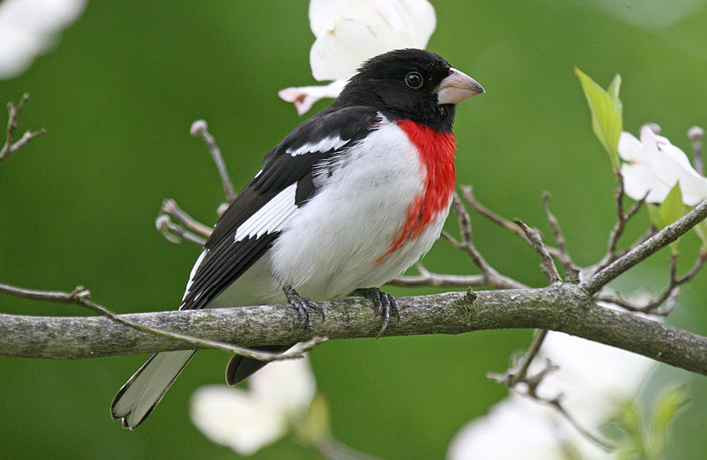
Rose-breasted Grosbeak timing in Prince Edward Island
- Arrives
- Around May
- Leaves
- By August
- Status here
- Summer breeder
- Nesting season
- June–July
- Present roughly
- May–August
In Prince Edward Island, rose-breasted grosbeaks are present through the warm months, arriving around May and heading south again by August.
These windows are set by latitude: Prince Edward Island sits in the middle part of this species' range, so timing here runs later than the continental average — the season starts later this far north and the birds wait for it. In any given year, weather can move the first arrivals by a week or two either way.
Month by month in this state
Highlighted months are when rose-breasted grosbeaks are expected in Prince Edward Island. The edges of the window are the interesting weeks — first arrivals and last departures vary most from year to year.
Getting ready before they arrive
The week before May is the time to act. Have feeders cleaned, filled and out by early May — the first rose-breasted grosbeaks into Prince Edward Island are scouting for reliable food, and a station that's ready early gets added to their route.
Once nesting begins around June, adults switch to protein-rich food for their young and visits to feeders become quick and purposeful. Expect the busiest activity at dawn.
What rose-breasted grosbeaks eat while they're here
- Beetles, caterpillars and bees
A brief spring feeder visitor in the south; stays to nest in northern deciduous woods.
Full Rose-breasted Grosbeak diet guide → · Best feeder for rose-breasted grosbeaks →
Native plants that hold rose-breasted grosbeaks in Prince Edward Island
Food keeps a migrant for a day; habitat keeps it for the season. These Prince Edward Island-native plants are known to attract rose-breasted grosbeaks:
Deciduous holly holding red fruit into mid-winter.
Fruit clusters persist all winter as emergency food.
Prolific seed heads for finches and sparrows.
Seed-rich cones and year-round shelter.
Catkin seed feeds redpolls and siskins all winter.
Hosts hundreds of caterpillar species; spring flowers draw early insects.
Among the first spring bloomers; early insects for returning migrants.
Fast-growing northern cherry with midsummer fruit.
Keep exploring
Frequently asked
When do rose-breasted grosbeaks arrive in Prince Edward Island?
rose-breasted grosbeaks typically arrive in Prince Edward Island around May, with nesting underway by June. Timing can shift a week or two with the weather in any given year.
When do rose-breasted grosbeaks leave Prince Edward Island?
Most rose-breasted grosbeaks have left Prince Edward Island by August. They spend the winter farther south and return the following spring.
Do rose-breasted grosbeaks stay in Prince Edward Island all year?
No — in Prince Edward Island the Rose-breasted Grosbeak is a summer breeder, present roughly May–August. Outside that window it is rarely seen in the state.
What should I put out before rose-breasted grosbeaks arrive in Prince Edward Island?
Have feeders up and clean by early May — first arrivals scout reliable food sources. Good offerings for this species: beetles, caterpillars and bees.
Sources
- Rose-breasted Grosbeak — All About Birds, Cornell Lab of Ornithology
- Rose-breasted Grosbeak life history — Cornell Lab of Ornithology
- Rose-breasted Grosbeak — Audubon Guide to North American Birds
- eBird region overview and bar charts — Prince Edward Island
- Plant Hardiness Zones of Canada — Natural Resources Canada
- Audubon Native Plants Database
Timing reflects typical patterns for the region as a whole; local dates vary with elevation and year. Check the linked eBird bar charts for your county.