The best feeder for white-winged crossbills
Wanders the boreal forest chasing spruce cone crops; nests in any month cones are ripe.
Feeder styles that work
Suits small clinging and perching birds and keeps seed dry.
Holds a large seed volume with a ledge for mid-sized birds.
What to fill it with
- Hulled sunflower
- Black-oil sunflower
Sizing the feeder to the bird
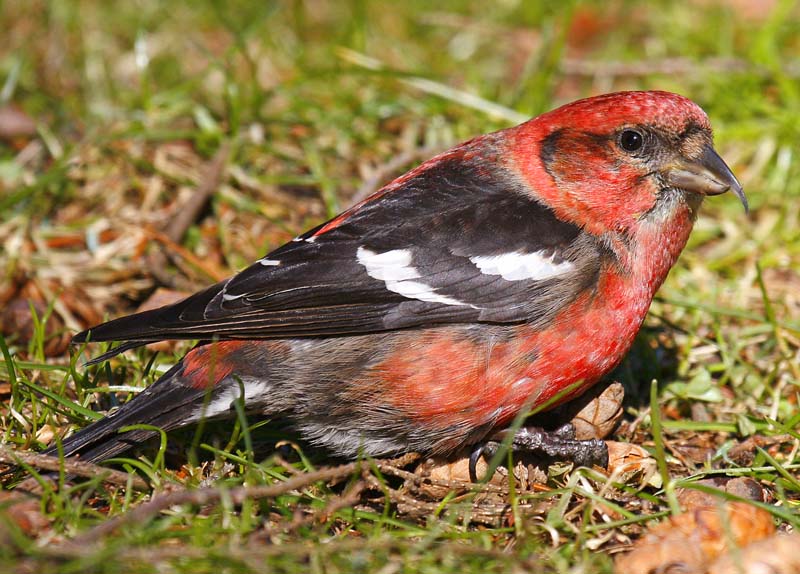
The White-winged Crossbill measures 5.9–6.7 in and weighs 0.8–0.9 oz. Perches, ports and landing surfaces need to fit that frame — too small and the bird can't feed comfortably, too open and larger birds and squirrels dominate.
Keep it clean
Scrub feeders every two weeks in hot soapy water, soak 10 minutes in a 1:9 bleach solution, rinse and dry before refilling. Rake up hulls underneath.
When to have a feeder up for white-winged crossbills
Across the 55 US states and Canadian provinces where we have range data for the White-winged Crossbill, it is a year-round resident in 26, a summer breeder in 0, a winter visitor in 29. That makes it largely migratory: most backyards see it for part of the year only, so feeding and planting should be timed to its arrival.
Nesting starts earliest in Connecticut (January–December) and latest in Yukon (February–December) — a 1-month spread driven by latitude and spring warm-up. Insect food and nest sites matter most in your own region's window.
One feeder, several birds
These species take at least two of the same feeder foods as the White-winged Crossbill, so the same offering will draw them too — useful for planning, and a warning if a larger bird on this list tends to crowd the feeder.
- Black-capped Chickadee (4.7–5.9 in) — shares black-oil sunflower, hulled sunflower
- Downy Woodpecker (5.5–6.7 in) — shares black-oil sunflower, hulled sunflower
- House Finch (5.1–5.5 in) — shares black-oil sunflower, hulled sunflower
- Pine Grosbeak (7.9–9.8 in) — shares black-oil sunflower, hulled sunflower
- Purple Finch (4.7–6.3 in) — shares black-oil sunflower, hulled sunflower
- Red Crossbill (5.5–6.7 in) — shares black-oil sunflower, hulled sunflower
Native plants that feed white-winged crossbills
Ranked by how many states and provinces list each plant for the White-winged Crossbill. Planting these supplies food when feeders are empty and insects for nestlings.
- Eastern red cedar Juniperus virginiana
Tree · listed in 37 regions. Dense evergreen roost cover and bluish 'berries' eaten through winter.
- Eastern white pine Pinus strobus
Tree · listed in 32 regions. Seed-rich cones and year-round shelter.
- Tamarack Larix laricina
Tree · listed in 31 regions. Deciduous conifer with small cones for siskins and redpolls.
- Eastern hemlock Tsuga canadensis
Tree · listed in 27 regions. Small cones for siskins and chickadees; dense winter roosting.
Full guide: how to attract white-winged crossbills →
Other finches (fringillidae) in our guides
Frequently asked
What kind of feeder is best for white-winged crossbills?
Tube feeder with short perches. Suits small clinging and perching birds and keeps seed dry.
What should I put in a feeder for white-winged crossbills?
Hulled sunflower, Black-oil sunflower.
Where should I place a feeder for white-winged crossbills?
Wanders the boreal forest chasing spruce cone crops; nests in any month cones are ripe.
Sources
- White-winged Crossbill — All About Birds, Cornell Lab of Ornithology
- White-winged Crossbill life history — Cornell Lab of Ornithology
- White-winged Crossbill — Audubon Guide to North American Birds
Timing reflects typical patterns for the region as a whole; local dates vary with elevation and year. Check the linked eBird bar charts for your county.