How to Keep Bees Away from a Hummingbird Feeder
Why bees and yellowjackets swarm hummingbird feeders, which feeder designs keep them out, and the fixes that work without pesticides or harming the birds.
10 min read · Updated 2026-10-24
Equipment for this job
The five-port feeder has covered feeding openings and a base that separates for washing. We have not tested it as bee-proof; check nectar level, leaks and insect access rather than relying on the label.
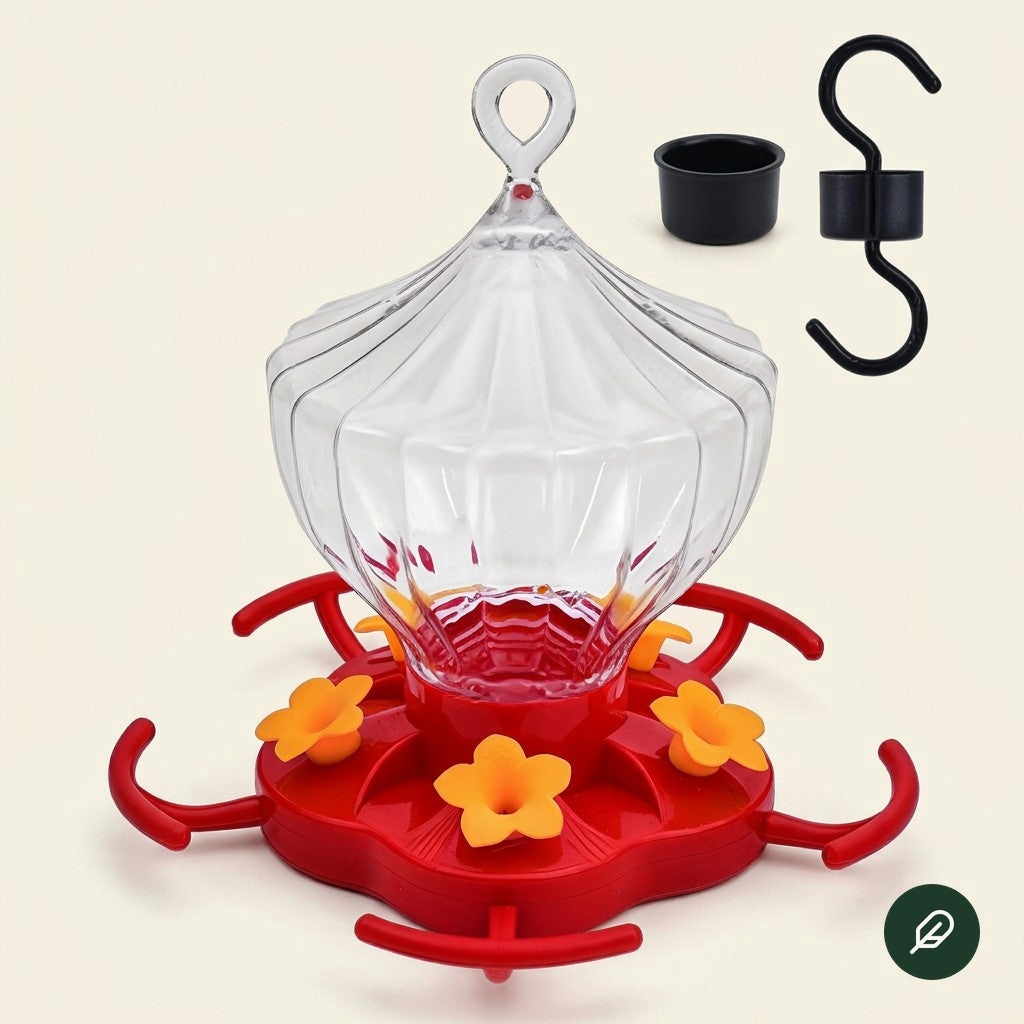

- Best defense
- Covered ports with nectar below insect reach
- Common cause
- Dripping or leaking feeders
- Avoid
- Yellow feeder parts, oil on ports, pesticides
- Peak season
- Late summer, as natural nectar dries up
Start with leaks, sticky ports and exposed nectar
Wash away nectar from the outside of the feeder, repair leaking seals and move the feeder into shade. Use a design that keeps nectar below covered ports rather than offering an open dish. Moving a feeder can interrupt insects' usual route, but it is not a permanent guarantee. Keep checking for spills, and never put oil or sticky substances around the openings.
An ant moat will not stop bees: flying insects bypass the hanger. Buy for the problem you actually have. Covered ports, accessible cleaning surfaces and a well-sealed base matter more here than a large reservoir or decorative glass. A bee guard also needs to fit the exact feeder; forcing an incompatible guard onto a port can obstruct the birds or create a leak.
Why bees and wasps find your feeder
Honey bees, bumble bees, paper wasps, and yellowjackets all want sugar, and a hummingbird feeder is a concentrated, predictable source. The problem almost always peaks in late summer. Colonies are at their largest, flower nectar is drying up in heat and drought, and yellowjackets switch from hunting protein for their larvae to seeking sugar for themselves. A feeder that was left alone in June can be covered by August.
Insects are not attracted to the nectar you cannot see. They are drawn by nectar they can reach: drips on the outside of the feeder, sticky ports, and pools on the ground below. Most bee problems are leak problems first.
Start with the right feeder design
A saucer (basin) feeder is the single most effective fix. The nectar sits in a dish below the feeding ports, a half inch or more down. A hummingbird's bill and long tongue reach it easily. A honey bee's tongue is only about a quarter inch long, so the nectar stays out of reach. Saucer feeders also do not drip, because nothing is pushing nectar down from above.
Inverted bottle feeders are far more prone to insect trouble. As sun warms the air trapped inside the bottle, it expands and forces nectar out through the ports, leaving a sweet film where bees gather. If you keep an inverted feeder, hang it in full shade and check that the seals and ports are tight.
- Choose red ports and bases. Yellow 'flower' accents attract bees and wasps.
- Look for built-in bee guards — small mesh or plastic grids over each port.
- Replace worn gaskets; a cracked seal leaks constantly.
- Wipe the ports and outside surfaces every time you refill.
Fixes for a feeder that is already swarmed
Move the feeder. Relocating it even a few feet breaks the insects' learned route, and hummingbirds find a moved feeder within hours. Moving it into shade also slows the drip that brought the insects in the first place.
Put out a decoy. A shallow dish of stronger sugar water — about one part sugar to two parts water — set some distance away, lower than the feeder, gives bees and wasps an easier target. Many insects will choose the decoy. Move it gradually farther from the hummingbird feeder over several days. Clean up afterward so you are not simply feeding a larger colony.
Hang a yellowjacket trap well away from the feeder if wasps are the main problem. Commercial reusable traps with a species-specific lure catch yellowjackets without attracting honey bees. Never place a trap next to the hummingbird feeder.
What not to do
Do not spray insecticide on or near a feeder. Hummingbirds feed on small insects and drink the nectar, and any residue reaches them directly. Do not coat ports with cooking oil, petroleum jelly, or insect repellent; these soil feathers, and a hummingbird cannot clean oil off its face and throat easily. Do not dilute the nectar to make it less appealing to insects — it makes it less valuable to the birds without solving the problem.
Remember that honey bees and native bumble bees are pollinators you want in the yard. The goal is to separate them from the feeder, not to kill them. Planting native nectar flowers nearby gives bees their own food source, and a mix of blooms through late summer eases pressure on the feeder.
A late-summer routine that keeps insects off
Bee and wasp pressure is seasonal and predictable, so plan for it before August rather than reacting once the feeder is covered. The routine below takes a few minutes per refill and prevents most problems.
Each time you change nectar, rinse the whole feeder in hot water and wipe the ports, the underside of the base, and the hanger. A single dried drip of sugar is enough for a scout bee to find and recruit others. Fill to the line and no higher; overfilled saucer feeders can bring the nectar up to the port. Hang the feeder back in shade, and look at the ground underneath for sticky spots worth hosing off.
If yellowjackets are nesting in the ground or in a wall void near the feeder, the feeder will stay busy until the colony dies back with the first hard frost. In that case, it is often simplest to move the feeder to the other side of the house for a few weeks. Leave ground nests alone unless they are in a spot where people walk; yellowjackets defend nests aggressively, and removal is a job for a pest professional who will not spray near your feeders.
- Wipe ports and base at every refill.
- Fill to the line, not to the brim.
- Keep feeders in shade from July to September.
- Hose off sticky spots under the feeder.
- Relocate for a few weeks if a nest is nearby.
If you are dealing with ants too
Bees and ants often arrive together, because the same drips attract both. An ant moat — a small cup of water hung above the feeder — solves the ant side of the problem, and it is covered in detail in the ant guide in this cluster. The pillar hummingbird feeder guide covers choosing a saucer feeder and setting a cleaning schedule that prevents the sticky buildup insects follow.
Choosing equipment without a bee-proof promise
Our open ring-and-glass-dish feeder leaves nectar exposed and is not the right choice for a yard already crowded with bees. The five-port feeder keeps feeding openings separate and comes apart for washing, but its listing does not establish tested bee exclusion. Use the listing's actual construction details to compare it, not an unverified insect-proof claim.
You may solve this without buying anything. Start with a fresh fill, a clean exterior and a shaded position. If insects can still reach nectar inside the ports, compare the nectar depth with the port design and use only manufacturer-compatible guards. If a wasp nest is near a busy walkway, keep people away and get local professional advice rather than spraying a feeder.
Frequently asked
What hummingbird feeder is bee proof?
Saucer (basin) feeders are the most bee-resistant, because the nectar sits below the port, beyond the reach of a bee's tongue, and they do not drip. Built-in bee guards add protection.
Why are wasps on my hummingbird feeder?
Late summer is when yellowjackets switch to seeking sugar and natural nectar is scarce. Dripping or leaking feeders are the usual draw. Fix leaks, move the feeder into shade, and use a trap placed well away from it.
Can I put oil or Vaseline on feeder ports to stop bees?
No. Oils and petroleum jelly foul hummingbird feathers. Use a saucer feeder, bee guards, and a decoy dish instead.
Will moving the feeder get rid of bees?
Often, yes. Moving it a few feet breaks their learned route, and hummingbirds relocate a moved feeder within hours.
Keep reading
Hummingbird Feeders: The Complete Buyer's and Care Guide
How to choose, place, fill, and clean a hummingbird feeder — saucer vs. inverted, port count, materials, and the maintenance schedule that keeps nectar safe.
HummingbirdsHummingbird Nectar Recipe: The 1:4 Ratio and Why It Works
The only nectar recipe you need — one part white sugar to four parts water — plus why honey, brown sugar, and red dye are harmful, and how long homemade nectar keeps.
HummingbirdsAnt Moat for a Hummingbird Feeder: Keep Ants Out
How an ant moat works, how to hang and maintain one, and the other bird-safe ways to stop ants from reaching your hummingbird nectar.
HummingbirdsWhen to Put Out and Take Down Hummingbird Feeders, by Region
Arrival and departure windows for hummingbirds across the United States and Canada, plus why leaving a feeder up in fall does not stop migration.
HummingbirdsRuby-throated vs. Anna's Hummingbird: How to Tell Them Apart
Range, gorget color, crown, size, voice, and season — a field-mark comparison of North America's two most common feeder hummingbirds.