Hummingbird Nectar Recipe: The 1:4 Ratio and Why It Works
The only nectar recipe you need — one part white sugar to four parts water — plus why honey, brown sugar, and red dye are harmful, and how long homemade nectar keeps.
8 min read · Updated 2026-09-30
Equipment for this job
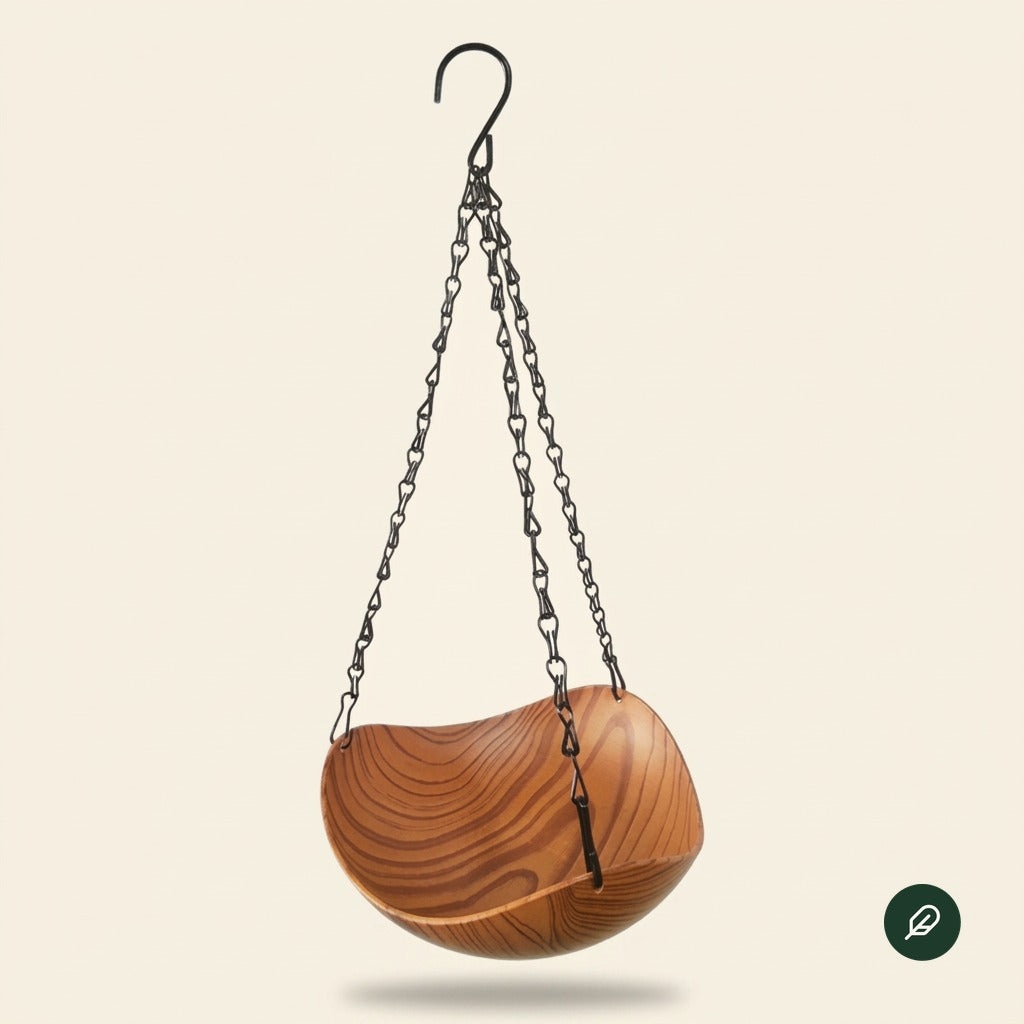
Hanging Basin Feeder and Water Bowl
A single open basin that hangs from a hook and does two jobs: a seed tray through the growing season, a shallow water bowl the rest of the year. Seed or water goes straight in — no reservoir, no perches, nothing to assemble beyond the hanging chains.Three chains run from the rim to one S-hook, so the basin hangs level under a bracket, a shepherd's hook or a low branch. Put it where you can watch it from a window, and where a cat can't launch from a fence.The rim is low and the floor is open, so birds can land anywhere around the edge instead of fighting over a perch. It also means the bowl needs wiping out every few days: hulls and droppings land in the water, and a rinse with hot water and a brush keeps it clean.The basin has a wood-grain finish and hangs from black metal chains.
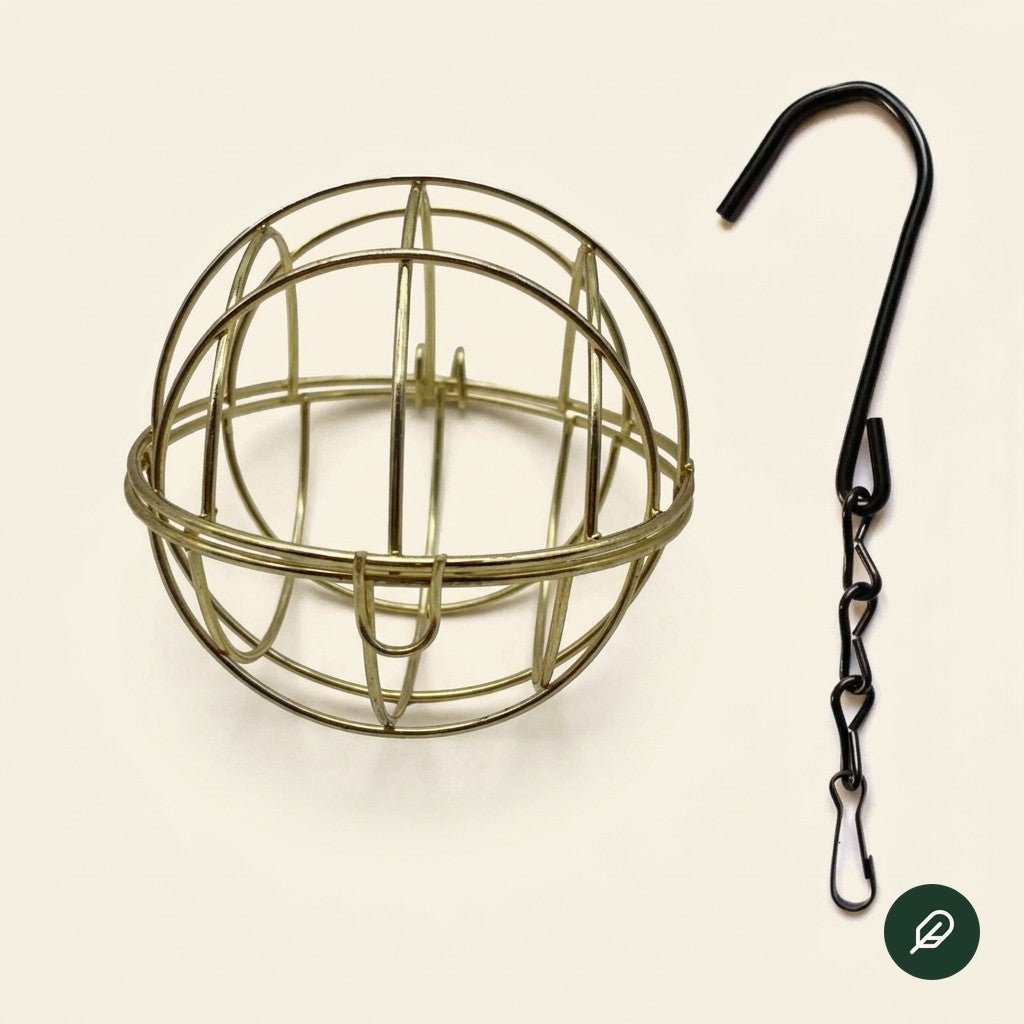
Round Suet Ball Cage
A small round wire cage made to hold one suet or fat ball. The hinged cage opens for refilling and closes with a simple wire latch. A short chain and hook are included for hanging. Available in gold-colored or black finish. This is a suet holder, not a hummingbird feeder.
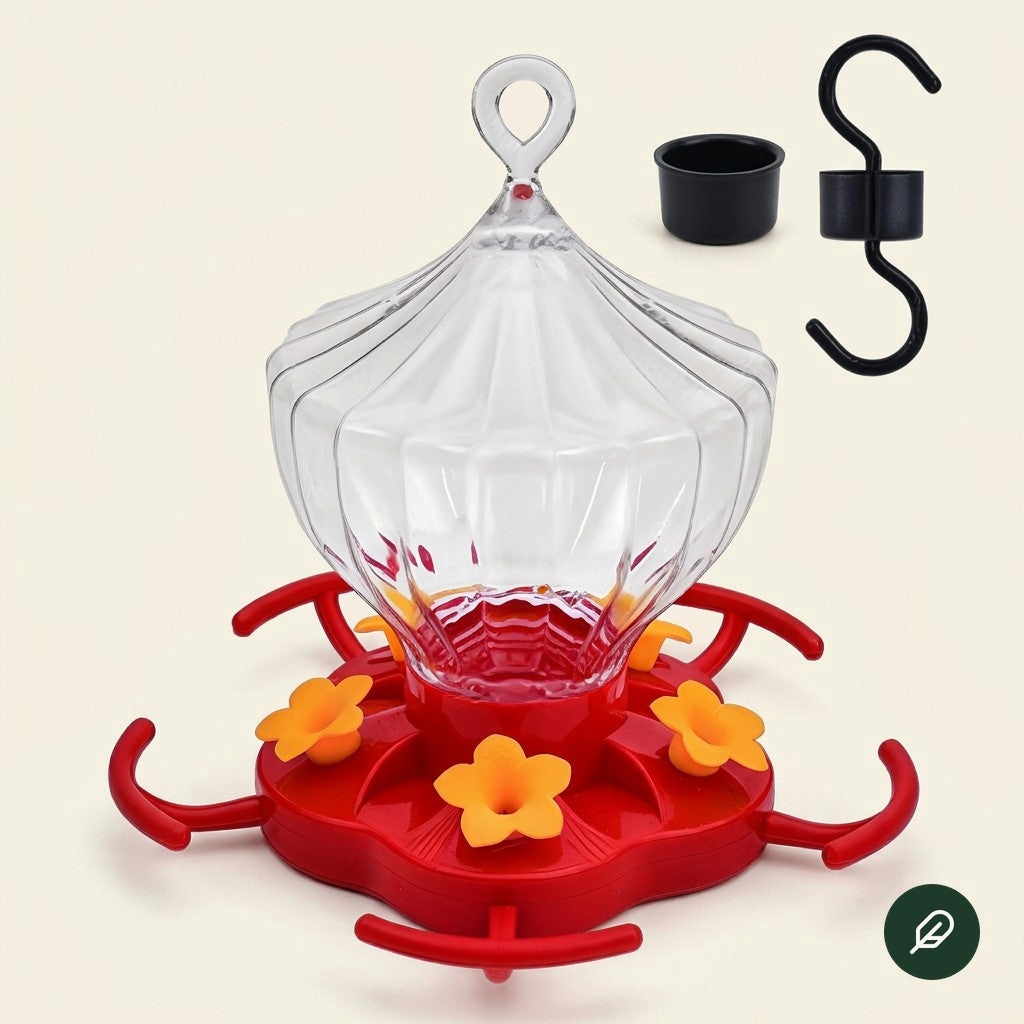
Five-Port Hummingbird Feeder
A compact red hummingbird feeder with a clear 8-ounce reservoir, five flower-shaped feeding ports, and five curved perches. The set includes a separate ant-moat cup and an S-hook for hanging. The wide base separates for routine washing. Use plain white sugar nectar at a 1:4 sugar-to-water ratio; never add dye.

- Ratio
- 1/4 cup white sugar per 1 cup water
- Sugar
- Plain white cane or beet sugar only
- Fridge life
- Up to 1 week, sealed
- Never add
- Red dye, honey, brown sugar, sweeteners
The recipe
Mix one part plain white granulated sugar with four parts water — a quarter cup of sugar to one cup of water, or one cup of sugar to four cups for a batch. Stir until the sugar is fully dissolved. Let it cool to room temperature before filling a feeder. That is the entire recipe, and it is the one recommended by the Audubon Society, the Cornell Lab of Ornithology, and hummingbird banders across North America.
Boiling is optional. Heating the water helps sugar dissolve quickly and briefly slows mold if you plan to store extra in the refrigerator, but hot tap water and a good stir work fine for a batch you use right away. What matters far more is that the feeder itself is clean, because nectar spoils from the feeder inward.
Why 1:4 and not stronger
A 1:4 solution is roughly 20 percent sucrose, which sits inside the range of the flower nectars hummingbirds feed on in the wild — typically about 20 to 25 percent sugar in the tubular, red and orange blossoms they favor. It gives the birds the energy they need without being so thick that it is slow to drink or so sweet that it spoils faster.
Some people strengthen the mix to 1:3 in cold weather or during migration, when birds need extra calories. That is within the natural range and is acceptable for short periods. Going stronger than that is unnecessary, and syrupy mixes ferment faster and gum up ports. Weaker mixes than 1:5 give birds less reason to visit and are not recommended.
What never goes in a feeder
Red dye is the most common mistake. It adds nothing: hummingbirds find feeders by the red plastic or glass on the feeder, not by the color of the liquid. Commercial red nectars contain dyes that birds do not need, and their safety for an animal that drinks more than its body weight in fluid each day has never been demonstrated. Clear nectar in a red feeder is the standard.
Honey ferments quickly and can grow a fungus that causes a fatal tongue infection in hummingbirds. Brown sugar, raw sugar, turbinado, and molasses contain iron levels that are harmful to hummingbirds over time. Artificial sweeteners have no calories, so a bird can starve drinking them. Powdered sugar often contains cornstarch. Stick to plain white sugar.
- No red dye or colored commercial nectar.
- No honey, agave, or maple syrup.
- No brown, raw, organic unrefined, or powdered sugar.
- No artificial or zero-calorie sweeteners.
- No added electrolytes, vitamins, or 'protein' — birds get protein from insects.
Water: tap, filtered, or bottled
Ordinary tap water that is safe for you to drink is safe for hummingbirds. If your water is heavily softened with sodium, or you have well water with high iron, use filtered or bottled drinking water instead. Distilled water is fine but unnecessary.
Storing homemade nectar
Make a larger batch and keep the extra in a clean, sealed jar in the refrigerator for up to a week. Throw it out sooner if it turns cloudy, smells sour, or shows any floating strands. Let cold nectar warm to room temperature before filling a feeder, or it can drip out of inverted designs as it warms and expands.
Fill feeders only with what the birds will drink before the next cleaning day. In the heat of July, that may be just a few ounces. Topping up old nectar with fresh nectar does not reset the clock — always empty, clean, and refill.
Nectar through the season
Demand changes a lot from spring to fall, and the amount you mix should follow it. In early spring a single scout may drink only a fraction of an ounce a day, so a small feeder filled a quarter full is plenty. Through June and early July, when females are nesting and males hold territories, demand stays modest. From late July into September, juveniles leave the nest and migrants from farther north pass through, and many Eastern yards see consumption jump several times over within a couple of weeks.
Match batch size to that curve. Make a cup or two at a time in spring, a quart at a time in late summer, and keep the extra in the refrigerator. If a feeder empties in a day, add a second feeder in another part of the yard rather than a larger one; it spreads the birds out and cuts down on chasing.
Hot weather needs the most discipline. Nectar in a sunny feeder at 90°F can start fermenting within a day, even when it still looks clear. Move feeders into shade for the summer and change nectar daily in heat waves. In cold snaps the opposite applies: nectar keeps longer, and a 1:3 mix gives visiting birds a little extra energy for cold nights.
- Spring: small batches; feeders a quarter full.
- Nesting season: steady, moderate use; keep feeders in shade.
- Late summer migration: largest batches; add feeders, not capacity.
- Cold snaps: 1:3 is acceptable for short periods.
Signs your nectar has gone bad
Cloudy or milky liquid, black specks or strands, a film on the surface, a vinegar or alcohol smell, and dead insects all mean the batch is spoiled. Birds hovering and leaving without drinking is another sign. Empty the feeder, scrub the ports and reservoir, soak in a vinegar solution, rinse, and refill fresh. If mold keeps coming back quickly, move the feeder into more shade or switch to a smaller feeder that empties faster.
The pillar hummingbird feeder guide sets out the full cleaning schedule by temperature. If bees and ants are drinking your nectar, the bee and wasp guide and the ant moat guide cover fixes that do not harm the birds.
Frequently asked
What is the ratio for hummingbird nectar?
One part plain white sugar to four parts water — for example, 1/4 cup sugar in 1 cup of water. Stir until dissolved and let it cool before filling the feeder.
Do I need to boil hummingbird nectar?
No. Boiling helps sugar dissolve and can slightly extend refrigerator storage, but a clean feeder matters far more. Hot tap water and stirring are fine for a batch used immediately.
Is red dye bad for hummingbirds?
It is unnecessary and its safety has not been demonstrated. Hummingbirds find feeders by the red feeder parts, so use clear nectar.
Can I use honey or brown sugar?
No. Honey promotes a fungus that can kill hummingbirds, and brown or raw sugars contain iron that is harmful to them. Use plain white granulated sugar only.
How long does homemade nectar last?
Up to one week sealed in the refrigerator. In a feeder outdoors, change it every 1–5 days depending on temperature.
Keep reading
Hummingbird Feeders: The Complete Buyer's and Care Guide
How to choose, place, fill, and clean a hummingbird feeder — saucer vs. inverted, port count, materials, and the maintenance schedule that keeps nectar safe.
HummingbirdsHow to Keep Bees Away from a Hummingbird Feeder
Why bees and yellowjackets swarm hummingbird feeders, which feeder designs keep them out, and the fixes that work without pesticides or harming the birds.
HummingbirdsAnt Moat for a Hummingbird Feeder: Keep Ants Out
How an ant moat works, how to hang and maintain one, and the other bird-safe ways to stop ants from reaching your hummingbird nectar.
HummingbirdsWhen to Put Out and Take Down Hummingbird Feeders, by Region
Arrival and departure windows for hummingbirds across the United States and Canada, plus why leaving a feeder up in fall does not stop migration.
HummingbirdsRuby-throated vs. Anna's Hummingbird: How to Tell Them Apart
Range, gorget color, crown, size, voice, and season — a field-mark comparison of North America's two most common feeder hummingbirds.