Ruby-throated vs. Anna's Hummingbird: How to Tell Them Apart
Range, gorget color, crown, size, voice, and season — a field-mark comparison of North America's two most common feeder hummingbirds.
8 min read · Updated 2026-09-30
Equipment for this job
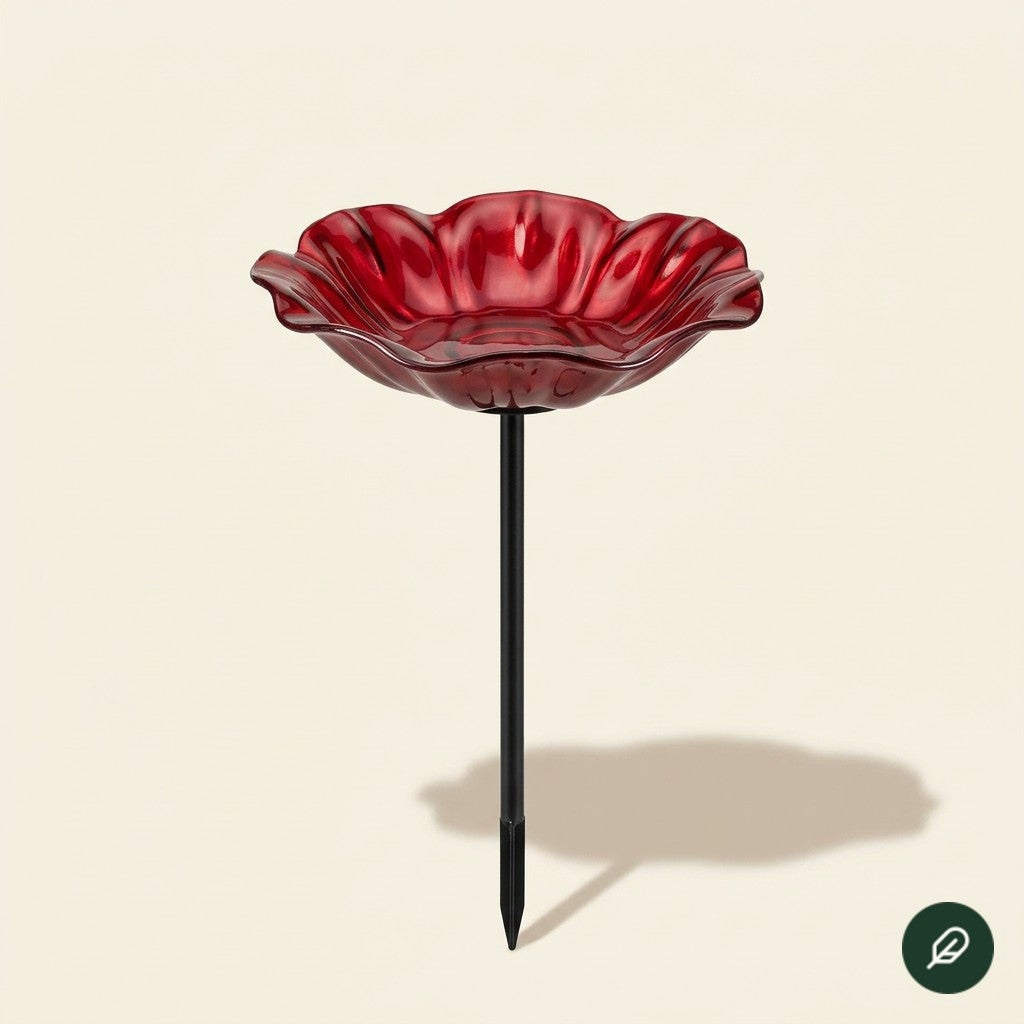
Flower Stake Bird Bath
A flower-shaped bird bath on a slim garden stake. The metal bowl holds water for drinking and bathing, and the dark center gives small birds a textured spot to grip. Push the stake into a flower bed or lawn and it's ready — no tools, no assembly beyond threading the bowl onto the stake. Bowl: 5.1 in (13 cm) across, flower-shaped, painted metal Stake: 17.3 in (44 cm) tall, black metal, pushes into soil Colors: Red, Blue, Orange, Purple Use: water for drinking and bathing; shallow depth suits small songbirds Care: tip out and rinse every few days in summer to keep water fresh and mosquitoes down Best placed near shrubs or cover so birds feel safe stopping to drink. Bring it in over hard freezes to protect the finish.
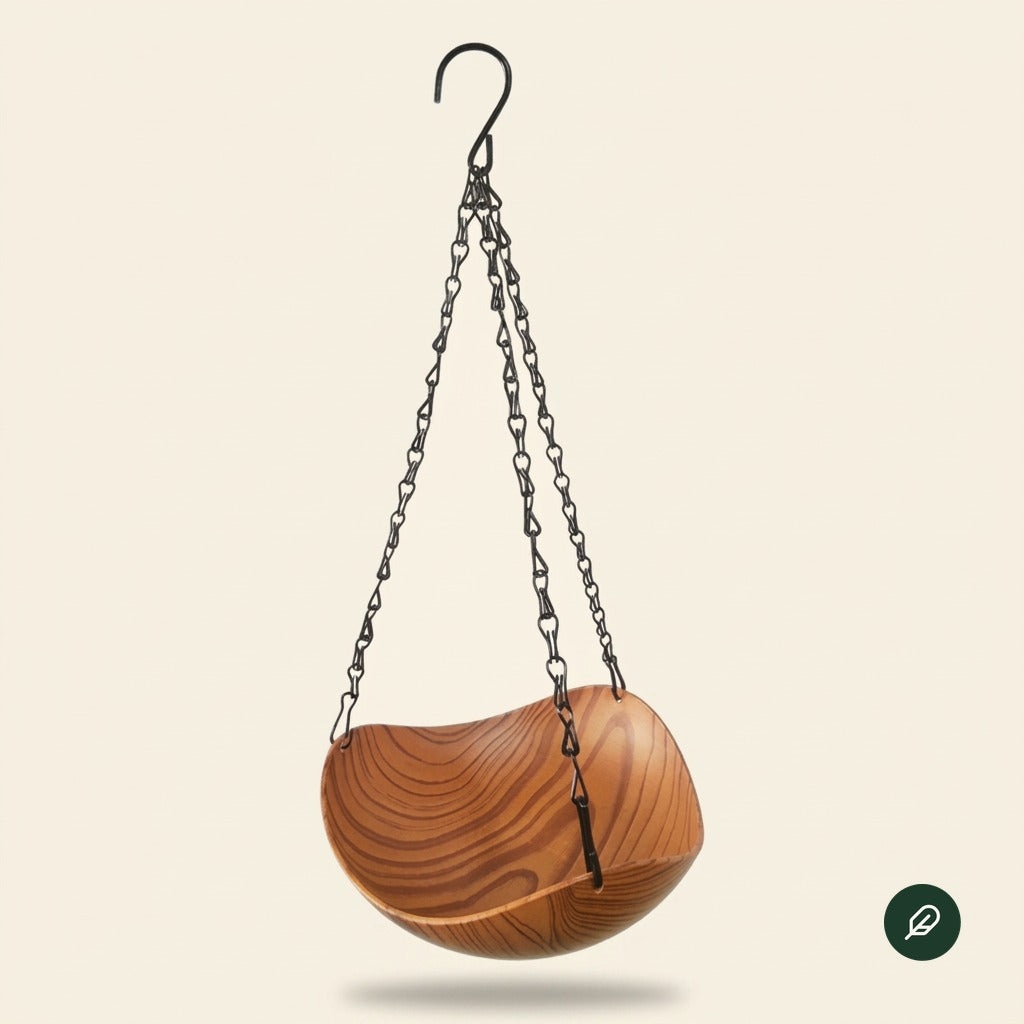
Hanging Basin Feeder and Water Bowl
A single open basin that hangs from a hook and does two jobs: a seed tray through the growing season, a shallow water bowl the rest of the year. Seed or water goes straight in — no reservoir, no perches, nothing to assemble beyond the hanging chains.Three chains run from the rim to one S-hook, so the basin hangs level under a bracket, a shepherd's hook or a low branch. Put it where you can watch it from a window, and where a cat can't launch from a fence.The rim is low and the floor is open, so birds can land anywhere around the edge instead of fighting over a perch. It also means the bowl needs wiping out every few days: hulls and droppings land in the water, and a rinse with hot water and a brush keeps it clean.The basin has a wood-grain finish and hangs from black metal chains.
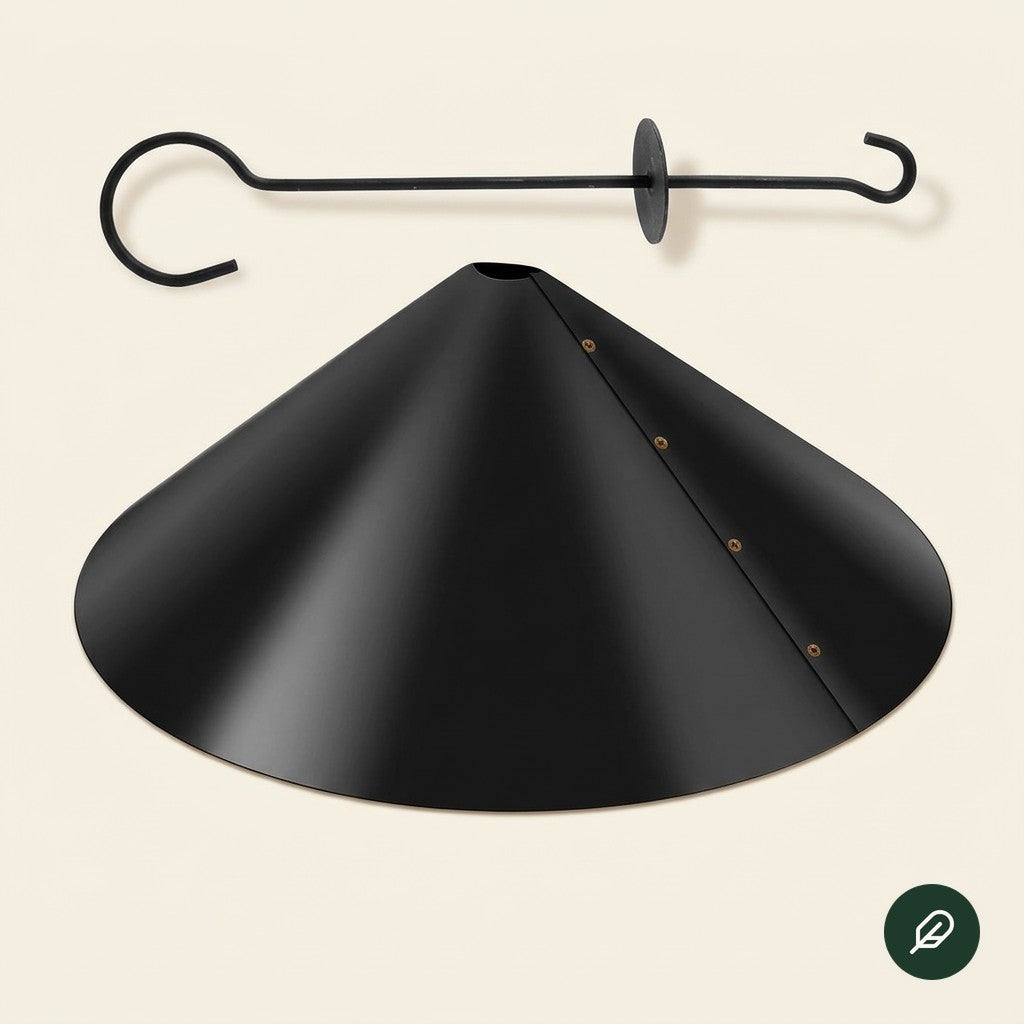
18-Inch Squirrel Baffle
A wide black baffle for helping keep squirrels from reaching a hanging or pole-mounted feeder. The cone measures 18 inches (45.7 cm) across. Choose the hanging-hook setup or pole-collar setup to suit your feeder station. Position the baffle so squirrels cannot bypass it from a nearby branch, railing, or roof.

- Ruby-throated
- Archilochus colubris — East; summer only
- Anna's
- Calypte anna — Pacific Coast; year-round
- Best field mark
- Male crown: green (Ruby-throated) vs. rose-pink (Anna's)
- Overlap
- Rare — mostly in Texas and occasional vagrants
Start with where you are
Range settles most identifications before you look at a single feather. The Ruby-throated Hummingbird is the only hummingbird that breeds east of the Great Plains, from the Gulf Coast north into southern Canada. If you are in Ohio, Georgia, or Ontario and see a hummingbird between April and October, it is almost certainly a Ruby-throated.
The Anna's Hummingbird lives along the Pacific Coast from southern British Columbia through Washington, Oregon, and California, and inland into Arizona and southern Nevada. It is a year-round resident across most of that range and has been expanding north and east for decades, helped by garden plantings and winter feeders. Anna's wander in fall and winter, and they turn up regularly in Texas and occasionally farther east, which is where the two species are most likely to share a feeder.
Adult males
Males are the easy birds. A male Ruby-throated Hummingbird has an iridescent red throat patch, or gorget, a green crown and back, and a white collar under the gorget. The tail is forked and dark. In poor light the throat can look black, so wait for the bird to turn.
A male Anna's Hummingbird has iridescent rose-pink to magenta color on both the throat and the whole crown — the key difference. When he faces you in sunlight, the entire head appears to glow pink. His underparts are grey-green rather than clean white, and he is stockier, with a shorter, straighter bill proportionally and a squared tail.
- Crown: green on Ruby-throated; rose-pink on Anna's.
- Gorget: ruby red and ends at the throat on Ruby-throated; rose-pink extending onto the sides of the head on Anna's.
- Underparts: white collar and pale belly on Ruby-throated; greyish on Anna's.
- Build: slender, about 3–3.5 in on Ruby-throated; stockier, about 3.9 in on Anna's.
Females and juveniles
Females are harder. Both species have green backs and pale underparts. A female Ruby-throated is cleaner white below with buffy flanks and white tips on her outer tail feathers. A female Anna's is dingier grey below and usually shows a small central patch of rose-pink feathers on the throat — a helpful mark when visible. Juvenile males of both species begin showing a few colored throat feathers in late summer and fall.
Size and shape help too. Anna's is the larger, heavier bird, with a rounded head and a habit of perching upright and still. Ruby-throated females look slimmer, with a slightly longer, more slender bill.
Voice and behavior
Anna's is unusual among North American hummingbirds because the male sings — a scratchy, buzzy series of notes delivered from a perch, often through winter. In spring, male Anna's perform steep display dives, climbing more than 100 feet and plunging past a female with a sharp, explosive chirp made by the tail feathers.
Ruby-throated males do not have a true song. They give chips and chatters, and their display is a U-shaped pendulum flight in front of a perched female. Their wings produce a soft hum in flight.
Other hummingbirds you might confuse them with
Ruby-throated and Anna's are the two most common feeder species, but they are not the only ones, and a few look similar enough to cause confusion.
The Black-chinned Hummingbird is the Western cousin of the Ruby-throated and the closest look-alike. Males have a black chin with a thin band of violet at the bottom that shows only in good light, a green back, and a white collar. Females of the two species are very hard to separate in the field. Black-chinned breeds from Texas and the desert Southwest north into the interior Northwest, so range usually decides it.
The Costa's Hummingbird of the Southwest deserts has a violet crown and a gorget that flares long on each side of the throat. It can suggest a small, purple-toned Anna's, and the two overlap in southern California and Arizona. The Rufous Hummingbird is easy to tell as an adult male — bright orange-rufous on the back, sides, and tail — but females and juveniles show only rufous on the flanks and tail base and can be confused with other species, especially on Eastern winter feeders.
When a bird does not fit, note the date, location, crown and throat color, the color of the flanks and tail, and take a photo if you can. Local bird clubs and state rare-bird committees are glad to help with difficult hummingbirds, and winter records in the East are valuable.
- Black-chinned: black chin, violet band; West and Texas.
- Costa's: violet crown and long flared gorget; desert Southwest.
- Rufous: orange-rufous on back or flanks; also an Eastern winter vagrant.
Season as a clue
A hummingbird in winter in the East is never a Ruby-throated, which leaves for Central America by fall; it is more likely a Rufous or another Western vagrant. A hummingbird singing at a Seattle feeder in January is an Anna's. The timing guide in this cluster explains arrival and departure windows for each region, and the pillar hummingbird feeder guide covers how to attract whichever species lives near you.
For state-by-state status, visit the Ruby-throated and Anna's Hummingbird pages in the bird guides matrix, which list where each species breeds, winters, or lives year-round and its local nesting months.
Frequently asked
How do you tell a Ruby-throated from an Anna's Hummingbird?
Look at the male's crown: green on the Ruby-throated, rose-pink on the Anna's. Range also helps — Ruby-throated in the East, Anna's on the Pacific Coast.
Do Anna's Hummingbirds migrate?
Most do not. They are year-round residents along the Pacific Coast and in the Southwest, though some wander in fall and winter.
Is a winter hummingbird in the East a Ruby-throated?
Almost never. Ruby-throated Hummingbirds leave for Central America in fall. Winter hummingbirds in the East are usually Rufous or other Western vagrants.
Do female hummingbirds have red throats?
Female Ruby-throated do not. Female Anna's often show a small patch of rose-pink feathers in the center of the throat.
Keep reading
Hummingbird Feeders: The Complete Buyer's and Care Guide
How to choose, place, fill, and clean a hummingbird feeder — saucer vs. inverted, port count, materials, and the maintenance schedule that keeps nectar safe.
HummingbirdsHummingbird Nectar Recipe: The 1:4 Ratio and Why It Works
The only nectar recipe you need — one part white sugar to four parts water — plus why honey, brown sugar, and red dye are harmful, and how long homemade nectar keeps.
HummingbirdsHow to Keep Bees Away from a Hummingbird Feeder
Why bees and yellowjackets swarm hummingbird feeders, which feeder designs keep them out, and the fixes that work without pesticides or harming the birds.
HummingbirdsAnt Moat for a Hummingbird Feeder: Keep Ants Out
How an ant moat works, how to hang and maintain one, and the other bird-safe ways to stop ants from reaching your hummingbird nectar.
HummingbirdsWhen to Put Out and Take Down Hummingbird Feeders, by Region
Arrival and departure windows for hummingbirds across the United States and Canada, plus why leaving a feeder up in fall does not stop migration.