When to Put Out and Take Down Hummingbird Feeders, by Region
Arrival and departure windows for hummingbirds across the United States and Canada, plus why leaving a feeder up in fall does not stop migration.
9 min read · Updated 2026-09-30
Equipment for this job
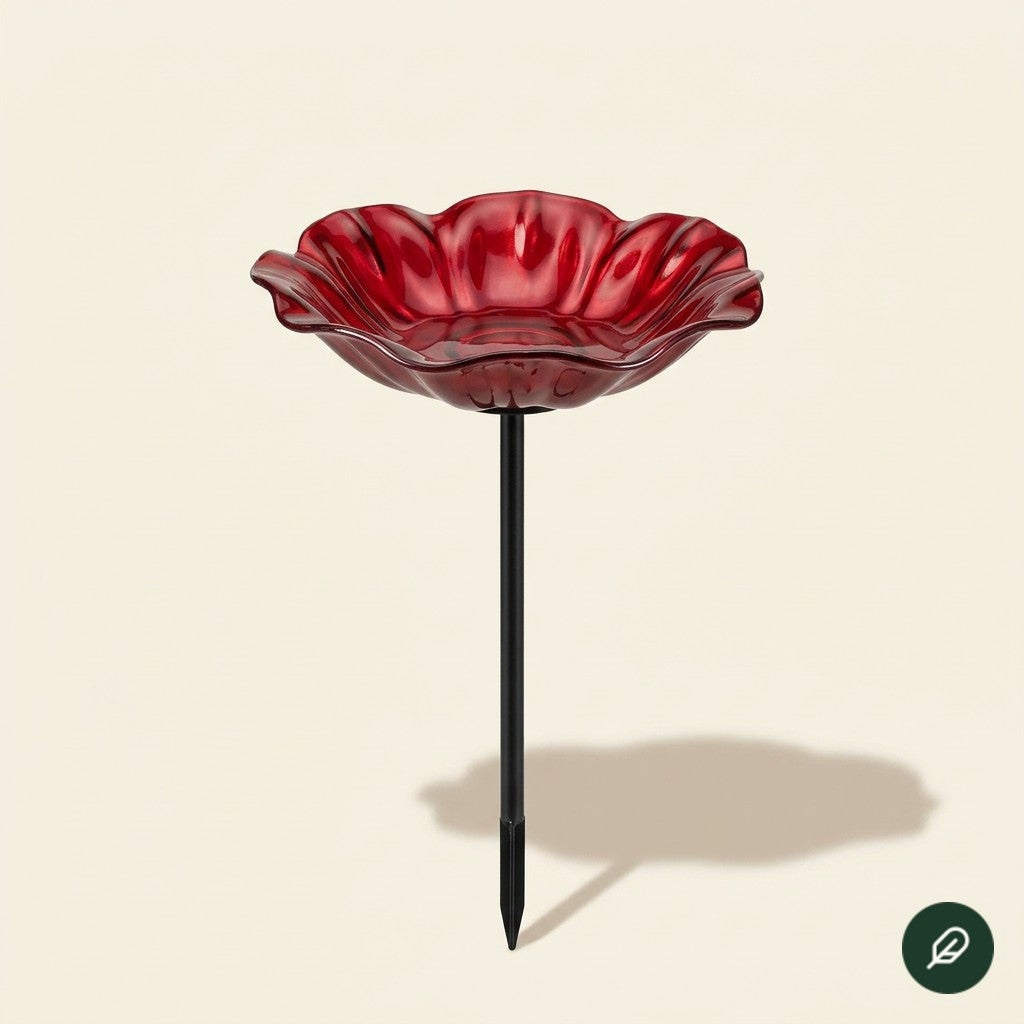
Flower Stake Bird Bath
A flower-shaped bird bath on a slim garden stake. The metal bowl holds water for drinking and bathing, and the dark center gives small birds a textured spot to grip. Push the stake into a flower bed or lawn and it's ready — no tools, no assembly beyond threading the bowl onto the stake. Bowl: 5.1 in (13 cm) across, flower-shaped, painted metal Stake: 17.3 in (44 cm) tall, black metal, pushes into soil Colors: Red, Blue, Orange, Purple Use: water for drinking and bathing; shallow depth suits small songbirds Care: tip out and rinse every few days in summer to keep water fresh and mosquitoes down Best placed near shrubs or cover so birds feel safe stopping to drink. Bring it in over hard freezes to protect the finish.
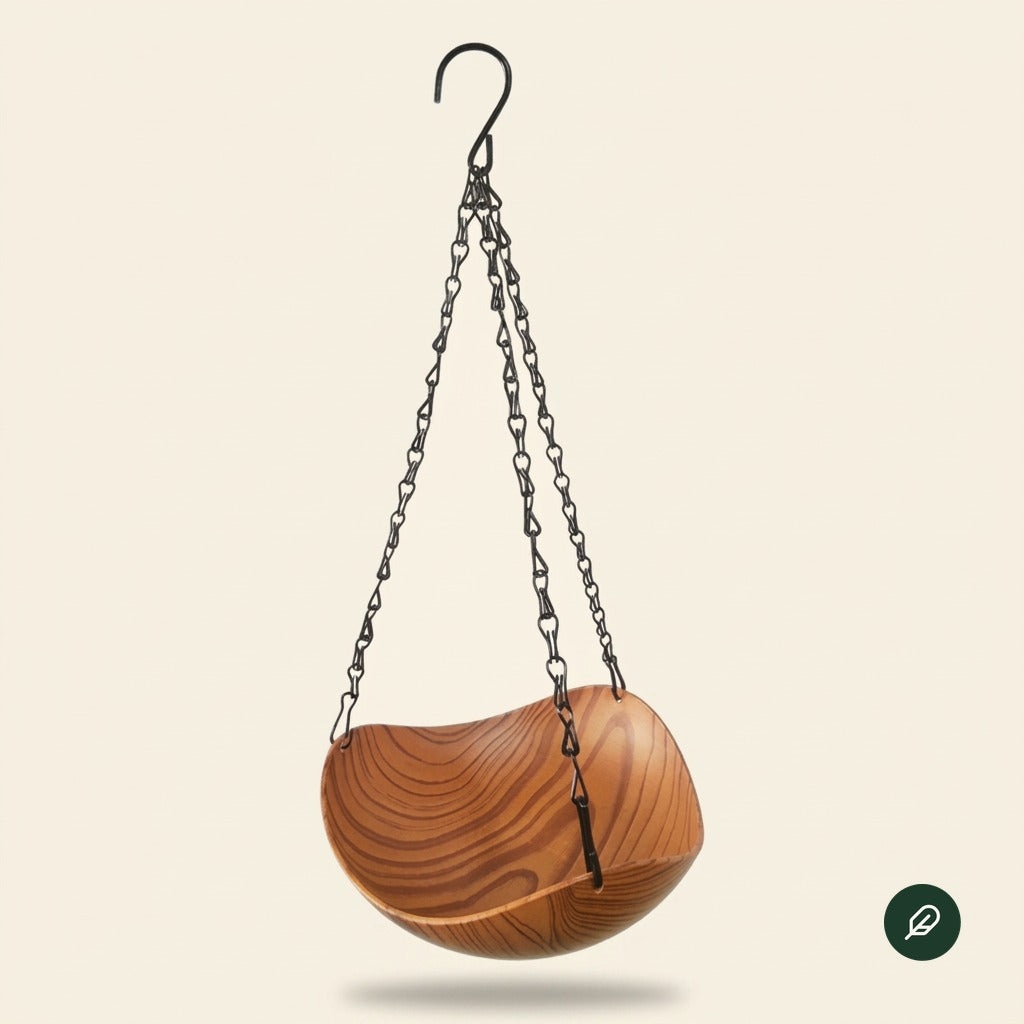
Hanging Basin Feeder and Water Bowl
A single open basin that hangs from a hook and does two jobs: a seed tray through the growing season, a shallow water bowl the rest of the year. Seed or water goes straight in — no reservoir, no perches, nothing to assemble beyond the hanging chains.Three chains run from the rim to one S-hook, so the basin hangs level under a bracket, a shepherd's hook or a low branch. Put it where you can watch it from a window, and where a cat can't launch from a fence.The rim is low and the floor is open, so birds can land anywhere around the edge instead of fighting over a perch. It also means the bowl needs wiping out every few days: hulls and droppings land in the water, and a rinse with hot water and a brush keeps it clean.The basin has a wood-grain finish and hangs from black metal chains.
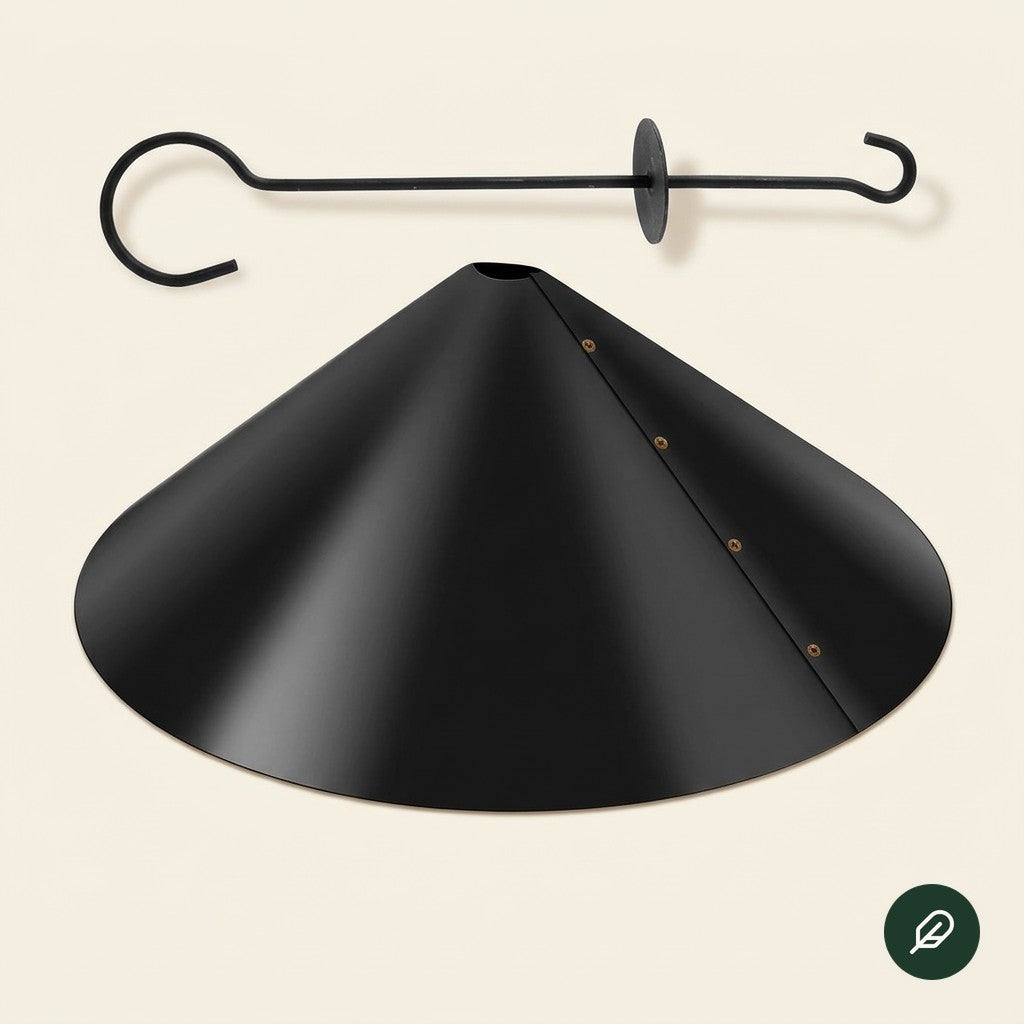
18-Inch Squirrel Baffle
A wide black baffle for helping keep squirrels from reaching a hanging or pole-mounted feeder. The cone measures 18 inches (45.7 cm) across. Choose the hanging-hook setup or pole-collar setup to suit your feeder station. Position the baffle so squirrels cannot bypass it from a nearby branch, railing, or roof.

- Rule of thumb (put out)
- About 2 weeks before usual first arrival
- Rule of thumb (take down)
- 2 weeks after the last bird seen
- Fall myth
- Feeders do not delay migration
- Year-round
- Pacific Coast (Anna's) and parts of the Southwest
The short answer
Put feeders out about two weeks before hummingbirds usually arrive in your area, and take them down about two weeks after you see the last one in fall. Early feeders give the first, often exhausted, migrants fuel when few flowers are open. Late feeders help stragglers and birds migrating through from farther north.
Timing depends on where you live and which species you host. East of the Great Plains, nearly all feeder visitors are Ruby-throated Hummingbirds, which winter in Mexico and Central America and move north with spring. In the West, several species overlap, and along the Pacific Coast Anna's Hummingbirds stay all year.
Spring arrival by region (Ruby-throated range)
Ruby-throated Hummingbirds cross the Gulf of Mexico or follow the Texas coast, reaching the Gulf states first. Arrival then moves north at a fairly steady pace, following the bloom of early nectar flowers and the emergence of small insects. The windows below are typical first-arrival dates; a warm or cold spring can shift them by a week or more.
- Gulf Coast — Florida, southern Texas, Louisiana, Alabama, Mississippi: late February to mid-March.
- Southeast — Georgia, the Carolinas, Tennessee, Arkansas, Oklahoma: mid-March to early April.
- Mid-Atlantic and Ohio Valley — Virginia, Kentucky, Missouri, Maryland, Ohio, Indiana, Illinois: early to late April.
- Northeast and Great Lakes — Pennsylvania, New York, New England, Michigan, Wisconsin, Iowa: late April to mid-May.
- Northern tier and Canada — Minnesota, the Dakotas, Maine, Ontario, Quebec, the Maritimes, the southern Prairie Provinces: early to late May.
The West
Western hummingbird timing is more varied. Black-chinned Hummingbirds arrive in the desert Southwest and Texas Hill Country in March and April. Broad-tailed Hummingbirds reach the Rocky Mountain states in April and May. Rufous Hummingbirds move north along the Pacific Coast from February through April to breed from Oregon to Alaska, then return south through the mountains in July and August — often the most aggressive birds at Western feeders in late summer.
Anna's Hummingbirds are residents from British Columbia south through Washington, Oregon, California, and into Arizona. In those areas, keep a feeder up all year. In a hard freeze, bring the feeder in overnight and rehang it at first light, or use a feeder heater designed for the purpose, so the nectar stays liquid when birds need it most.
Fall: leave feeders up longer than you think
The most persistent myth in backyard birding is that a feeder left up in fall will keep hummingbirds from migrating. It will not. Migration is triggered by day length and internal hormonal changes, not by food supply. Healthy birds leave on schedule whether or not your feeder is full.
What a fall feeder does is fuel the birds that pass through. Adult males leave first, often by midsummer. Females and juveniles follow, and birds from farther north keep moving through for weeks afterward. In the Southeast, rare Western species such as the Rufous Hummingbird show up at feeders in late fall and winter, and a feeder kept up into November or December is how many of them are discovered and recorded.
- Northern states and Canada: most birds gone by mid-September; keep feeders up into early October.
- Mid-Atlantic and Midwest: most gone by late September; keep feeders up to mid-October.
- Southeast and Gulf states: migrants pass through into October; consider leaving a feeder up all winter for Western vagrants.
Getting ready before the first bird arrives
Hummingbirds return to places where they found food before, and many individuals come back to the same yard year after year. The first arrivals often show up hungry after a long flight, sometimes during a cold spell when few flowers are open. Being ready a couple of weeks early matters more than having the perfect feeder.
Take stock in late winter. Pull out last year's feeders, soak them in a vinegar solution, and check the gaskets, ports, and bee guards for cracks. Replace anything cloudy or brittle. Buy a new ant moat if the old one leaks. Clear the spot where the feeder hangs: trim shrubs that have grown into it and confirm it sits in partial shade once the trees leaf out.
Plant for the arrival window as well. Native early bloomers — red buckeye and coral honeysuckle in the Southeast, wild columbine across much of the East, currants and manzanita in the West — open as the first hummingbirds arrive and give them natural nectar and insects alongside the feeder. The native plant pages for your state list the nectar plants native where you live.
Once feeders are out, keep them clean even if no bird has visited yet. Nectar spoils on schedule whether or not it is being used, and a scout that finds a cloudy feeder may move on.
- Late winter: clean and inspect feeders; replace worn parts.
- Two weeks before arrival: hang feeders a quarter full.
- Plant native early bloomers near the feeder.
- Change nectar on schedule even before the first visit.
Match timing to your state
For state-specific windows, each state's bird guide in the Perch Supply matrix lists whether a hummingbird species breeds, winters, or lives there year-round, and its local nesting months. Pair the timing here with the pillar hummingbird feeder guide for placement and cleaning, and with the nectar recipe guide so the first feeder of spring is filled correctly.
Frequently asked
When should I put out my hummingbird feeder?
About two weeks before hummingbirds normally arrive where you live — late February on the Gulf Coast, April in the Mid-Atlantic and Midwest, and May in the northern states and Canada.
When should I take down my hummingbird feeder?
About two weeks after you see your last hummingbird. In most of the northern US that is early to mid-October.
Will leaving my feeder up stop hummingbirds from migrating?
No. Migration is triggered by day length and hormones, not food. A fall feeder helps late migrants refuel.
Can I keep a hummingbird feeder up all winter?
Yes, and on the Pacific Coast you should, because Anna's Hummingbirds live there year-round. In the Southeast, winter feeders attract rare Western species.
Keep reading
Hummingbird Feeders: The Complete Buyer's and Care Guide
How to choose, place, fill, and clean a hummingbird feeder — saucer vs. inverted, port count, materials, and the maintenance schedule that keeps nectar safe.
HummingbirdsHummingbird Nectar Recipe: The 1:4 Ratio and Why It Works
The only nectar recipe you need — one part white sugar to four parts water — plus why honey, brown sugar, and red dye are harmful, and how long homemade nectar keeps.
HummingbirdsHow to Keep Bees Away from a Hummingbird Feeder
Why bees and yellowjackets swarm hummingbird feeders, which feeder designs keep them out, and the fixes that work without pesticides or harming the birds.
HummingbirdsAnt Moat for a Hummingbird Feeder: Keep Ants Out
How an ant moat works, how to hang and maintain one, and the other bird-safe ways to stop ants from reaching your hummingbird nectar.
HummingbirdsRuby-throated vs. Anna's Hummingbird: How to Tell Them Apart
Range, gorget color, crown, size, voice, and season — a field-mark comparison of North America's two most common feeder hummingbirds.