Hummingbird Feeders: The Complete Buyer's and Care Guide
How to choose, place, fill, and clean a hummingbird feeder — saucer vs. inverted, port count, materials, and the maintenance schedule that keeps nectar safe.
10 min read · Updated 2026-09-30
Equipment for this job
Feeders that come apart fully for cleaning.
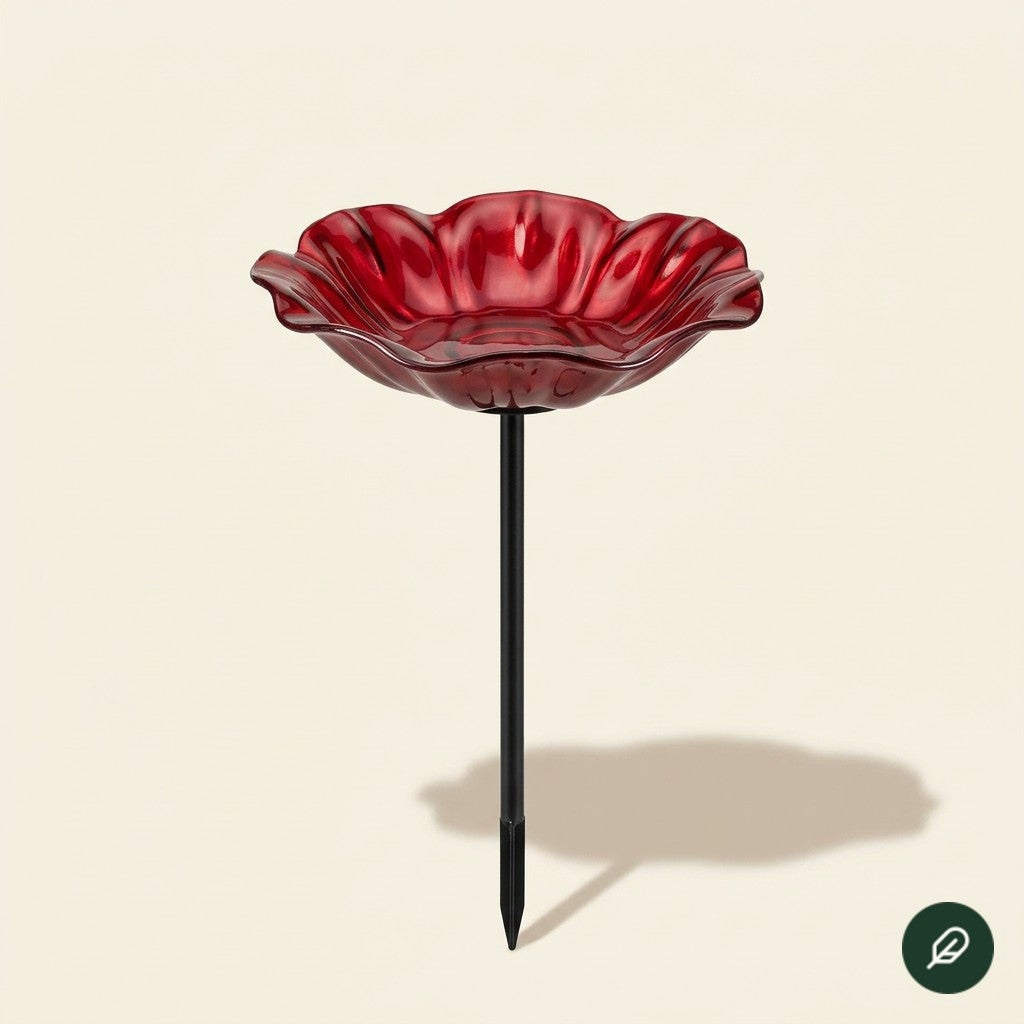
Flower Stake Bird Bath
A flower-shaped bird bath on a slim garden stake. The metal bowl holds water for drinking and bathing, and the dark center gives small birds a textured spot to grip. Push the stake into a flower bed or lawn and it's ready — no tools, no assembly beyond threading the bowl onto the stake. Bowl: 5.1 in (13 cm) across, flower-shaped, painted metal Stake: 17.3 in (44 cm) tall, black metal, pushes into soil Colors: Red, Blue, Orange, Purple Use: water for drinking and bathing; shallow depth suits small songbirds Care: tip out and rinse every few days in summer to keep water fresh and mosquitoes down Best placed near shrubs or cover so birds feel safe stopping to drink. Bring it in over hard freezes to protect the finish.
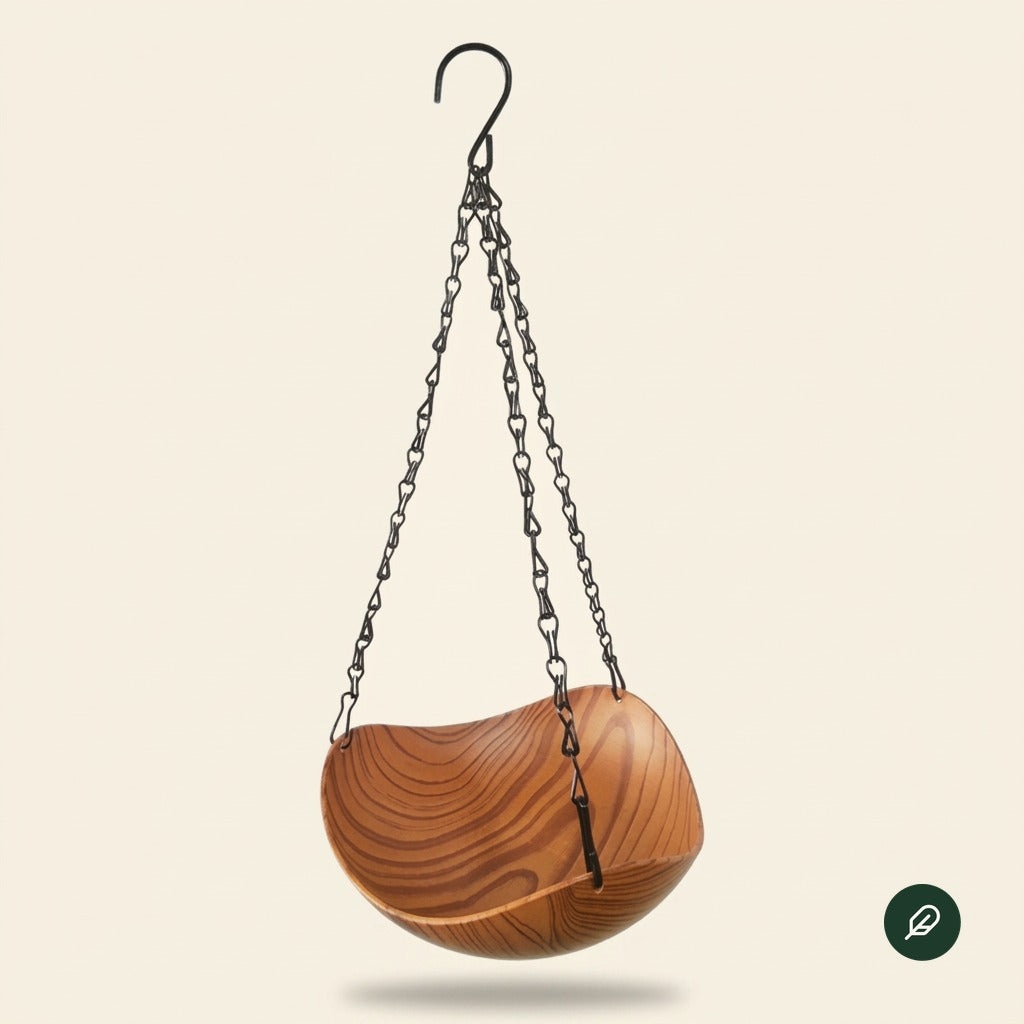
Hanging Basin Feeder and Water Bowl
A single open basin that hangs from a hook and does two jobs: a seed tray through the growing season, a shallow water bowl the rest of the year. Seed or water goes straight in — no reservoir, no perches, nothing to assemble beyond the hanging chains.Three chains run from the rim to one S-hook, so the basin hangs level under a bracket, a shepherd's hook or a low branch. Put it where you can watch it from a window, and where a cat can't launch from a fence.The rim is low and the floor is open, so birds can land anywhere around the edge instead of fighting over a perch. It also means the bowl needs wiping out every few days: hulls and droppings land in the water, and a rinse with hot water and a brush keeps it clean.The basin has a wood-grain finish and hangs from black metal chains.
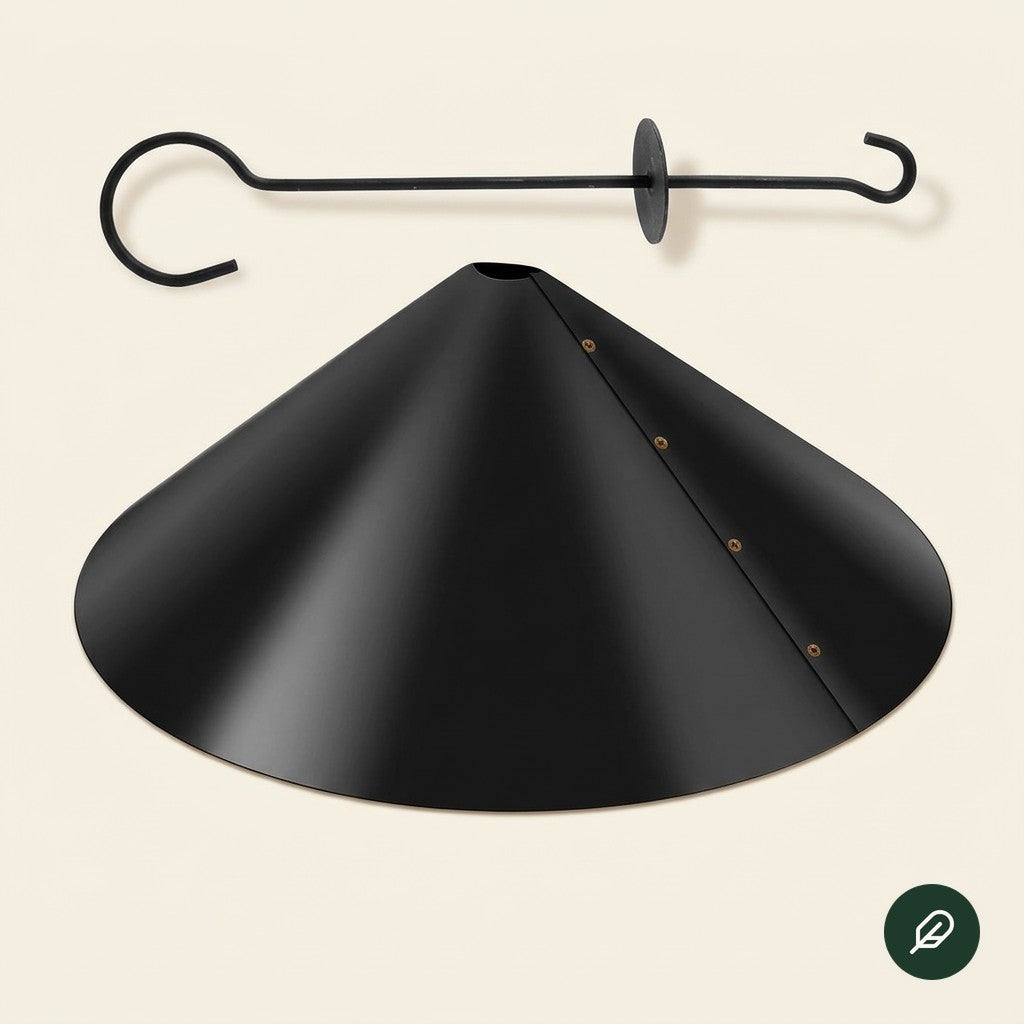
18-Inch Squirrel Baffle
A wide black baffle for helping keep squirrels from reaching a hanging or pole-mounted feeder. The cone measures 18 inches (45.7 cm) across. Choose the hanging-hook setup or pole-collar setup to suit your feeder station. Position the baffle so squirrels cannot bypass it from a nearby branch, railing, or roof.

- Nectar ratio
- 1 part white sugar : 4 parts water
- Cleaning
- Every 2 days above 85°F, every 4–5 days below 70°F
- Best design for bees
- Saucer (basin) feeder
- Placement
- Within 3 ft or beyond 30 ft of windows; partial shade
- Red dye
- Never needed — red feeder parts are enough
What a hummingbird feeder actually has to do
A hummingbird feeder is a small, temporary flower. It holds a sugar solution close to the concentration of the nectar hummingbirds drink from native blooms, presents it through ports sized for a bill and tongue, and keeps that liquid clean long enough for the birds to use it. Every design decision — the shape of the reservoir, the number of ports, the color, the material — either helps or hurts one of those three jobs.
Hummingbirds have the highest metabolic rate of any warm-blooded vertebrate other than some shrews. A Ruby-throated Hummingbird weighs about three grams and can visit hundreds of flowers a day. A feeder does not replace flowers, and it should not: the birds also need small insects and spiders for protein, especially while feeding nestlings. A feeder is a supplement that brings the birds close enough to watch, and a reliable fuel stop during migration and cold snaps.
Saucer vs. inverted feeders
There are two basic designs. Inverted (bottle) feeders hold nectar in an upside-down reservoir above the ports; a vacuum keeps it from pouring out. They hold more, show the nectar level at a glance, and suit busy yards. Their weakness is that heat expands the air trapped in the bottle and pushes nectar out of the ports, which drips, attracts bees and ants, and wastes solution in full sun.
Saucer (basin) feeders hold nectar in a shallow dish below the ports. They do not drip, the nectar sits too far below the port for most bees and wasps to reach, and they come apart flat for cleaning. They hold less and need refilling more often in a busy yard. For most homeowners — especially anyone fighting bees or ants — a saucer is the better default. Inverted feeders make sense in shaded, high-traffic Western yards where capacity matters more.
- Choose a feeder that disassembles completely. If a brush cannot reach every surface, mold will.
- Glass and hard polycarbonate clean better and last longer than soft or cloudy plastics.
- Built-in ant moats and bee guards are worth paying for; add-on versions work too.
- Red on the feeder itself is enough to attract birds. Yellow flower parts tend to attract bees.
How many ports and how many feeders
Port count matters less than feeder count. Hummingbirds are territorial; in many yards one dominant male — Rufous Hummingbirds are notorious for it — will guard a single feeder and chase every other bird away. Four ports on one feeder will not change that. Two or three small feeders placed out of sight of each other, around corners of the house or on opposite sides of a shrub bed, split territories and let more birds feed.
Size capacity to consumption, not ambition. Nectar spoils in days, so a 32-ounce reservoir that only drains two ounces before cleaning day wastes sugar and invites fermentation. Early in the season, fill feeders a quarter full. Increase the volume only as visits climb, which in most of the East happens in late summer when juveniles and migrants arrive.
Placement that works
Hang feeders in partial shade. Afternoon sun warms nectar, speeds fermentation, and drives inverted feeders to drip. Put a small tree or shrub within ten to fifteen feet so birds have a perch to rest and watch the feeder from; hummingbirds spend most of their day perched.
Mind windows. Feeders either closer than about three feet to glass or farther than thirty feet cut the risk of collisions: close enough that a startled bird cannot build speed, or far enough that it does not aim at a reflection. Keep feeders away from dense cover where cats can wait, and at least a few feet above the ground.
The cleaning schedule is the whole game
Most failed feeders are dirty feeders. Sugar water ferments and grows black mold, and hummingbirds will abandon a cloudy feeder — or worse, drink from it. Change the nectar and clean the feeder on a schedule set by temperature, not by how full it looks.
Rinse with hot water and scrub every port with a small bottle brush. Every week or two, or whenever you see black spots, soak the parts in a solution of one part white vinegar to four parts water, or a weak bleach solution, then rinse thoroughly. Skip dish soap unless you can rinse it away completely; residue lingers in ports.
- Above 90°F: change nectar daily.
- 81–90°F: every 2 days.
- 71–80°F: every 3 days.
- 70°F and below: every 4–5 days.
Where to go next in this cluster
This guide is the hub for the Perch Supply hummingbird library. The nectar recipe guide covers ratios, sugar types, and why red dye should never be used. The bee and wasp guide and the ant guide cover the two problems that drive most people to give up on feeders. The timing guide explains when to put feeders out and take them down in your part of North America, and the identification guide separates the Ruby-throated Hummingbird of the East from the Anna's Hummingbird of the Pacific Coast — the two species most feeder owners see.
Frequently asked
What is the best type of hummingbird feeder?
For most yards, a saucer (basin) feeder that disassembles fully. It does not drip, resists bees and wasps, and is easy to clean. Inverted bottle feeders suit shaded, high-traffic yards where capacity matters.
How often should I clean a hummingbird feeder?
Set it by temperature: daily above 90°F, every 2 days at 81–90°F, every 3 days at 71–80°F, and every 4–5 days at 70°F and below. Clean immediately if the nectar looks cloudy or you see black mold.
Where should I hang a hummingbird feeder?
In partial shade, with a perch within 10–15 feet, and either within 3 feet or more than 30 feet from windows. Hang multiple feeders out of sight of each other to reduce territorial chasing.
Do hummingbird feeders need to be red?
The feeder parts should be red, since hummingbirds key on that color. The nectar itself should be clear — never add red dye.
Keep reading
Hummingbird Nectar Recipe: The 1:4 Ratio and Why It Works
The only nectar recipe you need — one part white sugar to four parts water — plus why honey, brown sugar, and red dye are harmful, and how long homemade nectar keeps.
HummingbirdsHow to Keep Bees Away from a Hummingbird Feeder
Why bees and yellowjackets swarm hummingbird feeders, which feeder designs keep them out, and the fixes that work without pesticides or harming the birds.
HummingbirdsAnt Moat for a Hummingbird Feeder: Keep Ants Out
How an ant moat works, how to hang and maintain one, and the other bird-safe ways to stop ants from reaching your hummingbird nectar.
HummingbirdsWhen to Put Out and Take Down Hummingbird Feeders, by Region
Arrival and departure windows for hummingbirds across the United States and Canada, plus why leaving a feeder up in fall does not stop migration.
HummingbirdsRuby-throated vs. Anna's Hummingbird: How to Tell Them Apart
Range, gorget color, crown, size, voice, and season — a field-mark comparison of North America's two most common feeder hummingbirds.