Ant Moat for a Hummingbird Feeder: Keep Ants Out
How an ant moat works, how to hang and maintain one, and the other bird-safe ways to stop ants from reaching your hummingbird nectar.
9 min read · Updated 2026-10-24
Equipment for this job
Keep your existing feeder and add a water-cup hook, or choose the five-port feeder that includes a separate moat. The four-pack contains four red metal moat hooks and four small brushes; fill the cups with plain water.
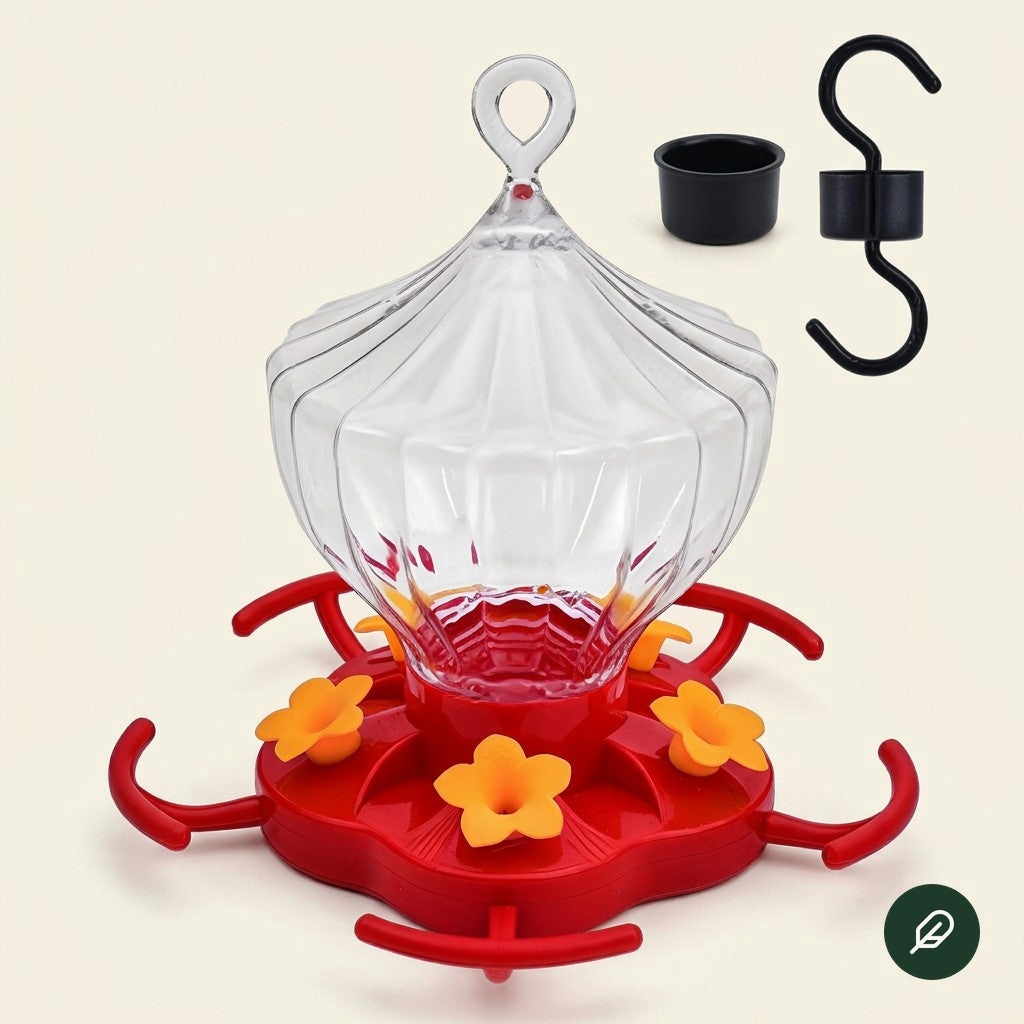
Five-Port Hummingbird Feeder
A compact red hummingbird feeder with a clear 8-ounce reservoir, five flower-shaped feeding ports, and five curved perches. The set includes a separate ant-moat cup and an S-hook for hanging. The wide base separates for routine washing. Use plain white sugar nectar at a 1:4 sugar-to-water ratio; never add dye.
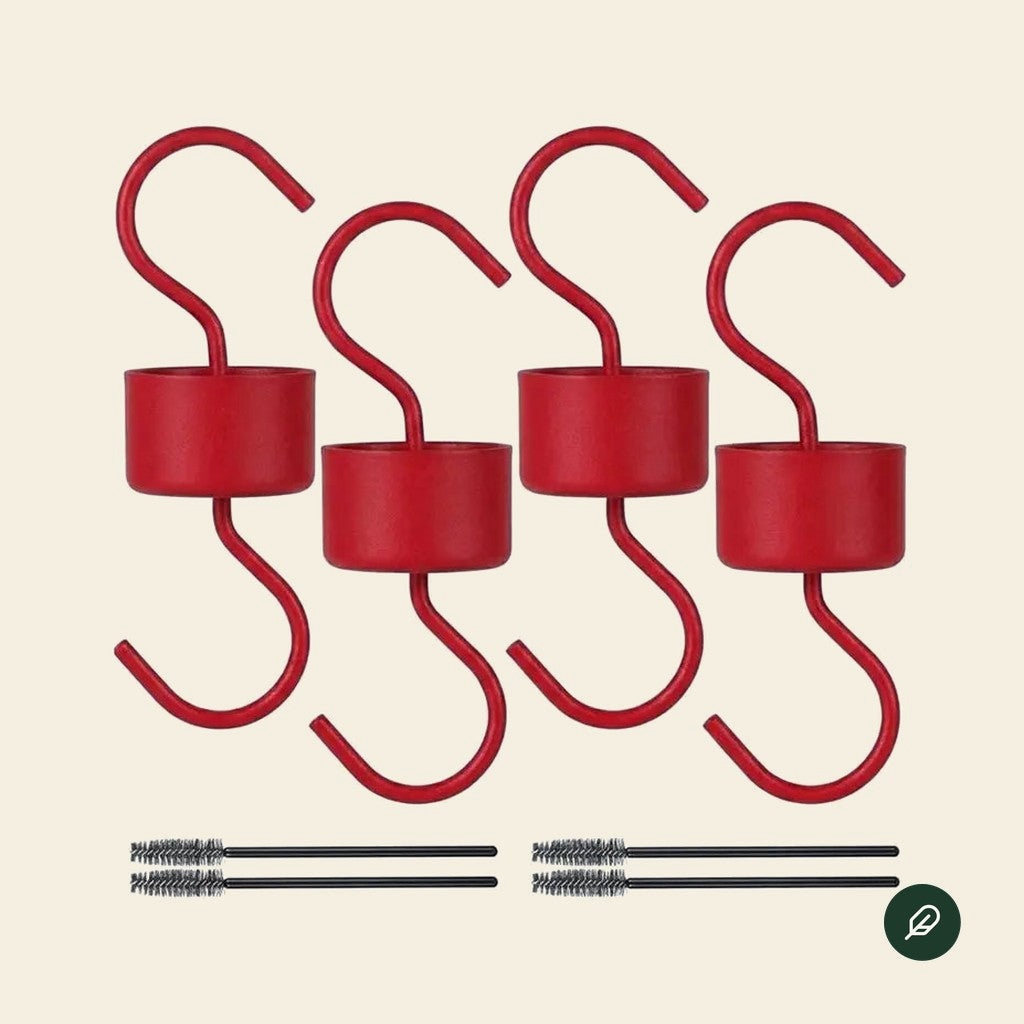
Hummingbird Ant Moat Hooks, 4-Pack
Four red metal S-hooks, each with a built-in water cup. Hang the hook from your bracket, hang the feeder below it, and fill the cup with water. Ants walking down toward the nectar hit the water and stop.Specs Material: metal with red coating Pack: 4 moat hooks + 4 small cleaning brushes Fits most hanging feeders with a wire or loop hanger Use Plain water only. Never add oil or insecticide to the cup. Top up every few days in hot weather; a dry moat does nothing.

- Main fix
- Water-filled ant moat above the feeder
- Moat depth
- About 1 inch of plain water
- Refill
- Check daily; top up before the cup dries
- Never use
- Oil, grease, or insecticide in the moat
The quick fix: water in the hanger path
Hang a water-filled ant moat between the support and the feeder. Keep the feeder clear of branches, leaves, walls and railings so every climbing route passes through the moat. Empty contaminated nectar, wash the feeder, refill it with fresh nectar and wipe away sticky spills. Check the moat daily: a dry cup or a leaf bridging the water lets ants straight through.
An add-on moat is the first purchase to consider if your feeder is otherwise sound. You do not need to replace the entire feeder just because ants have found it. A feeder with a separate or built-in moat makes sense when the old base leaks, has damaged seals or is difficult to clean.
Why ants in the nectar matter
A trail of ants into a hummingbird feeder is more than a nuisance. Ants that fall into the nectar drown and contaminate it, speeding spoilage. A crowd of ants on the ports puts hummingbirds off feeding, and in hot weather a feeder can go from clean to fouled in a single afternoon. Ants are persistent: once a colony's scouts find a sugar source, they recruit the rest by laying a scent trail along the pole, wire, or branch that leads to it.
The fix is to break that path with a barrier ants cannot cross, rather than trying to kill the ants. A physical barrier works for the whole season and does nothing to harm the birds.
How an ant moat works
An ant moat is a small cup that hangs between the hook and the feeder. The hanger passes up through the middle of the cup, so the only route from the hook down to the feeder runs through water. Ants cannot swim across it and will not climb down into it. Fill the cup with about an inch of plain water and the path is closed.
Many modern feeders have a moat built into the top of the feeder. Add-on moats cost little and fit almost any hanging feeder. Choose one with a cup at least two inches across, since smaller moats evaporate quickly in summer heat, and a hook on the bottom sturdy enough to hold a full feeder.
- Hang the moat directly above the feeder, not beside it.
- Use plain water only. Never add soap, oil, or insecticide — hummingbirds sometimes drink or bathe from moats.
- Check the moat each time you change nectar; refill more often in hot, dry weather.
- Clear out drowned insects and debris so they cannot form a bridge.
Close every other path
A moat only protects the route through the hanger. Ants will find any other bridge: a branch touching the feeder, a leaf resting on the reservoir, or a wall behind it. Hang the feeder so nothing but the hanger touches it, clear of foliage and structures by at least a few inches.
Leaks create a second problem. Nectar dripping onto the ground or pooling on a deck below draws ants from the ground up, and a leaking feeder can attract ants onto the pole no matter what is above. Saucer feeders, which do not drip, solve this for most people. With inverted feeders, keep them in shade, check seals, and rinse the area under the feeder.
Other bird-safe options
Nylon fishing line is a simple extra barrier. Hanging a feeder from a length of thin monofilament gives ants a slippery, narrow path they tend to abandon, and it keeps the feeder away from branches. It works best combined with a moat.
Moving the feeder even a few feet breaks an established ant trail. Ants follow scent, and a relocated feeder takes them time to rediscover — time a moat can use to close the new route.
Setting up a feeder the ant-proof way
Most ant trouble starts on day one with how the feeder is hung. Getting the setup right avoids months of fighting trails later.
Start with the hanger. Use a shepherd's hook or a bracket that places the feeder at least a foot away from walls, railings, and foliage, and hang the feeder from it with the ant moat in between. A plain metal pole in the open is ideal. If the only spot is on a tree limb, choose a branch that extends out into the open, hang the feeder from a line of fishing monofilament at least a foot long, and put the moat at the top of the line.
Next, check what grows toward the feeder. Vines, shrubs, and tall perennials fill in over summer, and a leaf that brushes the reservoir in July gives ants a path the moat cannot cover. Trim back anything within a few inches of the feeder once a month in the growing season. Finally, look at the ground below. A drip-free saucer feeder over a lawn or mulch bed rarely draws ants from below. An inverted feeder over a deck or patio should be checked and rinsed often.
With this setup, most yards see ants only when the moat dries out — which is why checking the moat at every nectar change is the one habit worth keeping all season.
- Hang from a hook or bracket at least a foot from structures.
- Moat between hook and feeder; fishing line for tree branches.
- Trim foliage monthly during summer.
- Check the ground beneath inverted feeders.
What not to do
Do not smear petroleum jelly, cooking oil, grease, or sticky insect barriers on the hanger or feeder. A hummingbird that brushes against them gets oil on its feathers, which damages insulation and waterproofing and is difficult for a bird that small to remove. Do not spray insecticide around a feeder or on the pole. Hummingbirds eat small insects and spiders, and any residue ends up in them.
Pair the ant moat with the bee and wasp guide if flying insects are also a problem, and see the pillar hummingbird feeder guide for choosing a drip-free saucer feeder and setting a cleaning schedule.
Buying an ant moat: fit matters more than decoration
Check the hanger arrangement before ordering. The top hook must fit your bracket, and the lower hook must take the feeder's loop with enough room for the feeder to hang level. Confirm the support can carry the feeder when full; a moat is not a way to strengthen an overloaded branch or hook. We do not give a load rating where the manufacturer has not provided one.
Choose a cup you can see and reach from the ground. A larger water surface may last longer between refills, but exposure, wind and heat still decide how quickly it dries. Test a new cup over a sink, then hang it outside and check it the next morning. If it loses water without visible evaporation, inspect seams and joints before using it above nectar.
- Use plain water, never nectar, oil, detergent or insecticide in the moat.
- Keep the moat upright and keep foliage from touching either the feeder or hanger below it.
- Empty debris and refill daily as needed, especially in hot or windy weather.
- If ants remain, inspect the route before buying another moat: a bypass defeats any cup.
Ant-moat reference
Cornell Lab recommends a water-filled ant guard or a feeder with a built-in moat. The barrier must stay filled; feeder hygiene still matters.
Frequently asked
Do ant moats really work?
Yes, when they are kept filled and the moat is the only path to the feeder. Ants cannot cross the water. Keep branches and walls from touching the feeder so they cannot bypass it.
What do I put in an ant moat?
Plain water only, about an inch deep. Never add oil, soap, or insecticide, since hummingbirds sometimes drink or bathe from the moat.
Can I use Vaseline to keep ants off a hummingbird feeder?
No. Petroleum jelly and oils can get on hummingbird feathers and harm the birds. Use a water moat and fishing-line hanger instead.
Why do ants keep getting into my feeder?
Usually because the moat has dried out, a branch or wall touches the feeder, or the feeder is leaking nectar onto the ground below.
Keep reading
Hummingbird Feeders: The Complete Buyer's and Care Guide
How to choose, place, fill, and clean a hummingbird feeder — saucer vs. inverted, port count, materials, and the maintenance schedule that keeps nectar safe.
HummingbirdsHummingbird Nectar Recipe: The 1:4 Ratio and Why It Works
The only nectar recipe you need — one part white sugar to four parts water — plus why honey, brown sugar, and red dye are harmful, and how long homemade nectar keeps.
HummingbirdsHow to Keep Bees Away from a Hummingbird Feeder
Why bees and yellowjackets swarm hummingbird feeders, which feeder designs keep them out, and the fixes that work without pesticides or harming the birds.
HummingbirdsWhen to Put Out and Take Down Hummingbird Feeders, by Region
Arrival and departure windows for hummingbirds across the United States and Canada, plus why leaving a feeder up in fall does not stop migration.
HummingbirdsRuby-throated vs. Anna's Hummingbird: How to Tell Them Apart
Range, gorget color, crown, size, voice, and season — a field-mark comparison of North America's two most common feeder hummingbirds.