Bird Baths for UK Gardens: Depth, Placement and Keeping Ice Off
A bird bath is often more useful than another feeder. How deep it should be, where to put it, how often to clean it, and how to keep water open on a frosty British morning without chemicals.
7 min read · Updated 2026-10-27
Equipment for this job
Shallow, unpowered baths that suit small garden birds. We deliver to the UK.
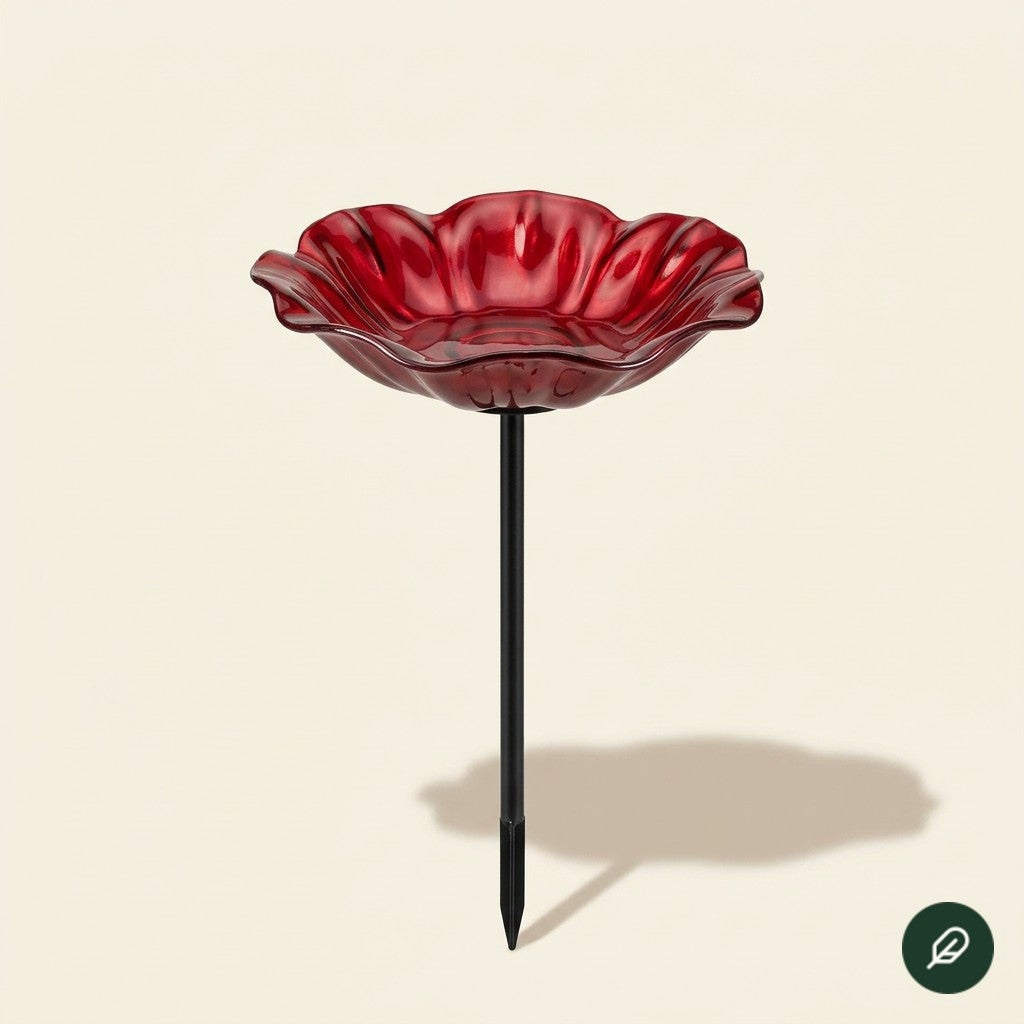
Flower Stake Bird Bath
A flower-shaped bird bath on a slim garden stake. The metal bowl holds water for drinking and bathing, and the dark center gives small birds a textured spot to grip. Push the stake into a flower bed or lawn and it's ready — no tools, no assembly beyond threading the bowl onto the stake. Bowl: 5.1 in (13 cm) across, flower-shaped, painted metal Stake: 17.3 in (44 cm) tall, black metal, pushes into soil Colors: Red, Blue, Orange, Purple Use: water for drinking and bathing; shallow depth suits small songbirds Care: tip out and rinse every few days in summer to keep water fresh and mosquitoes down Best placed near shrubs or cover so birds feel safe stopping to drink. Bring it in over hard freezes to protect the finish.
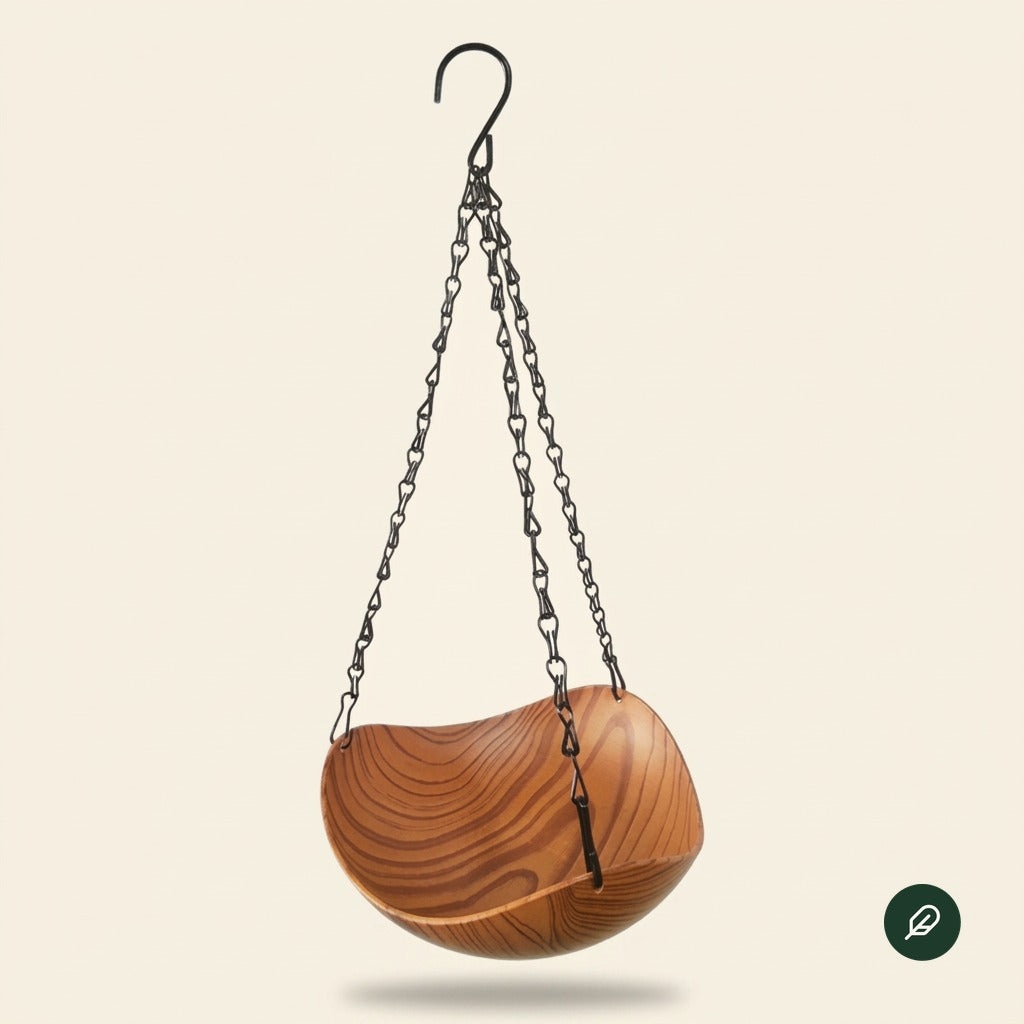
Hanging Basin Feeder and Water Bowl
A single open basin that hangs from a hook and does two jobs: a seed tray through the growing season, a shallow water bowl the rest of the year. Seed or water goes straight in — no reservoir, no perches, nothing to assemble beyond the hanging chains.Three chains run from the rim to one S-hook, so the basin hangs level under a bracket, a shepherd's hook or a low branch. Put it where you can watch it from a window, and where a cat can't launch from a fence.The rim is low and the floor is open, so birds can land anywhere around the edge instead of fighting over a perch. It also means the bowl needs wiping out every few days: hulls and droppings land in the water, and a rinse with hot water and a brush keeps it clean.The basin has a wood-grain finish and hangs from black metal chains.

- Depth
- Sloping from about 2.5 cm to no more than 10 cm
- Surface
- Rough or textured, so feet grip
- Placement
- In the open, about 2 m from cover
- Clean
- Rinse daily or every few days; scrub weekly
- Ice
- Warm (not boiling) water or a floating ball — never salt or antifreeze
Why water matters as much as food
Birds drink every day and bathe often, even in winter, because clean feathers trap air and keep them warm. In a dry spell or a hard frost, clean open water can be the hardest thing in the garden to find. A bath brings in birds that rarely use feeders — Blackbirds, Song Thrushes, Starlings, Wrens and, in late summer, flocks of Goldfinches.
Shape and depth
Most garden birds are small and wade rather than swim. The RSPB recommends a bath with gently sloping sides, ranging from about 2.5 cm at the edge to no more than 10 cm in the middle, so every size of bird can find a comfortable depth. A shallow dish, an upturned dustbin lid or a plant saucer sunk into a border all work.
Texture matters. Glazed ceramic and smooth glass are slippery; birds avoid them or use them nervously. Stone, concrete or textured resin give feet a grip. If you love a smooth bath, put a few flat stones in it to stand on.
Where to put it
Bathing birds are wet and slow to take off, so they're vulnerable. Place the bath in the open with a clear view all round, about two metres from a shrub or hedge they can retreat to, but not so close that a cat can wait unseen. Partial shade keeps the water cooler and slows algae in summer. A raised bath on a pedestal or stake keeps birds above cat height; a ground-level dish suits Blackbirds and thrushes.
Keeping it clean
A bath shared by dozens of birds a day gets fouled quickly. Trichomonosis, which has hit Greenfinch and Chaffinch numbers in the UK, spreads through contaminated water as well as food. Tip out and refill every day or two, and scrub weekly with a stiff brush and hot water. For stubborn algae, a weak solution of white vinegar works; rinse well before refilling. Avoid bleach and household cleaners unless you rinse very thoroughly and let the bath dry.
If you see sick birds, empty the bath and stop feeding for at least two weeks.
Keeping ice off in winter
A British winter brings plenty of nights a few degrees below zero and the occasional proper freeze. On those mornings an open bath is a lifeline. Methods that work without electricity:
- Pour warm (not boiling) water on the ice to melt it, then top up with fresh water. Boiling water can crack a stone or concrete bath.
- Float a ping-pong ball or small plastic ball; the breeze keeps it moving and stops a thin film of ice forming.
- Use a dark-coloured bath in a sunny spot; it warms faster in the day.
- Bring a lightweight dish in at night and put it out again in the morning.
- Never add salt, glycerine or antifreeze. They damage feathers and can poison birds.
A note on electric heaters
Bath heaters and deicers sold in North America run on 120 V and plug into US/Canadian sockets. They aren't suitable for UK mains and shouldn't be used with a plug adaptor. If you want a heated bath in the UK, buy a unit made for 230 V with a UK plug and a recognised safety mark, and run it from an outdoor-rated, RCD-protected socket. We don't sell UK-voltage heaters, so for UK gardens we recommend the unpowered methods above.
Summer
In a hot spell, a bath can empty in a day through drinking, splashing and evaporation. Check it every morning. Mosquito larvae need about a week of still water to develop, so emptying and refilling every few days stops them before they hatch.
Which birds you'll see
In most British gardens the regular bathers are Blackbirds, Starlings, House Sparrows, Robins, Blue and Great Tits, Goldfinches and Woodpigeons. Starlings arrive in groups and can empty a small bath of water in minutes; a wider basin copes better. Song Thrushes and Dunnocks prefer a ground-level dish near cover. In late summer, young birds that have just fledged often visit in numbers, and in dry spells you may see Jays, Great Spotted Woodpeckers and even Sparrowhawks stopping to drink.
Sources
Depth and hygiene guidance follows the RSPB.
Frequently asked
How deep should a bird bath be in the UK?
Sloping from around 2.5 cm at the edge to no more than 10 cm at the deepest point, so small and larger birds can both use it.
How do I stop my bird bath freezing without electricity?
Pour on warm (not boiling) water, float a small ball on the surface, or bring a light dish in overnight. Never use salt or antifreeze.
Can I use an American bird bath heater in the UK?
No. Those run on 120 V. In the UK you would need a 230 V unit with a UK plug, run from an RCD-protected outdoor socket.
How often should I clean a bird bath?
Refill every day or two and scrub weekly with hot water and a brush.
More UK garden guides
- Window Bird Feeders in the UK: Which Birds Use Them and How to Make One Stick
A suction-cup feeder on the glass is the easiest way to feed birds from a flat, a terrace with no garden, or a kitchen window. What visits, what to put in it, and how to stop it sliding off in the cold.
- How to Set Up a Bird Feeding Station in a UK Garden
A good feeding station is about placement more than the pole. Where to put it, how high, what to hang on each arm, and how to keep it from feeding the local squirrels, pigeons and Sparrowhawk.
- Robin Bird Box: Open-Front Design, Height and Where to Put It
Robins won't use a box with a small round hole. They want an open-fronted box, low down and well hidden. The dimensions, the best spots in a British garden, and when to put it up.
- Squirrel-Proof Bird Feeders in the UK: What Stops Grey Squirrels
Grey squirrels are clever, persistent and widespread across Britain. Which feeders actually keep them out, how far they jump, and what to do if red squirrels visit your garden.
More troubleshooting
- Why Birds Stopped Coming to Your Feeder (and What to Do by Season)
- Keeping House Sparrows Out of Bluebird and Chickadee Boxes
- A Hawk Is Hunting at My Bird Feeder: What It Means and What to Do
- Keep Squirrels Off a Shepherd's Hook and Out of Feeders
- How to Get Rid of Grackles at Your Feeders (Without Losing the Birds You Want)
- How to Keep Starlings Off Your Feeders (Suet, Seed and Nest-Box Problems)
- How to Stop Raccoons Raiding Your Bird Feeders (and Your Nest Boxes)
- Bears and Bird Feeders: When to Take Feeders Down (and How to Feed Birds in Bear Country)
- How to Stop Rats and Mice Moving In Under Your Bird Feeders
- Bird Feeder Placement: Height, Distance and Sightlines That Actually Work
- How to Keep Cats Away From Your Bird Feeders (Yours and the Neighbors')
- Sick Birds at Your Feeder: House Finch Eye Disease, Salmonella and What To Do
- How to Keep Crows and Jays From Taking Over Your Feeders
- Why a Woodpecker Is Pecking Your House (and How to Make It Stop)
- Choosing and Placing a Bird Bath: Depth, Material, Moving Water and Location
- How to Clean a Bird Bath: Algae, Safe Cleaning and Mosquitoes
- Bird Bath Water Through the Seasons: Freezing Winters and Summer Heat
- Why Birds Won't Use Your Bird Bath: 8 Common Reasons and Fixes
- Heated Bird Baths in Canada: Keeping Water Open at -20°C
- Winter Bird Feeding in Canada: Foods, Feeders and What Shows Up
- Squirrel-Proof Bird Feeders in Canada: Red, Grey and Black Squirrels
- Bird Feeders for Condos and Balconies in Canada
- How to Attract Chickadees in Canada: Food, Nest Boxes and Winter Care
- Caged Bird Feeders: Keep Out Squirrels, Starlings and Grackles
- Upside-Down Suet Feeders: Feed Woodpeckers, Not Starlings
- Window Bird Feeders: Which Ones Stay Up, and Which Birds Come
- Bird Feeder Pole Setup: Height, Depth and Baffle Placement
- Deck Railing Bird Feeders: Mounting, Mess and Squirrels