How to Get Rid of Grackles at Your Feeders (Without Losing the Birds You Want)
Common Grackles arrive in mobs, empty a tube feeder in an hour and scare off everything smaller. The fix is feeder physics and seed choice, not scare tactics.
8 min read · Updated 2026-10-01
Equipment for this job
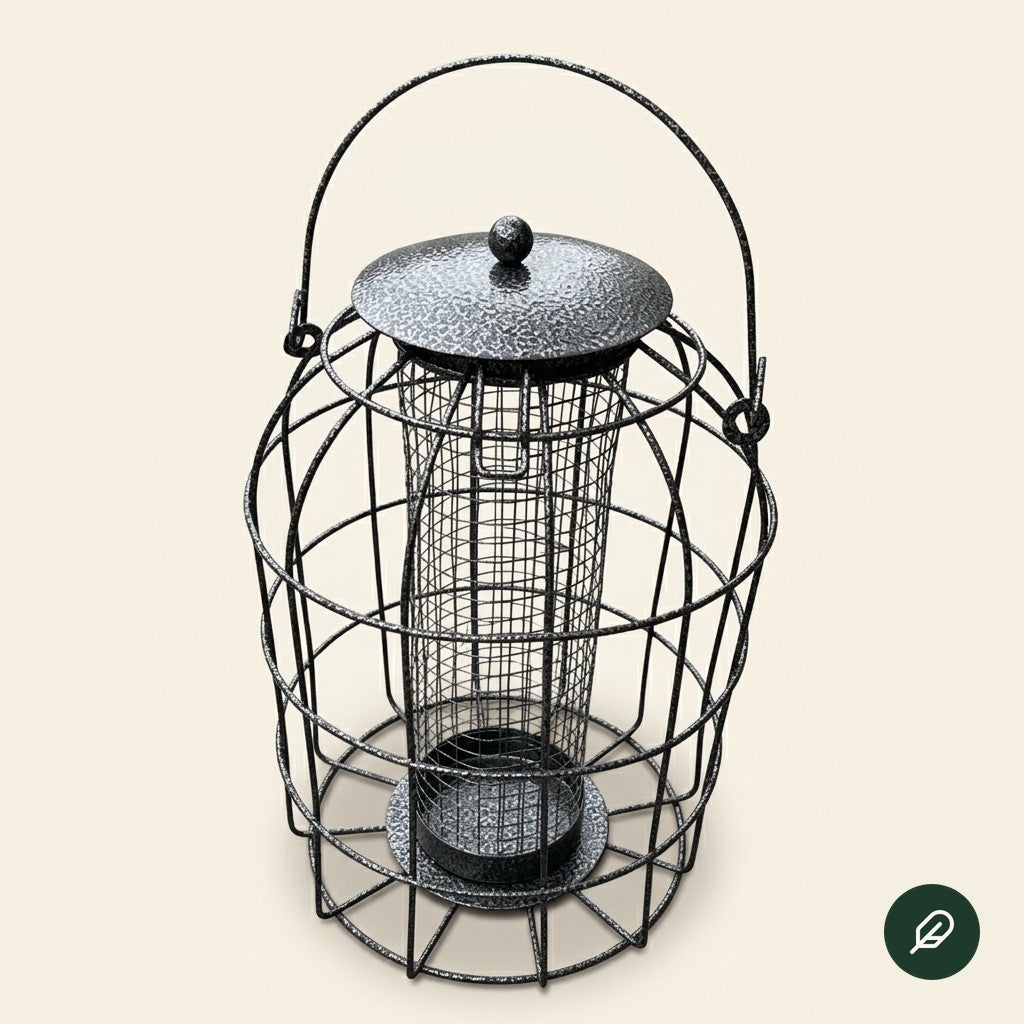
Caged feeders are the passive, all-season grackle fix — small birds reach the seed, blackbirds can't.

- Body length
- 11–13 in — too big for small perches and cage grids
- Seed they avoid
- Safflower and nyjer; they relish sunflower, corn, millet
- What works best
- Caged feeders, small perches, safflower-only stations
- Peak pressure
- March–April migration and late-summer family flocks
- Legal note
- Grackles are protected under the Migratory Bird Treaty Act
Why grackles take over
A Common Grackle is an eleven-to-thirteen-inch, long-tailed blackbird with a strong bill and a bold disposition. They don't visit feeders one at a time the way cardinals do — they arrive as a rolling flock, dominate every perch by sheer size, and eat with the efficiency of animals that must win every contest. A dozen grackles can empty a large tube feeder in a morning. Smaller birds don't get bullied so much as simply crowded out; a chickadee cannot land where a grackle is flailing.
The pressure comes in waves. Big flocks move through during March–April migration and again in late summer when fledged young form family groups that roam until fall. In much of the country grackles are year-round residents, so a yard on their route feels it every season. The good news: grackles are big-bodied, ground-feeding, sunflower-loving birds, and every one of those traits is a design constraint you can exploit.
The physical fix: feeders too small for them
Grackles weigh three to five ounces with a body and tail span that simply does not fit small spaces. A caged tube feeder — a standard tube surrounded by a wire grid with roughly 1.5-inch gaps — lets chickadees, finches, nuthatches and even goldfinches reach the ports while shutting out grackles, doves, jays and squirrels alike. This is the single most effective anti-grackle hardware because it's passive: it works whether you're home or not, all year, with no adjustment.
Short perches do the same job differently. Grackles need a landing platform; tube feeders with short, straight perches and no tray are awkward for them, while hopper and tray feeders are grackle paradise. If grackles have claimed your feeder, retire the hopper and tray during heavy season and run tubes and caged feeders only. Upside-down suet feeders exploit the same physics: grackles and starlings refuse to hang inverted, while nuthatches, chickadees and woodpeckers do it all day.
- Caged tube feeder: best all-season defense; also blocks squirrels and jays.
- Tube feeders with short perches, no tray, no wide seed hopper.
- Upside-down suet feeder: woodpeckers eat, blackbirds don't.
- Pull tray and hopper feeders during March–April and late-summer flock season.
The food fix: change what's on the menu
Grackles love sunflower, cracked corn, millet and bread — essentially everything in a standard mix. They noticeably avoid safflower, whose thick, bitter seed they handle poorly, while cardinals, chickadees, titmouses, House Finches and doves eat it readily. Running your main feeder on pure safflower during grackle season cuts their interest dramatically without costing you the birds you actually want. Nyjer-only feeders for goldfinches are also grackle-proof in practice: the tiny ports make them inefficient to raid.
Ground feeding is where most grackle calories come from, so what lands under the feeder matters as much as what's in it. Cheap seed mixes full of milo and corn get flung to the ground by songbirds and swept up by grackle flocks, which then linger and try the feeders. Feed clean single seeds in small amounts, and rake up hulls and spillage weekly. If grackles are also robbing nests in your yard — they do take eggs and nestlings — placement is your only lever: nest boxes should have predator guards and be mounted away from the feeder station.
What doesn't work (and what's illegal)
Scare tactics fail against grackles faster than against almost any bird. They habituate to fake owls in days, they ignore reflective tape, and they learn that noise-makers mean nothing. Shooting or poisoning them is illegal — Common Grackles are protected under the Migratory Bird Treaty Act, and the depredation permits that exist apply to agricultural operations, not yards. Trapping and relocating is also prohibited in most states and ineffective anyway; new birds refill the territory within days.
Nest-box trapping of House Sparrows (a different, non-native problem) is legal in the US; grackle nests in shrubs and conifers are not something to interfere with, and honestly, grackles near the yard are only a two-season problem. The design changes above solve the feeder issue permanently, and most people who make them report the grackles stop coming within a couple of weeks once the payoff disappears.
When grackles are actually a gift
It's worth remembering what you're watching while you wait for them to give up: grackles eat enormous quantities of insects, including armyworms, cutworms, grasshoppers and pest beetles that damage gardens and crops. A migrating flock can strip a lawn of moth larvae. In spring, they forage heavily on agricultural pests. The birds you're excluding are doing free pest control a quarter-mile away from your tomatoes.
So the goal isn't war; it's allocation. Give the grackles a ground-feeding corner at the yard's far edge — cracked corn scattered under a tree a hundred feet from your feeders — and defend the main station with caged tubes and safflower. Yards that split the difference report fewer raids on the good feeders, and the flocks still get fed somewhere they can't do damage.
Frequently asked
What is the fastest way to get rid of grackles?
Switch the main feeder to caged tubes with safflower seed, and pull tray and hopper feeders for a couple of weeks. Most flocks lose interest in under two weeks.
Do grackles eat safflower seed?
Rarely. Safflower is the standard anti-blackbird seed; cardinals, chickadees and finches still eat it.
Are grackles protected?
Yes — Common Grackles are protected under the Migratory Bird Treaty Act. Harming, trapping or killing them without a permit is a federal offense.
Why do grackles come in flocks?
They migrate and forage socially. March–April and late summer (family flocks) bring the biggest mobs; pressure is seasonal even in year-round yards.
More troubleshooting
- Why Birds Stopped Coming to Your Feeder (and What to Do by Season)
- Keeping House Sparrows Out of Bluebird and Chickadee Boxes
- A Hawk Is Hunting at My Bird Feeder: What It Means and What to Do
- Keep Squirrels Off a Shepherd's Hook and Out of Feeders
- How to Keep Starlings Off Your Feeders (Suet, Seed and Nest-Box Problems)
- How to Stop Raccoons Raiding Your Bird Feeders (and Your Nest Boxes)
- Bears and Bird Feeders: When to Take Feeders Down (and How to Feed Birds in Bear Country)
- How to Stop Rats and Mice Moving In Under Your Bird Feeders
- Bird Feeder Placement: Height, Distance and Sightlines That Actually Work
- How to Keep Cats Away From Your Bird Feeders (Yours and the Neighbors')
- Sick Birds at Your Feeder: House Finch Eye Disease, Salmonella and What To Do
- How to Keep Crows and Jays From Taking Over Your Feeders
- Why a Woodpecker Is Pecking Your House (and How to Make It Stop)
- Choosing and Placing a Bird Bath: Depth, Material, Moving Water and Location
- How to Clean a Bird Bath: Algae, Safe Cleaning and Mosquitoes
- Bird Bath Water Through the Seasons: Freezing Winters and Summer Heat
- Why Birds Won't Use Your Bird Bath: 8 Common Reasons and Fixes
- Window Bird Feeders in the UK: Which Birds Use Them and How to Make One Stick
- How to Set Up a Bird Feeding Station in a UK Garden
- Robin Bird Box: Open-Front Design, Height and Where to Put It
- Squirrel-Proof Bird Feeders in the UK: What Stops Grey Squirrels
- Bird Baths for UK Gardens: Depth, Placement and Keeping Ice Off
- Heated Bird Baths in Canada: Keeping Water Open at -20°C
- Winter Bird Feeding in Canada: Foods, Feeders and What Shows Up
- Squirrel-Proof Bird Feeders in Canada: Red, Grey and Black Squirrels
- Bird Feeders for Condos and Balconies in Canada
- How to Attract Chickadees in Canada: Food, Nest Boxes and Winter Care
- Caged Bird Feeders: Keep Out Squirrels, Starlings and Grackles
- Upside-Down Suet Feeders: Feed Woodpeckers, Not Starlings
- Window Bird Feeders: Which Ones Stay Up, and Which Birds Come
- Bird Feeder Pole Setup: Height, Depth and Baffle Placement
- Deck Railing Bird Feeders: Mounting, Mess and Squirrels