How to Keep Crows and Jays From Taking Over Your Feeders
Crows empty feeders in minutes, raid other birds' nests, and mob the yard. But they're also the smartest birds you'll ever host. Here's how to set boundaries that stick.
7 min read · Updated 2026-10-01
Equipment for this job
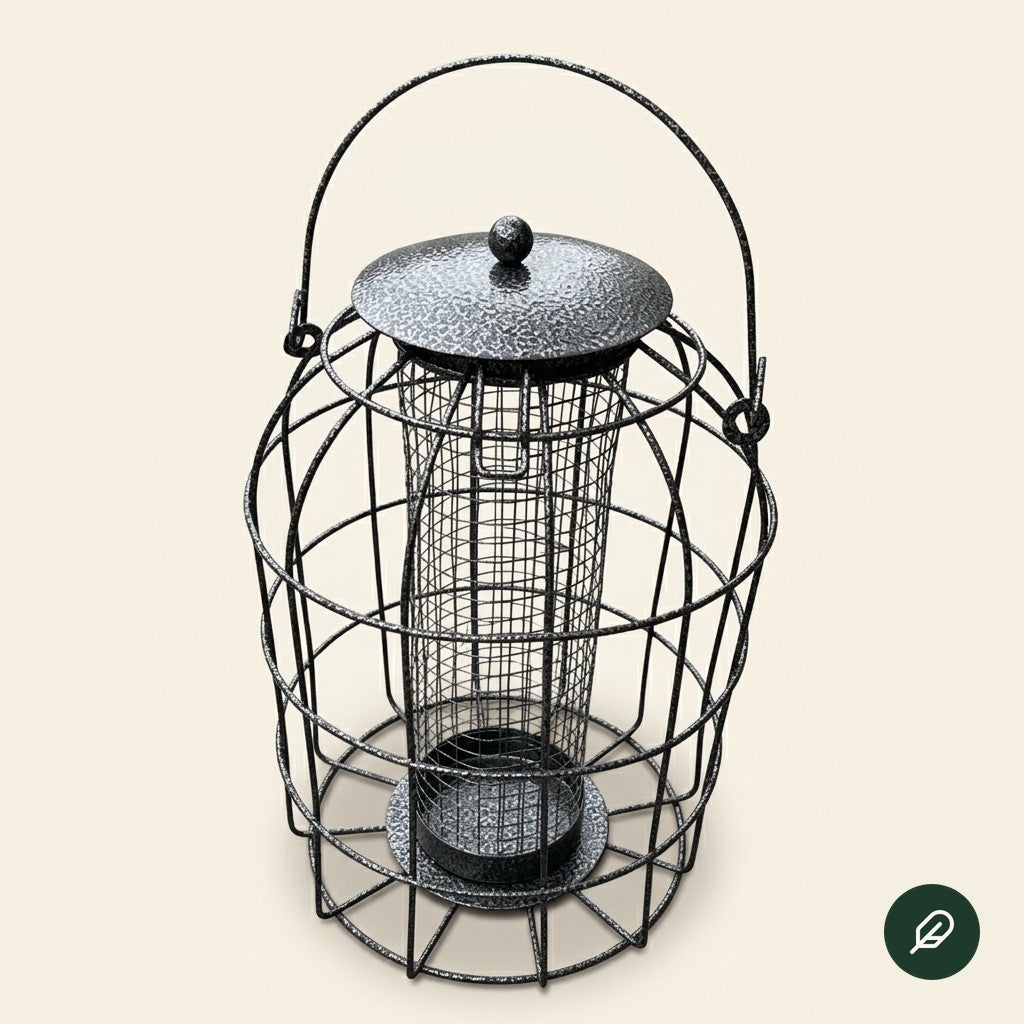
Caged feeders shut out crows and jays while letting chickadees, finches and nuthatches feed in peace.

- Intelligence
- Among the smartest animals tested — they remember faces and solutions for years
- Weakness
- Too heavy for small perches; can't hang or cling
- Food they want
- Peanuts, corn, suet, table scraps, large seeds
- Defense
- Caged feeders, small ports, no ground scatter, no unshelled peanuts
- Legal
- Crows are protected (MBTA); some states allow limited depredation control
The smartest problem at your feeder
American Crows are corvids — the bird family that includes ravens, jays and magpies, and the group that keeps topping animal-intelligence studies. A crow can solve a multi-step puzzle, recognize an individual human face for years, hold grudges against people who have threatened them, and teach other crows both the faces and the solutions. This matters for feeder defense in a practical way: any trick you use on a crow gets learned, shared and neutralized, usually within days. Scare tactics are essentially useless against crows.
The pressure is real. A family group of crows — crows travel in family units, not random flocks — can strip a feeder in minutes, dominate every station by size and coordination, and post sentries that warn the group. They also eat eggs and nestlings of songbirds in spring, which is why many backyard birders hold a grudge. But the same intelligence that makes them a pest problem makes them fascinating: yards that learn to manage crows often end up with a working truce, and some birders become devoted crow feeders once they see the problem-solving up close.
Physical defenses: size is their weakness
Crows weigh about a pound and need a landing platform — they can't cling to wire, hang upside-down, or balance on a small straight perch. Everything that shuts out grackles and starlings also shuts out crows: caged tube feeders (the grid gaps admit songbirds, not a crow), tube feeders with short perches and no trays, and upside-down or caged suet feeders. A crow can't physically exploit any of them. Hopper feeders, platform trays and ground scatter are the opposite — crow infrastructure; retire them during heavy pressure.
Where you put the food matters too. Crows patrol from above and from fence lines; a station in open view with a wide tray reads as a public buffet. Small-perch tubes hanging under a canopy, with baffled poles, are awkward for them to even approach. And remove what specifically recruits them: whole peanuts in the shell are the classic crow magnet (also jays, squirrels and raccoons). If you feed peanuts at all, use shelled pieces in small-port feeders that only small birds can work.
- Caged tube feeders and short-perch tubes: crows can't land or reach.
- Upside-down or caged suet: woodpeckers eat, crows and jays don't.
- No tray, hopper or platform feeding during crow pressure.
- Skip whole in-shell peanuts; use shelled pieces in small ports only.
Jays: the same problem with a blue coat
Blue Jays and Steller's Jays are smaller than crows but run the same playbook: loud, social, dominant, and obsessed with whole peanuts. A jay flock can empty a peanut feeder in the morning and return the next day having told their relatives. Jays also raid other birds' nests in spring, which is why chickadee and robin defenders get heated about them. The same hardware applies — small-port tubes, caged feeders, no trays — and the peanut rule is the main lever: jays will empty a whole-peanut feeder daily, so either feed peanuts in a caged feeder small birds can access or drop them from the menu.
One distinction: jays are native and protected, and unlike crows they cache food — thousands of acorns a season per bird, many of which become oak trees. If jays are merely loud and greedy rather than nest-raiding, many yards simply give them a dedicated peanut station at the yard's far edge, away from the small-bird tubes. The jays learn the location (they remember caching spots for months) and mostly leave the main station alone. Crows are harder to bribe this way because they travel in bigger groups, but a distant 'crow table' with scraps still diverts some pressure.
What doesn't work — and the legal line
Decoys, reflective tape, noise devices and distress calls all fail against crows, usually within days — they've been studied on this, and the habituation is faster than for any common feeder bird. Chasing them by hand teaches them your schedule, not fear. Harming crows is illegal under the Migratory Bird Treaty Act in most circumstances (a few states have limited depredation permits for agricultural damage; suburbs don't qualify). Nest disturbance is likewise illegal — crows are native birds with protected nests.
If crows are specifically raiding songbird nests in your yard, the defense is passive: nest boxes with predator guards, dense thorny cover where songbirds nest, and no crows-nesting-perch trees adjacent to your station. In open conflict at the feeder, the only reliable strategy remains physics and menu. Crow families are territorial — one family per territory, generally — so your problem is usually a single group, not a species. Once the family learns your yard doesn't pay out at their scale, they re-route, and because they learn socially, the lesson persists for years.
A truce worth having
Handled this way, most yards reach a stable arrangement: crows and jays keep to the far-edge station or move on, songbirds get the defended tubes, and everybody eats. Some birders go further and become crow feeders on purpose — peanuts scattered at a set time in a set place, at the yard edge — and find themselves with crow neighbors that recognize them, bring gifts (crows famously leave small objects for reliable feeders), and drive off hawks. A crow that knows you as a food source is also a crow that mobbed Cooper's Hawks away from your yard last winter.
The choice is yours, and both are legitimate. But either way, the same design work comes first: defend the main station with physical barriers and the right menu, and only then decide whether you want the corvids as clients or exiles. Skip the gadgets; the smartest bird in your yard wins the gadget war every time.
Frequently asked
How do I keep crows off my bird feeders?
Use caged or small-perch tube feeders (crows need platforms), stop tray and ground feeding, and cut whole peanuts. Crows can't hang or cling — feeders that require it are crow-proof.
Do scarecrows or owl decoys work on crows?
No. Crows are among the fastest birds to habituate to decoys and noise — days at most. Physical barriers and menu changes are what hold.
Are crows protected?
Yes, under the Migratory Bird Treaty Act. Harming them or disturbing nests is illegal without a depredation permit, which covers agriculture, not backyards.
Why do jays take over my peanut feeder?
Whole peanuts are jay and crow magnet food. Feed shelled pieces in small-port or caged feeders, or set up a peanut station at the yard's far edge.
More troubleshooting
- Why Birds Stopped Coming to Your Feeder (and What to Do by Season)
- Keeping House Sparrows Out of Bluebird and Chickadee Boxes
- A Hawk Is Hunting at My Bird Feeder: What It Means and What to Do
- Keep Squirrels Off a Shepherd's Hook and Out of Feeders
- How to Get Rid of Grackles at Your Feeders (Without Losing the Birds You Want)
- How to Keep Starlings Off Your Feeders (Suet, Seed and Nest-Box Problems)
- How to Stop Raccoons Raiding Your Bird Feeders (and Your Nest Boxes)
- Bears and Bird Feeders: When to Take Feeders Down (and How to Feed Birds in Bear Country)
- How to Stop Rats and Mice Moving In Under Your Bird Feeders
- Bird Feeder Placement: Height, Distance and Sightlines That Actually Work
- How to Keep Cats Away From Your Bird Feeders (Yours and the Neighbors')
- Sick Birds at Your Feeder: House Finch Eye Disease, Salmonella and What To Do
- Why a Woodpecker Is Pecking Your House (and How to Make It Stop)
- Choosing and Placing a Bird Bath: Depth, Material, Moving Water and Location
- How to Clean a Bird Bath: Algae, Safe Cleaning and Mosquitoes
- Bird Bath Water Through the Seasons: Freezing Winters and Summer Heat
- Why Birds Won't Use Your Bird Bath: 8 Common Reasons and Fixes
- Window Bird Feeders in the UK: Which Birds Use Them and How to Make One Stick
- How to Set Up a Bird Feeding Station in a UK Garden
- Robin Bird Box: Open-Front Design, Height and Where to Put It
- Squirrel-Proof Bird Feeders in the UK: What Stops Grey Squirrels
- Bird Baths for UK Gardens: Depth, Placement and Keeping Ice Off
- Heated Bird Baths in Canada: Keeping Water Open at -20°C
- Winter Bird Feeding in Canada: Foods, Feeders and What Shows Up
- Squirrel-Proof Bird Feeders in Canada: Red, Grey and Black Squirrels
- Bird Feeders for Condos and Balconies in Canada
- How to Attract Chickadees in Canada: Food, Nest Boxes and Winter Care
- Caged Bird Feeders: Keep Out Squirrels, Starlings and Grackles
- Upside-Down Suet Feeders: Feed Woodpeckers, Not Starlings
- Window Bird Feeders: Which Ones Stay Up, and Which Birds Come
- Bird Feeder Pole Setup: Height, Depth and Baffle Placement
- Deck Railing Bird Feeders: Mounting, Mess and Squirrels