Deck Railing Bird Feeders: Mounting, Mess and Squirrels
A clamp-on arm or rail-mounted feeder brings birds right to a deck or porch. How to mount one without damaging the railing, keep seed off the boards, and stop the deck becoming a squirrel buffet.
7 min read · Updated 2026-10-27
Equipment for this job
We don't sell a rail clamp; these hang from any clamp-on arm with a hook.
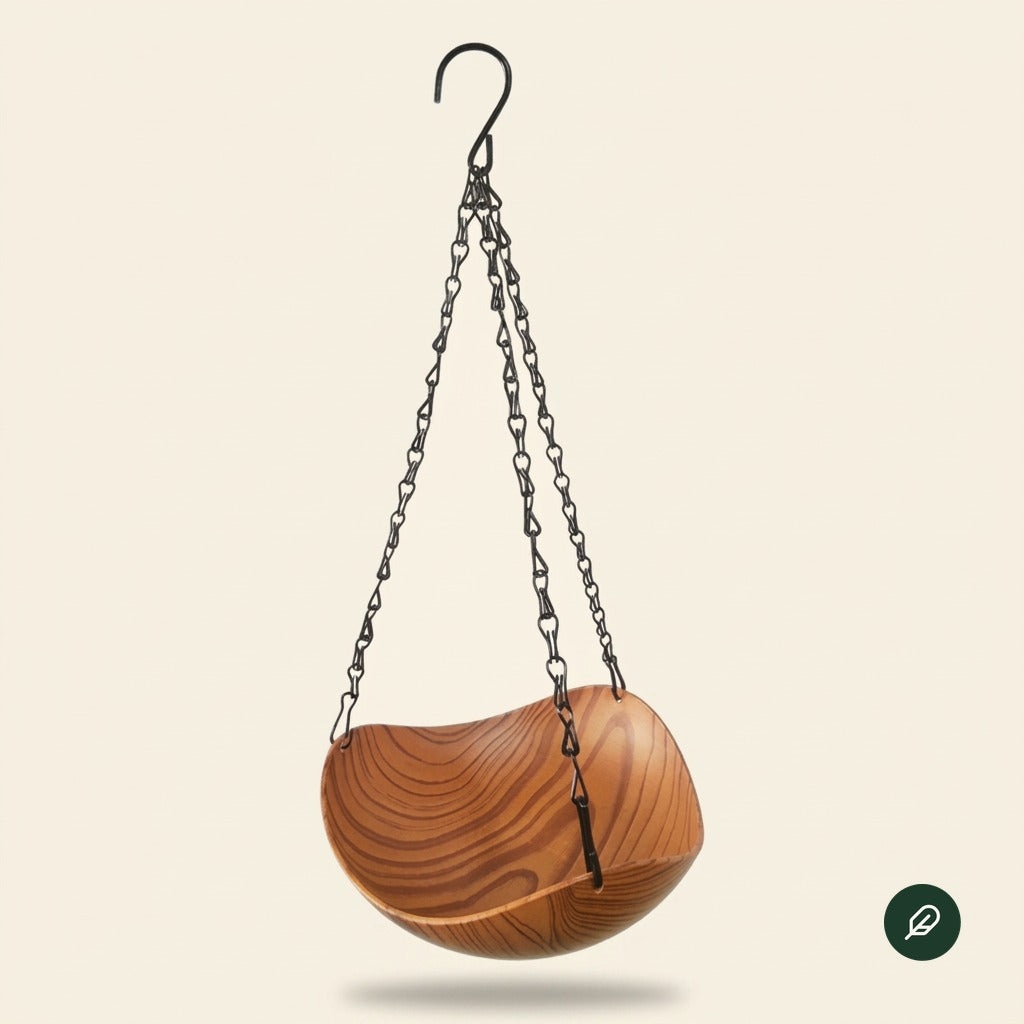
Hanging Basin Feeder and Water Bowl
A single open basin that hangs from a hook and does two jobs: a seed tray through the growing season, a shallow water bowl the rest of the year. Seed or water goes straight in — no reservoir, no perches, nothing to assemble beyond the hanging chains.Three chains run from the rim to one S-hook, so the basin hangs level under a bracket, a shepherd's hook or a low branch. Put it where you can watch it from a window, and where a cat can't launch from a fence.The rim is low and the floor is open, so birds can land anywhere around the edge instead of fighting over a perch. It also means the bowl needs wiping out every few days: hulls and droppings land in the water, and a rinse with hot water and a brush keeps it clean.The basin has a wood-grain finish and hangs from black metal chains.
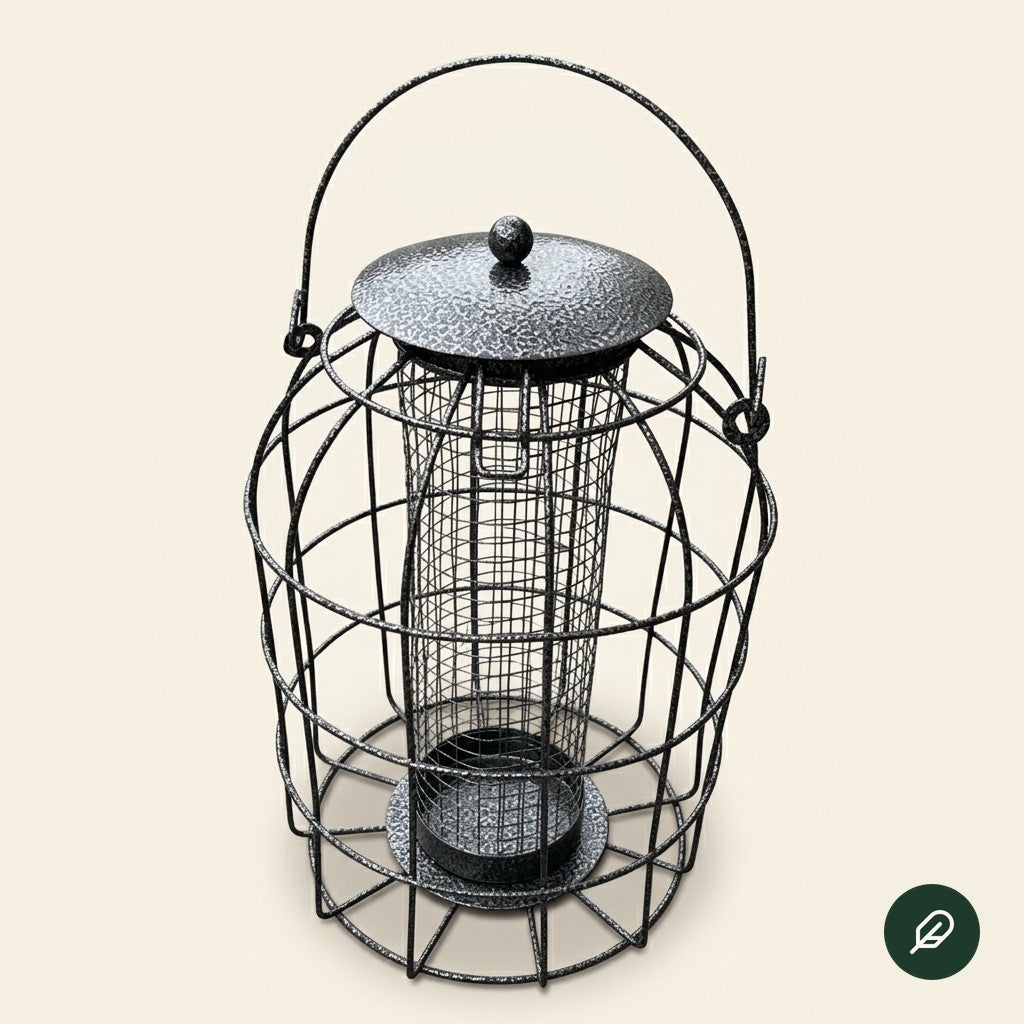
Caged Tube Bird Feeder
A metal tube feeder inside a wide protective cage. The outer cage limits access by squirrels and larger birds while smaller birds can reach the inner seed tube. A top handle makes it easy to hang, and the lid lifts for refilling. Available in black or green. No feeder is completely squirrel-proof, so placement still matters.

- Mount types
- Clamp-on arm, screw-on bracket, or rail-top tray
- Arm length
- 18–24 in or more holds feeders out past the rail
- Best seed
- Hulled sunflower or no-mess blends
- Squirrel risk
- High — decks are easy for squirrels to climb
- Window distance
- Feeder within 3 ft of glass or over 30 ft away
Why a deck feeder, and what to expect
A feeder on the deck rail puts birds a few feet from your chair. For people with a small yard, an apartment-style balcony, or no good place for a pole, it is often the only practical setup. Chickadees, titmice, nuthatches, House Finches and cardinals all come to deck feeders readily, and many people find birds get used to them sitting outside within a couple of weeks.
The trade-off is that a deck is easy for squirrels to reach. Wooden posts, railings and stairs are a staircase for a squirrel, and there is usually a tree or roof within jumping distance. Go in assuming squirrels will find it, and plan the setup accordingly.
Mounting without damaging the railing
Clamp-on arms are the most popular choice because they fit wood, composite and many metal rails without drilling. Look for a clamp with rubber or felt pads; bare metal jaws dent soft wood and scratch composite. Check the clamp range against your rail thickness before buying. Most standard 2x4 and 2x6 top rails fit, but thick composite caps and round metal rails often don't.
Screw-on brackets hold more weight and don't slip, but they leave holes. On a rented home or a composite deck, check whether drilling voids anything first. If you do screw in, use stainless or coated exterior screws so they don't leave rust stains.
Whatever the mount, extend the feeder out past the rail. An arm of 18 to 24 inches or more keeps seed and droppings off the boards and puts the feeder further from the posts squirrels climb. It also makes it harder for a squirrel sitting on the rail to reach in.
Keeping the deck clean
Seed hulls, droppings and spilled millet are the main complaint about deck feeders, and they can stain boards and draw mice. Hulled sunflower or sunflower hearts solve most of it: birds eat the whole thing and there is nothing left to drop. Avoid mixed blends with milo and millet, which birds flick out looking for sunflower.
A seed tray hung under the feeder catches what does fall. On a composite deck, a mat or outdoor rug under the feeder area makes cleanup easy. Sweep every few days rather than waiting; wet seed sprouts and moulds.
Hang the feeder over the yard side of the rail, not over the deck, if you can. Whatever falls then lands on grass or a bed instead of the boards.
Squirrels and other visitors
Because a deck is so easy for a squirrel to climb, the feeder itself has to do the work. A caged tube feeder keeps gray squirrels out of the seed while small birds feed inside. Safflower seed is less popular with squirrels than sunflower. Hot-pepper seed blends and suet put mammals off without affecting birds.
Raccoons are the other common deck visitor, especially if there is food or trash nearby. If feeders are knocked down at night, bring them in after dark. In bear country, deck feeders are a real risk to people and bears; take all feeders down from spring to late fall and follow local wildlife agency advice.
Cats on a deck can sit right under a feeder. If a neighbourhood cat is using the deck, move the feeder higher or out to the end of a long arm so birds have more warning.
Window strikes from a deck feeder
Deck feeders are often 5 to 15 feet from a sliding door or big window, which is the riskiest distance for collisions. Either move the feeder closer to the glass, within about 3 feet, or treat the outside of the door glass with dot or line patterns no more than 2 inches apart. Sliding glass doors reflect the yard so well that birds see straight through to the trees behind you.
If birds keep hitting the same pane, closing blinds does little; the reflection is on the outside of the glass. External screens, film or paint markers are what work.
Frequently asked
Will a deck railing feeder damage my deck?
A clamp with rubber pads won't. Screw-on brackets leave holes. Hulled seed and a seed tray prevent most staining from spilled seed.
How do I keep squirrels off a deck bird feeder?
Use a caged feeder or safflower seed, extend the feeder out on an arm away from posts, and remove easy jumping points nearby.
What seed makes the least mess on a deck?
Sunflower hearts or hulled no-mess blends. Birds eat the whole kernel, so there are no shells to sweep up.
Do deck feeders cause window strikes?
They can if they sit 5–15 feet from a sliding door. Move the feeder within 3 feet of the glass or mark the outside of the glass.
More Canadian winter guides
- Caged Bird Feeders: Keep Out Squirrels, Starlings and Grackles
A wire cage around a tube feeder lets chickadees, titmice and finches in while keeping squirrels and big blackbirds out. How cage spacing works, which birds get through, and where a cage feeder falls short.
- Upside-Down Suet Feeders: Feed Woodpeckers, Not Starlings
Woodpeckers, nuthatches and chickadees will hang underneath a suet cake to feed. Starlings mostly won't. How a bottom-feeding suet feeder works, how well it actually deters starlings, and how to set one up.
- Window Bird Feeders: Which Ones Stay Up, and Which Birds Come
A suction-cup feeder on the glass gives the closest view of backyard birds you'll get, and it's safer for birds than a feeder a few yards from the window. How to choose one, make it stick, and what to fill it with.
- Bird Feeder Pole Setup: Height, Depth and Baffle Placement
A pole is the most squirrel-resistant way to hang feeders, but only if it is the right height, far enough from launch points and fitted with a baffle in the right place. The measurements that matter.
More troubleshooting
- Why Birds Stopped Coming to Your Feeder (and What to Do by Season)
- Keeping House Sparrows Out of Bluebird and Chickadee Boxes
- A Hawk Is Hunting at My Bird Feeder: What It Means and What to Do
- Keep Squirrels Off a Shepherd's Hook and Out of Feeders
- How to Get Rid of Grackles at Your Feeders (Without Losing the Birds You Want)
- How to Keep Starlings Off Your Feeders (Suet, Seed and Nest-Box Problems)
- How to Stop Raccoons Raiding Your Bird Feeders (and Your Nest Boxes)
- Bears and Bird Feeders: When to Take Feeders Down (and How to Feed Birds in Bear Country)
- How to Stop Rats and Mice Moving In Under Your Bird Feeders
- Bird Feeder Placement: Height, Distance and Sightlines That Actually Work
- How to Keep Cats Away From Your Bird Feeders (Yours and the Neighbors')
- Sick Birds at Your Feeder: House Finch Eye Disease, Salmonella and What To Do
- How to Keep Crows and Jays From Taking Over Your Feeders
- Why a Woodpecker Is Pecking Your House (and How to Make It Stop)
- Choosing and Placing a Bird Bath: Depth, Material, Moving Water and Location
- How to Clean a Bird Bath: Algae, Safe Cleaning and Mosquitoes
- Bird Bath Water Through the Seasons: Freezing Winters and Summer Heat
- Why Birds Won't Use Your Bird Bath: 8 Common Reasons and Fixes
- Window Bird Feeders in the UK: Which Birds Use Them and How to Make One Stick
- How to Set Up a Bird Feeding Station in a UK Garden
- Robin Bird Box: Open-Front Design, Height and Where to Put It
- Squirrel-Proof Bird Feeders in the UK: What Stops Grey Squirrels
- Bird Baths for UK Gardens: Depth, Placement and Keeping Ice Off
- Heated Bird Baths in Canada: Keeping Water Open at -20°C
- Winter Bird Feeding in Canada: Foods, Feeders and What Shows Up
- Squirrel-Proof Bird Feeders in Canada: Red, Grey and Black Squirrels
- Bird Feeders for Condos and Balconies in Canada
- How to Attract Chickadees in Canada: Food, Nest Boxes and Winter Care