Sick Birds at Your Feeder: House Finch Eye Disease, Salmonella and What To Do
Crusty eyes, fluffed and lethargic birds, warty feet — how to identify the three big feeder diseases, when to take feeders down, and the cleaning routine that prevents the next outbreak.
9 min read · Updated 2026-10-01
Equipment for this job
Feeders that open fully, drain well and hold small quantities are the disease-smart choice — easier to clean means actually cleaned.
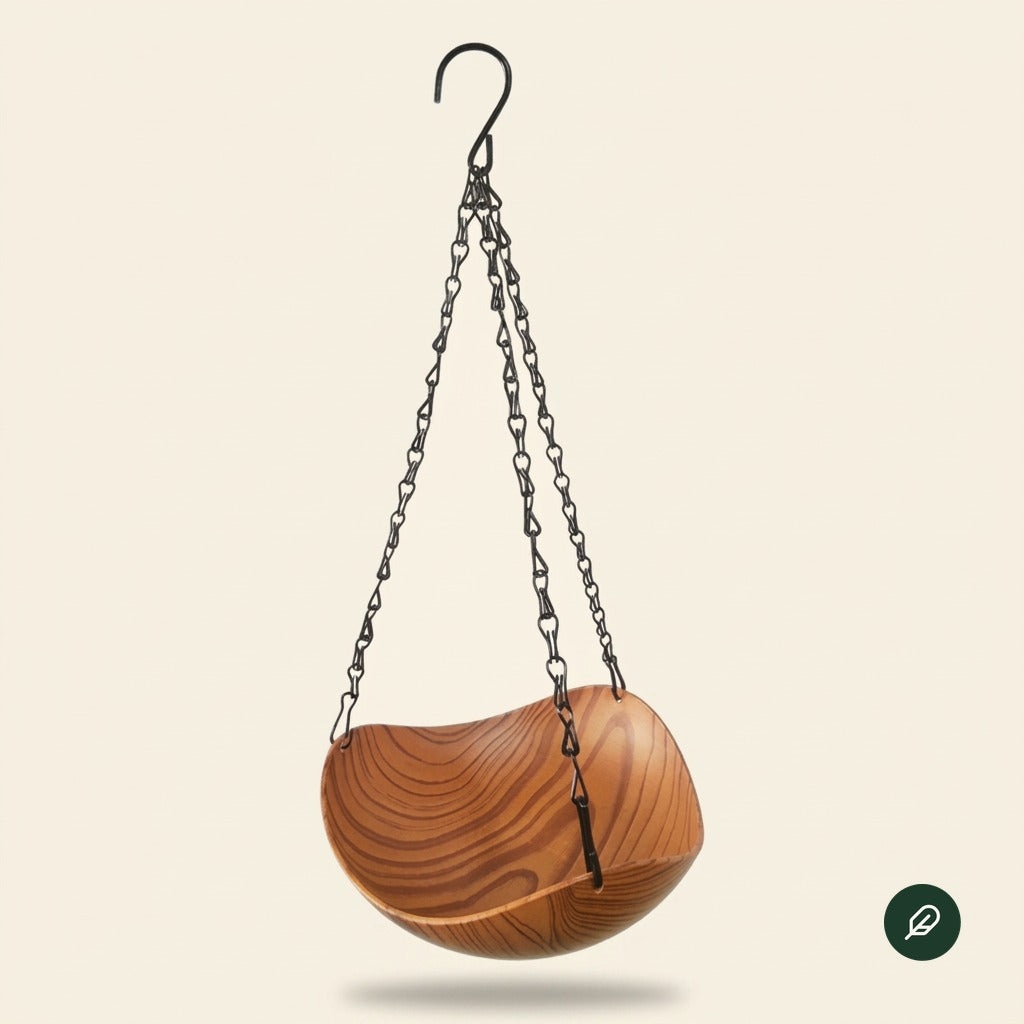
Hanging Basin Feeder and Water Bowl
A single open basin that hangs from a hook and does two jobs: a seed tray through the growing season, a shallow water bowl the rest of the year. Seed or water goes straight in — no reservoir, no perches, nothing to assemble beyond the hanging chains.Three chains run from the rim to one S-hook, so the basin hangs level under a bracket, a shepherd's hook or a low branch. Put it where you can watch it from a window, and where a cat can't launch from a fence.The rim is low and the floor is open, so birds can land anywhere around the edge instead of fighting over a perch. It also means the bowl needs wiping out every few days: hulls and droppings land in the water, and a rinse with hot water and a brush keeps it clean.The basin has a wood-grain finish and hangs from black metal chains.
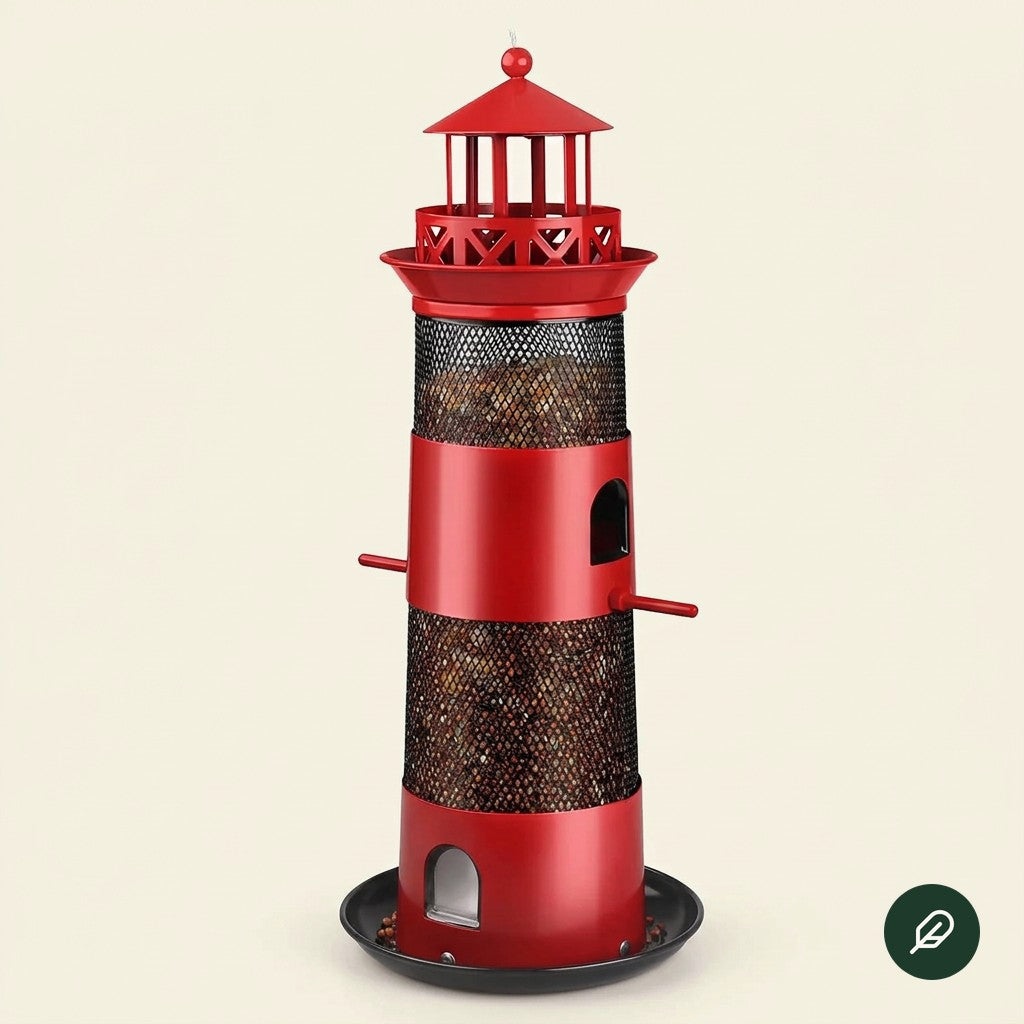
Lighthouse Metal Seed Feeder
A red-and-black metal seed feeder built in the shape of a lighthouse. The tall mesh body holds up to 4 lb of seed, with four feeding openings and perches arranged around the body. A circular tray catches some loose seed, and the top wire loop is used for hanging. Check and clean the feeder regularly, especially after wet weather.
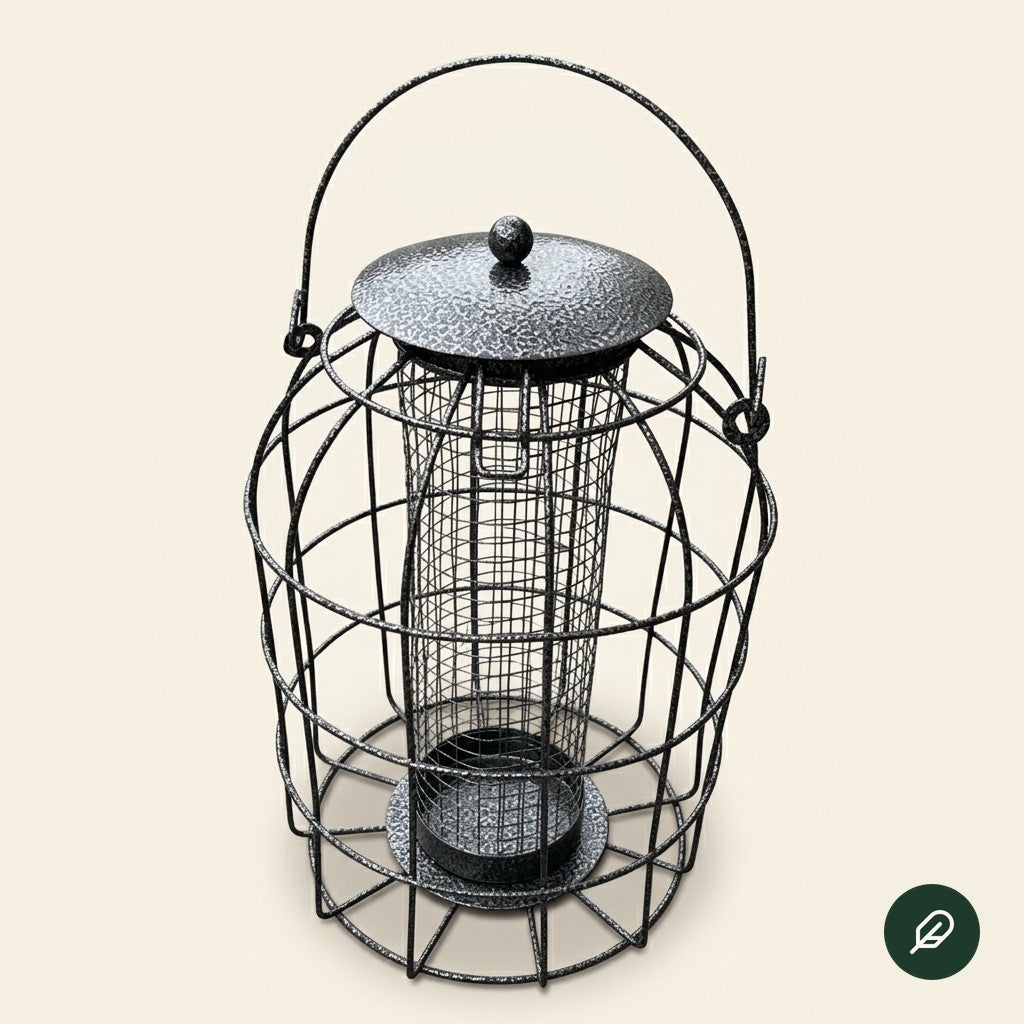
Caged Tube Bird Feeder
A metal tube feeder inside a wide protective cage. The outer cage limits access by squirrels and larger birds while smaller birds can reach the inner seed tube. A top handle makes it easy to hang, and the lid lifts for refilling. Available in black or green. No feeder is completely squirrel-proof, so placement still matters.
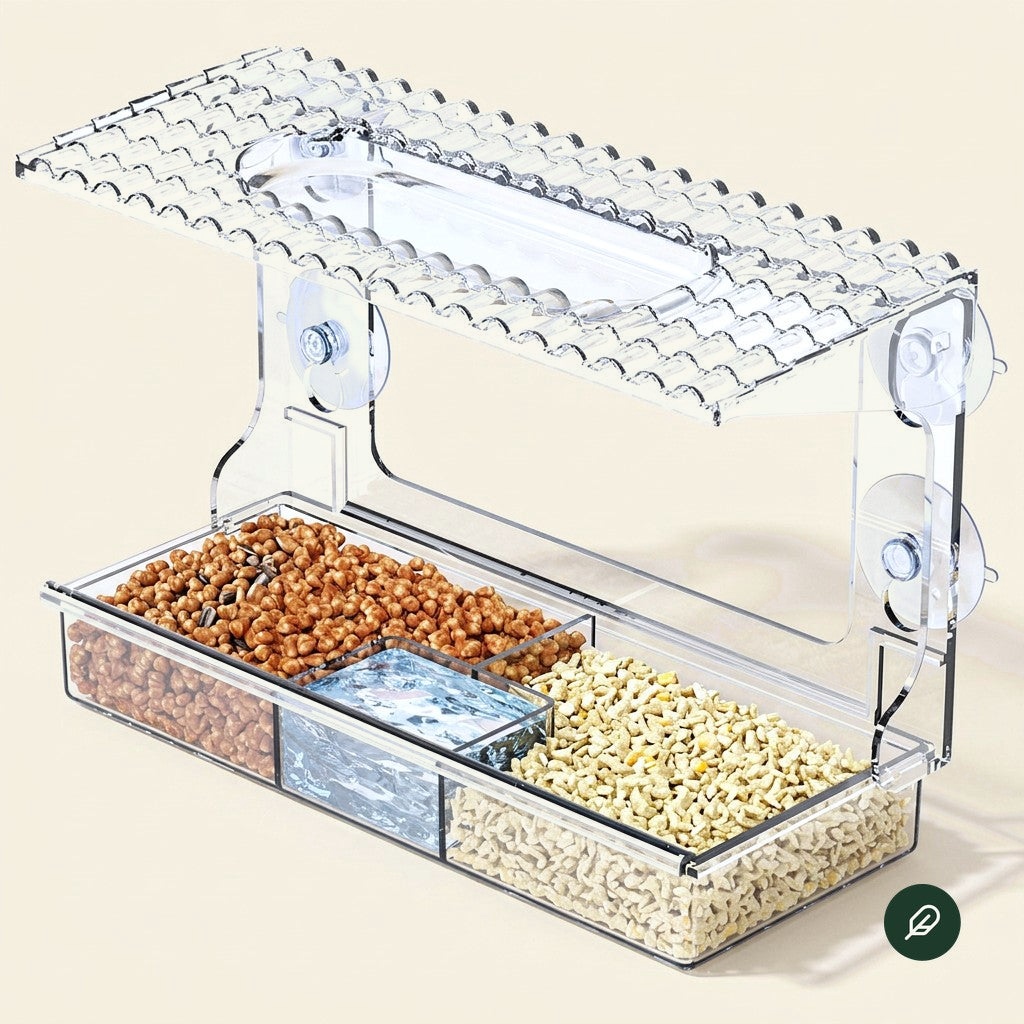
Window Feeder with Roof Bath
A wide clear acrylic window feeder with a textured roof that holds a shallow pool of water for small birds, plus a lift-out tray split into seed and water sections.Specs Clear acrylic, 4 suction cups Removable tray with drainage holes Roof basin catches rain; top it up in dry spells Tips Small birds only; jays and larger birds will crowd it. Pull the tray and rinse it weekly so wet seed doesn't mold.

- House finch eye disease
- Mycoplasma gallisepticum — swollen, crusty eyes; spread at feeders
- Salmonellosis
- Fluffed, lethargic birds; spreads via droppings-contaminated seed
- Avian pox
- Warty growths on face/feet; spread by contact and mosquitoes
- Response
- Take ALL feeders and baths down 1–2 weeks; clean; rake the ground
- Prevention
- Clean every 2 weeks (1:9 bleach soak), spread stations apart, fresh dry seed
Why feeders spread disease — and why that's manageable
A feeder concentrates birds the way a school classroom concentrates children: more bodies, closer together, touching the same surfaces. Diseases that circulate through droppings, saliva and direct contact move efficiently at a busy station. This is normal ecology, not a reason to stop feeding — millions of yards feed birds safely — but it does mean a feeding station carries a hygiene obligation that a bird bath in the wild doesn't. The yards where outbreaks happen are almost always the ones where seed sits wet for weeks, hulls pile up, and the feeder hasn't been opened since last fall.
Three diseases do most of the visible damage at North American feeders: Mycoplasma conjunctivitis (house finch eye disease), salmonellosis, and avian pox. Each has a distinct look, a different risk profile, and the same first response: take the feeders down before you do anything else. Continue reading while the station is down — every day a sick bird feeds is a day the pathogen spreads.
House finch eye disease (Mycoplasma conjunctivitis)
Look for a finch with red, swollen, watery eyes, often crusted shut, the bird sitting on your feeder or ground looking tame and dazed. It's caused by the bacterium Mycoplasma gallisepticum and exploded through Eastern House Finch populations in the mid-1990s after emerging around feeders in the Washington DC area; it has since spread across most of the continent and now also affects goldfinches and occasional other species. Infected birds often recover, especially with the eye on one side, but badly affected birds go blind and starve or fall to predators.
The disease spreads by direct contact and by infected droplets on feeder ports and perches — a dense flock of finches on one tube feeder is a transmission engine. If you see it: take down every feeder and bath, discard old seed, clean everything, and stay down one to two weeks. Report sightings to the Cornell Lab's Project FeederWatch (house finch disease survey) — it's one of the most successful citizen-science disease-tracking projects in existence, and your report matters to the map. Never attempt to treat a wild bird; capture stress kills as reliably as the disease, and rehabbers can't medicate Mycoplasma in free-ranging finches effectively.
- ID: swollen, crusty, watery eyes on finches — bird looks 'tame' and dazed.
- Response: all feeders and baths down 1–2 weeks, full clean, fresh dry seed after.
- Report to Project FeederWatch — it tracks the continental spread.
- One-sided infections often recover; don't capture or medicate wild birds.
Salmonellosis: the fluffed, quiet bird
Salmonella outbreaks hit siskins, goldfinches and Pine Siskins especially hard, with regular winter waves reported from the West Coast to the Northeast. The look: a bird fluffed into a ball on or under the feeder, lethargic, slow to flush, sometimes with pasted vent feathers — appearing 'tame' because it's too sick to flee. Infected birds shed enormous bacteria loads in droppings, which contaminate seed on the platform and the ground, and healthy birds ingest it while feeding. An outbreak can empty a yard of siskins within days.
The response is immediate and total: all feeders and baths down for two weeks minimum, seed discarded (don't compost it — bag it), everything scrubbed and disinfected, hulls raked and removed, and the station rehung in a different spot if possible. Wear gloves while cleaning; Salmonella is a human pathogen too. Prevention is the same list as always but with extra weight on dryness: wet seed is salmonella's incubator, so covered feeders, drainage, small quantities that finish in a day or two, and never re-feeding seed that got soaked.
Avian pox and the other things you'll see
Avian pox shows as wart-like growths on featherless skin — face, eyelids, feet — rather than sick behavior; birds often feed and act normally. It spreads by contact with infected surfaces and by mosquitoes, and it's less explosive at feeders than the other two, but the response is the same: take the station down, clean, and give the area a rest. Pox runs in waves and often burns out locally; affected birds can recover and the growths regress.
Not every odd-looking bird is diseased. A bald-headed Blue Jay or cardinal in late summer is normal molt, not disease. A puffball bird on a cold morning may simply be conserving heat. A bird with a deformed beak may have a congenital defect (or, in the Pacific Northwest and Alaska, beak deformity syndrome, which is tracked separately). Learn the difference before reacting — the feeder-down response is for genuinely sick birds and known outbreaks, not for every molting jay.
The cleaning routine that prevents all three
Every two weeks, and immediately after any visible sickness or a wet-seed event: empty the feeder completely (look at the seed at the bottom — clumped, sprouting or musty seed is the tell), scrub in hot soapy water, soak in a 1:9 bleach-to-water solution for ten minutes, rinse thoroughly, and let it dry completely before refilling. Birdbaths get the same treatment every few days in warm weather, more often than feeders because droppings land in open water. Rake and discard hulls and spilled seed under stations weekly — the ground layer is where salmonella and mold persist.
Station design is prevention, too: spread feeders across the yard (10+ feet apart) rather than clustering, keep quantities small enough to finish in a day or two, prefer feeders that drain and can be fully opened for scrubbing, and bring the whole station down for a deep clean once a season. Rubber gloves and a dedicated brush complete the kit — and wash your hands after handling feeders regardless. None of this is burdensome once it's a habit: fifteen minutes every other week buys you a station that feeds birds without quietly feeding pathogens.
Frequently asked
What does a sick bird at my feeder look like?
Swollen or crusty eyes (house finch disease), a fluffed, lethargic bird that won't flush (salmonella), or wart-like growths on face and feet (pox). Any of these means feeders down for 1–2 weeks.
Should I take my feeders down if I see a sick bird?
Yes — immediately, all feeders and baths, for one to two weeks. Clean everything with a 1:9 bleach solution and rake up old seed before restarting.
Can humans catch diseases from bird feeders?
Salmonella can infect people. Wear gloves when cleaning, wash hands after handling feeders or seed, and keep kids from playing under stations.
How often should I clean bird feeders?
Every two weeks with a 1:9 bleach soak, immediately after wet seed or sick birds, and birdbaths every few days. Rake hulls under feeders weekly.
More troubleshooting
- Why Birds Stopped Coming to Your Feeder (and What to Do by Season)
- Keeping House Sparrows Out of Bluebird and Chickadee Boxes
- A Hawk Is Hunting at My Bird Feeder: What It Means and What to Do
- Keep Squirrels Off a Shepherd's Hook and Out of Feeders
- How to Get Rid of Grackles at Your Feeders (Without Losing the Birds You Want)
- How to Keep Starlings Off Your Feeders (Suet, Seed and Nest-Box Problems)
- How to Stop Raccoons Raiding Your Bird Feeders (and Your Nest Boxes)
- Bears and Bird Feeders: When to Take Feeders Down (and How to Feed Birds in Bear Country)
- How to Stop Rats and Mice Moving In Under Your Bird Feeders
- Bird Feeder Placement: Height, Distance and Sightlines That Actually Work
- How to Keep Cats Away From Your Bird Feeders (Yours and the Neighbors')
- How to Keep Crows and Jays From Taking Over Your Feeders
- Why a Woodpecker Is Pecking Your House (and How to Make It Stop)
- Choosing and Placing a Bird Bath: Depth, Material, Moving Water and Location
- How to Clean a Bird Bath: Algae, Safe Cleaning and Mosquitoes
- Bird Bath Water Through the Seasons: Freezing Winters and Summer Heat
- Why Birds Won't Use Your Bird Bath: 8 Common Reasons and Fixes
- Window Bird Feeders in the UK: Which Birds Use Them and How to Make One Stick
- How to Set Up a Bird Feeding Station in a UK Garden
- Robin Bird Box: Open-Front Design, Height and Where to Put It
- Squirrel-Proof Bird Feeders in the UK: What Stops Grey Squirrels
- Bird Baths for UK Gardens: Depth, Placement and Keeping Ice Off
- Heated Bird Baths in Canada: Keeping Water Open at -20°C
- Winter Bird Feeding in Canada: Foods, Feeders and What Shows Up
- Squirrel-Proof Bird Feeders in Canada: Red, Grey and Black Squirrels
- Bird Feeders for Condos and Balconies in Canada
- How to Attract Chickadees in Canada: Food, Nest Boxes and Winter Care
- Caged Bird Feeders: Keep Out Squirrels, Starlings and Grackles
- Upside-Down Suet Feeders: Feed Woodpeckers, Not Starlings
- Window Bird Feeders: Which Ones Stay Up, and Which Birds Come
- Bird Feeder Pole Setup: Height, Depth and Baffle Placement
- Deck Railing Bird Feeders: Mounting, Mess and Squirrels