How to Stop Raccoons Raiding Your Bird Feeders (and Your Nest Boxes)
Raccoons don't just eat seed — they wreck feeders, take eggs from nest boxes, and remember a paying yard for years. Here's how to end the nightly visit.
8 min read · Updated 2026-10-01
Equipment for this job
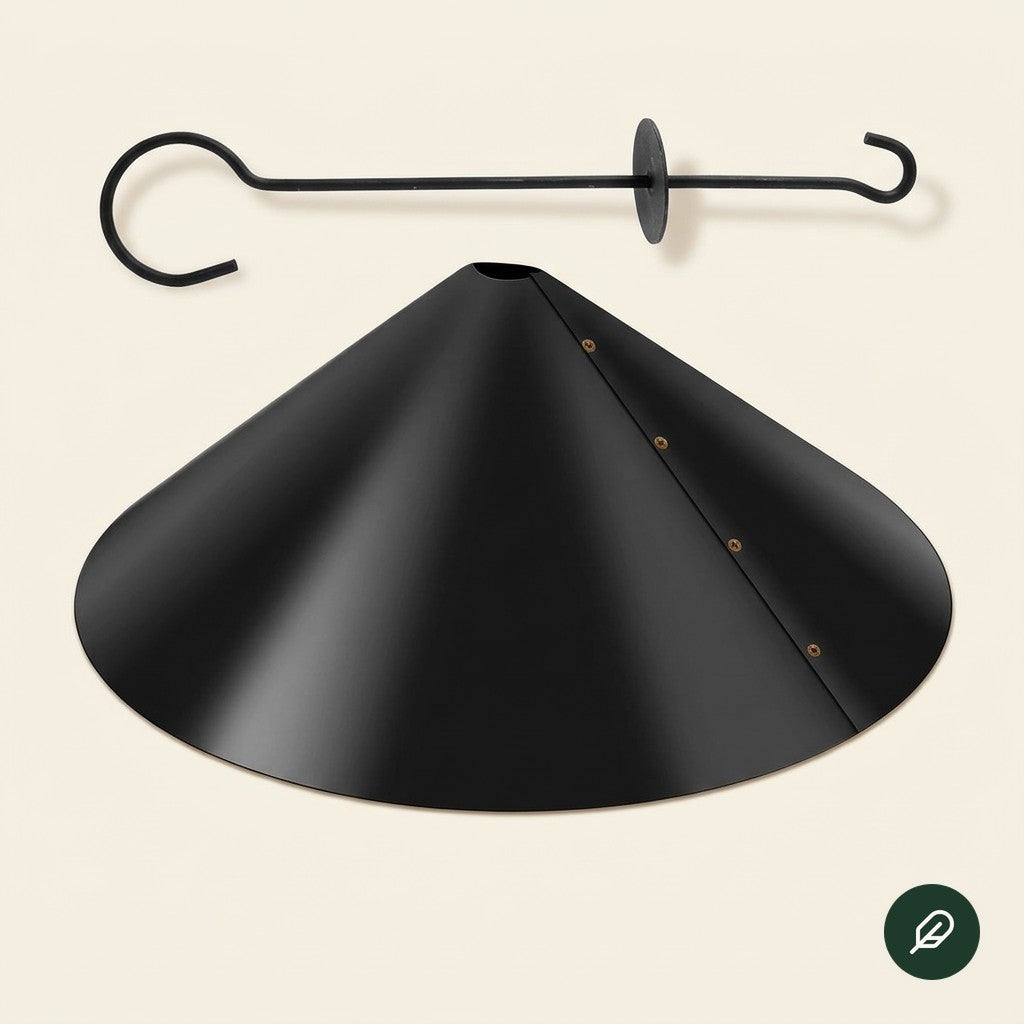
A wide, rigid baffle on a steel pole is the same hardware bluebird trails use against raccoons. Pair it with taking feeders in at night.

- When they hit
- Nightly; feeders emptied between dusk and dawn
- Weight
- 10–30 lb — far beyond any 'squirrel-proof' feeder rating
- Climb ability
- Excellent climbers; poor jumpers — vertical defenses work
- Best defenses
- Bring feeders in at night, metal pole baffles, smooth 6 ft poles
- Nest-box risk
- They take eggs and nestlings — stovepipe guards on the pole
The night shift at your feeders
If your feeder is mysteriously empty every morning, hangs crooked, or shows up on the ground with its lid pried open, you almost certainly have a raccoon. Raccoons work the night shift: they'll empty a feeder between dusk and dawn, bend cheap shepherd's hooks flat, unscrew or tear plastic feeders apart, and return every single night. At ten to thirty pounds, they are far beyond anything a 'squirrel-proof' feeder is rated for — those springs and cages are calibrated for half a pound of squirrel, not a raccoon with thumbs.
Two facts about raccoon anatomy shape the defense. They climb superbly — poles, trees, downspouts, fences — but they jump poorly, rarely leaping more than three or four feet horizontally. And they are creatures of routine: a raccoon that has learned your yard follows a patrol route for years, and a yard that stops paying out gets removed from the route within days. You don't need to outsmart a raccoon; you need to make your yard boring for about two weeks.
The simplest fix: feed on the birds' schedule
The single most effective raccoon defense costs nothing: bring feeders in at dusk and put them out at dawn. Songbirds feed from first light to mid-afternoon; raccoons work from dusk onward. A feeder that's indoors at 8 p.m. is invisible to a raccoon, and after a week or two of empty nights the raccoon's patrol route shifts elsewhere. This is also the required practice in bear country, so if you ever move feeders seasonally, you already have the habit.
If nightly hauling is impractical, automate it. Some feeders are designed for this; more commonly, people hang feeders from a pulley system on a tall pole and raise and lower them like a flag. The key spec is height: the feeder should be at least six feet off the ground when up, on a pole or wire with no jump-off access within eight to ten feet. A pulley over a smooth-wire run between two poles, with nothing nearby to launch from, defeats raccoons almost as well as squirrels.
- Bring feeders in at dusk; put them out at dawn. Cheapest fix, works immediately.
- Pulley-and-pole systems raise feeders 6+ ft and lower them for filling.
- No feeder left out should sit below 5 ft on an unguarded pole.
Hardware that holds: poles, baffles, metal
If feeders stay out overnight, the setup has to physically survive a raccoon. That means a steel pole — not a plastic-coated or aluminum shepherd's hook, which raccoons bend — with a stovepipe or wide dome baffle mounted four to five feet up, with bare pole below. Raccoons climb over wide dome baffles only if the baffle wobbles or sits too low; a rigid 24-inch stovepipe (a metal cylinder around the pole) is the classic raccoon guard and is what bluebird trail managers use against them. The feeder itself should be all metal: raccoons open plastic lids, chew hanging cords, and dismantle anything with weak seams.
Placement matters as much as hardware. Raccoons rarely jump, so a pole set in open ground eight-plus feet from fences, decks, trees and structures leaves them one route: up the pole, into the baffle, stuck. Keep in mind what they can reach sideways from a fence top — about three feet — and give the pole that clearance. Feeders on deck rail brackets are raccoon buffet counters; retire them in raccoon season.
- Steel pole, 24-in stovepipe baffle (or rigid 20+ in dome), mounted 4–5 ft up.
- 8+ ft clearance from fences, decks and trees — raccoons are bad jumpers.
- All-metal feeders only if they stay out overnight.
- Deck-rail feeders are effectively raccoon feeders; move them.
Nest boxes: raccoons are the top nest predator
Raccoons don't stop at seed. A raccoon that finds a nest box will take eggs and nestlings, often wiping out every brood of the season. If your bluebird or wren boxes sit on wooden fence posts or trees, they are raccoon ladders. The trail-standard defense is the same stovepipe guard used on feeder poles: a 24-inch metal cylinder, greased-free and rigid, on the post below the box. Conical plastic baffles help, but raccoons learn to ride them up on wobbly mounts — metal stovepipes don't wobble.
Placement helps too: boxes mounted on smooth steel poles in open ground, at least ten feet from overhanging branches, are far safer than fence-post boxes. And check boxes from the top or side rather than opening the front while an adult is sitting — a flushed adult leads a watching raccoon straight to the nest. If you find a raided box (scattered nesting material, crushed eggs), rehang it on a guarded pole rather than writing the location off; raccoons don't cache memory of boxes the way they do feeders.
Clean up the yard's night menu
Raccoons come for calories, and feeders are only one course. Pet food left on a porch, uncovered trash, compost with scraps, and spilled seed under feeders all anchor a raccoon's route. Rake up hulls and spillage weekly, feed pets indoors after dusk, latch trash cans (a raccoon opens simple lids), and skip ground-scatter feeding. In heavily raccooned neighborhoods, running feeders only in morning hours — birds' natural peak — plus a defended pole setup ends the raids for good.
A note on what not to do: relocating raccoons is illegal in many states without a permit, and in others it simply moves the problem (and often kills the relocated animal, which can't hold territory). Mothballs, ammonia rags and ultrasonic devices don't work. The physical and schedule fixes above are what wildlife rehabilitators and extension services actually recommend, because they address what the raccoon wants — an easy meal — rather than attempting to scare an animal that isn't scared.
Frequently asked
What is emptying my bird feeder at night?
Almost always a raccoon. Bent hooks, pried lids, and feeders on the ground confirm it. Squirrels work by day; raccoons empty feeders overnight.
Do squirrel-proof feeders stop raccoons?
No. They're rated for a few ounces; raccoons weigh 10–30 lb and simply tear the feeder apart. Bring feeders in at night or use a steel pole with a stovepipe baffle.
How do I protect nest boxes from raccoons?
Mount boxes on smooth steel poles with a 24-inch metal stovepipe guard below, in open ground away from fences and overhanging branches.
Will lights or noises keep raccoons away?
Not for long. Raccoons habituate quickly. Schedule (feeders in at dusk) and physical barriers are what actually hold.
More troubleshooting
- Why Birds Stopped Coming to Your Feeder (and What to Do by Season)
- Keeping House Sparrows Out of Bluebird and Chickadee Boxes
- A Hawk Is Hunting at My Bird Feeder: What It Means and What to Do
- Keep Squirrels Off a Shepherd's Hook and Out of Feeders
- How to Get Rid of Grackles at Your Feeders (Without Losing the Birds You Want)
- How to Keep Starlings Off Your Feeders (Suet, Seed and Nest-Box Problems)
- Bears and Bird Feeders: When to Take Feeders Down (and How to Feed Birds in Bear Country)
- How to Stop Rats and Mice Moving In Under Your Bird Feeders
- Bird Feeder Placement: Height, Distance and Sightlines That Actually Work
- How to Keep Cats Away From Your Bird Feeders (Yours and the Neighbors')
- Sick Birds at Your Feeder: House Finch Eye Disease, Salmonella and What To Do
- How to Keep Crows and Jays From Taking Over Your Feeders
- Why a Woodpecker Is Pecking Your House (and How to Make It Stop)
- Choosing and Placing a Bird Bath: Depth, Material, Moving Water and Location
- How to Clean a Bird Bath: Algae, Safe Cleaning and Mosquitoes
- Bird Bath Water Through the Seasons: Freezing Winters and Summer Heat
- Why Birds Won't Use Your Bird Bath: 8 Common Reasons and Fixes
- Window Bird Feeders in the UK: Which Birds Use Them and How to Make One Stick
- How to Set Up a Bird Feeding Station in a UK Garden
- Robin Bird Box: Open-Front Design, Height and Where to Put It
- Squirrel-Proof Bird Feeders in the UK: What Stops Grey Squirrels
- Bird Baths for UK Gardens: Depth, Placement and Keeping Ice Off
- Heated Bird Baths in Canada: Keeping Water Open at -20°C
- Winter Bird Feeding in Canada: Foods, Feeders and What Shows Up
- Squirrel-Proof Bird Feeders in Canada: Red, Grey and Black Squirrels
- Bird Feeders for Condos and Balconies in Canada
- How to Attract Chickadees in Canada: Food, Nest Boxes and Winter Care
- Caged Bird Feeders: Keep Out Squirrels, Starlings and Grackles
- Upside-Down Suet Feeders: Feed Woodpeckers, Not Starlings
- Window Bird Feeders: Which Ones Stay Up, and Which Birds Come
- Bird Feeder Pole Setup: Height, Depth and Baffle Placement
- Deck Railing Bird Feeders: Mounting, Mess and Squirrels