Bird Feeder Placement: Height, Distance and Sightlines That Actually Work
Where a feeder hangs decides which birds find it, whether squirrels and cats win, and whether birds hit your windows. The working numbers, all in one place.
9 min read · Updated 2026-10-01
Equipment for this job
Hanging feeders and baffles cover most station layouts — the basin feeder below also doubles as a water source in the same setup.
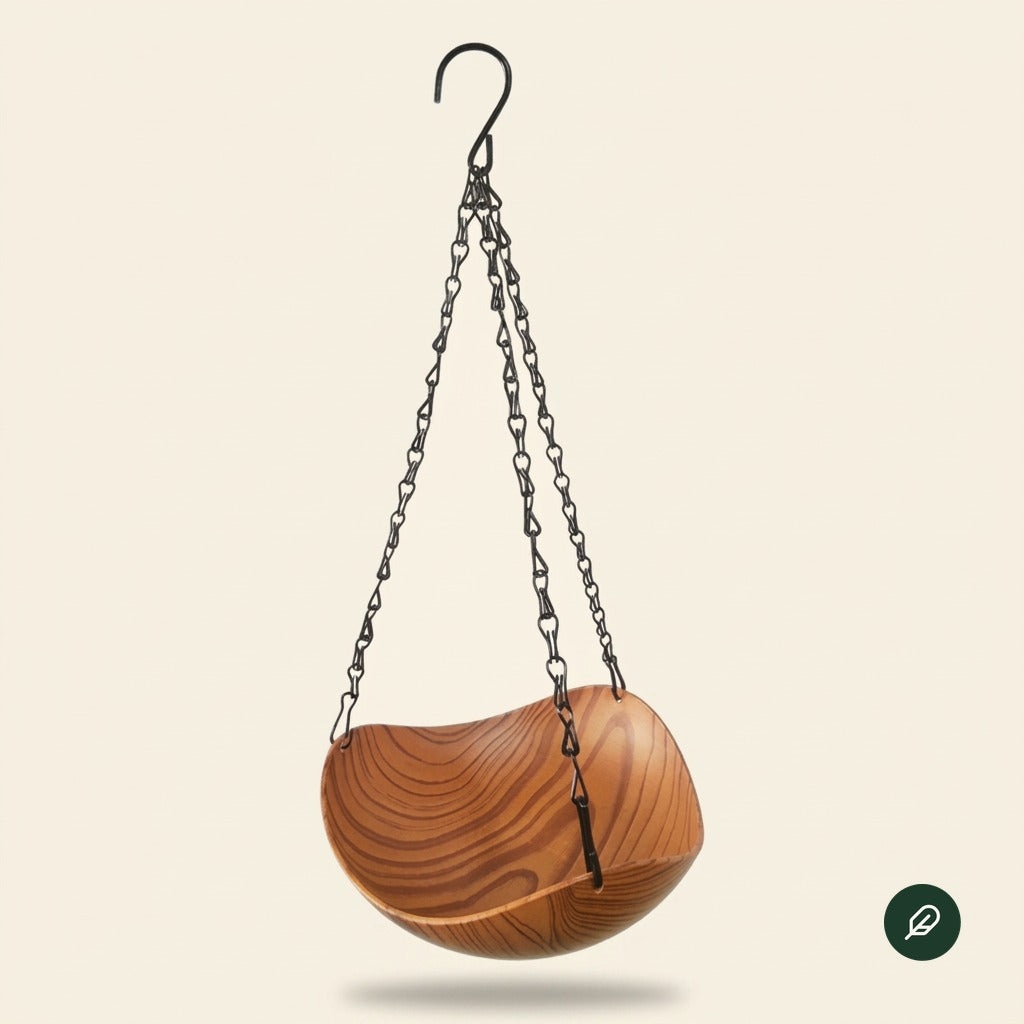
Hanging Basin Feeder and Water Bowl
A single open basin that hangs from a hook and does two jobs: a seed tray through the growing season, a shallow water bowl the rest of the year. Seed or water goes straight in — no reservoir, no perches, nothing to assemble beyond the hanging chains.Three chains run from the rim to one S-hook, so the basin hangs level under a bracket, a shepherd's hook or a low branch. Put it where you can watch it from a window, and where a cat can't launch from a fence.The rim is low and the floor is open, so birds can land anywhere around the edge instead of fighting over a perch. It also means the bowl needs wiping out every few days: hulls and droppings land in the water, and a rinse with hot water and a brush keeps it clean.The basin has a wood-grain finish and hangs from black metal chains.
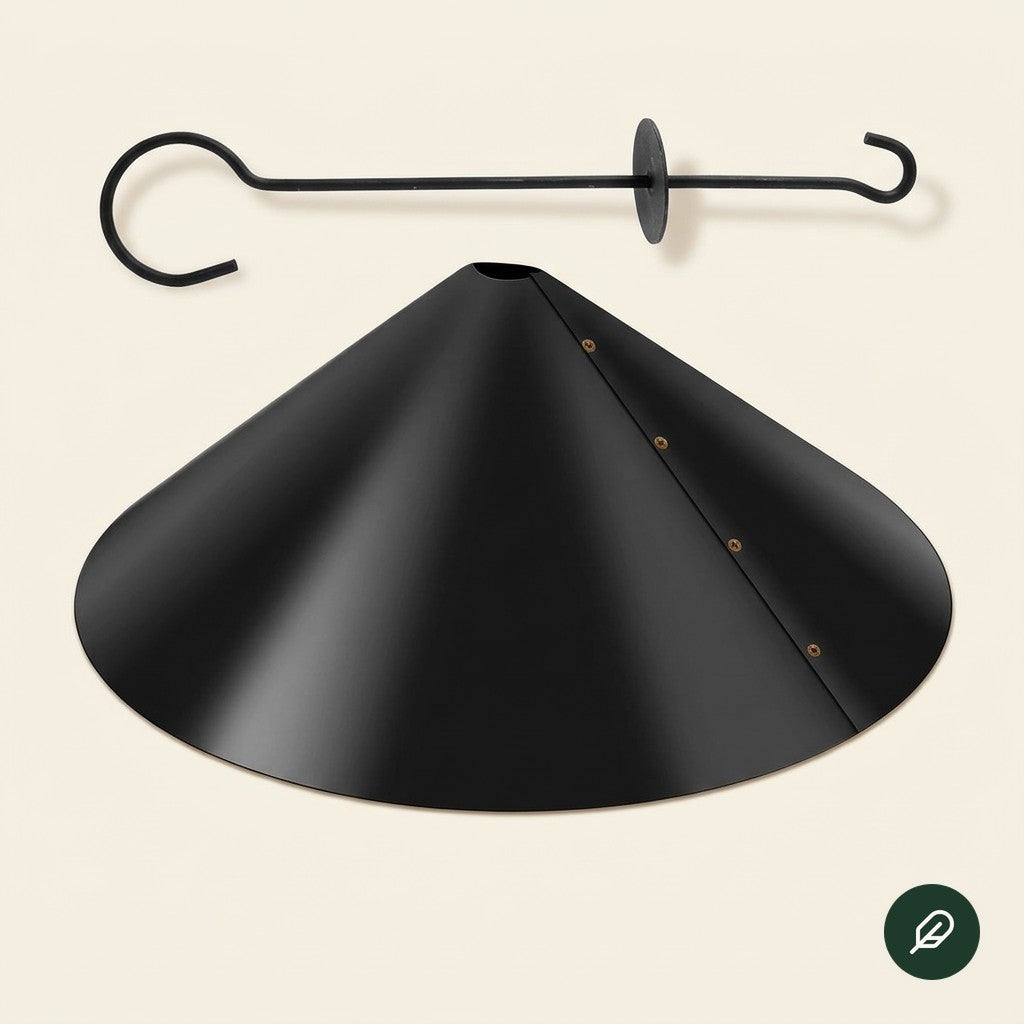
18-Inch Squirrel Baffle
A wide black baffle for helping keep squirrels from reaching a hanging or pole-mounted feeder. The cone measures 18 inches (45.7 cm) across. Choose the hanging-hook setup or pole-collar setup to suit your feeder station. Position the baffle so squirrels cannot bypass it from a nearby branch, railing, or roof.
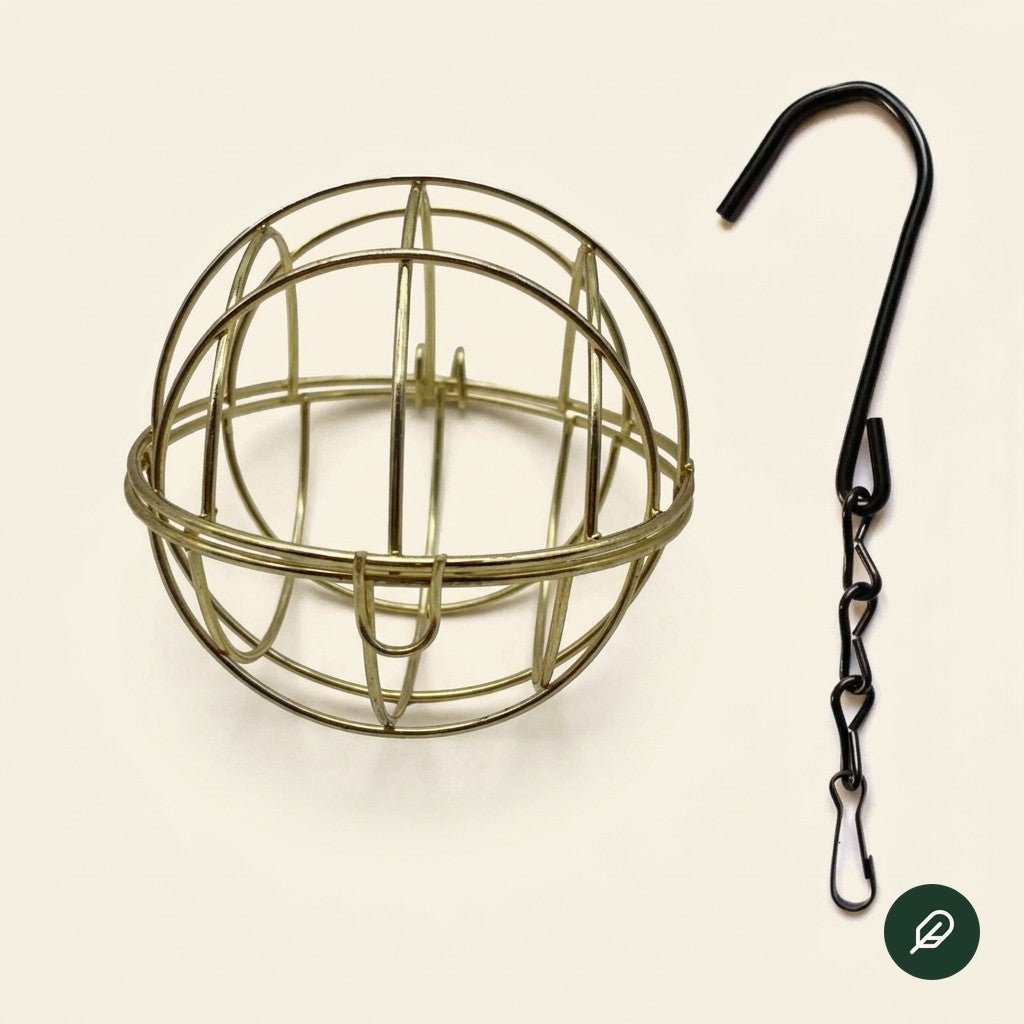
Round Suet Ball Cage
A small round wire cage made to hold one suet or fat ball. The hinged cage opens for refilling and closes with a simple wire latch. A short chain and hook are included for hanging. Available in gold-colored or black finish. This is a suet holder, not a hummingbird feeder.
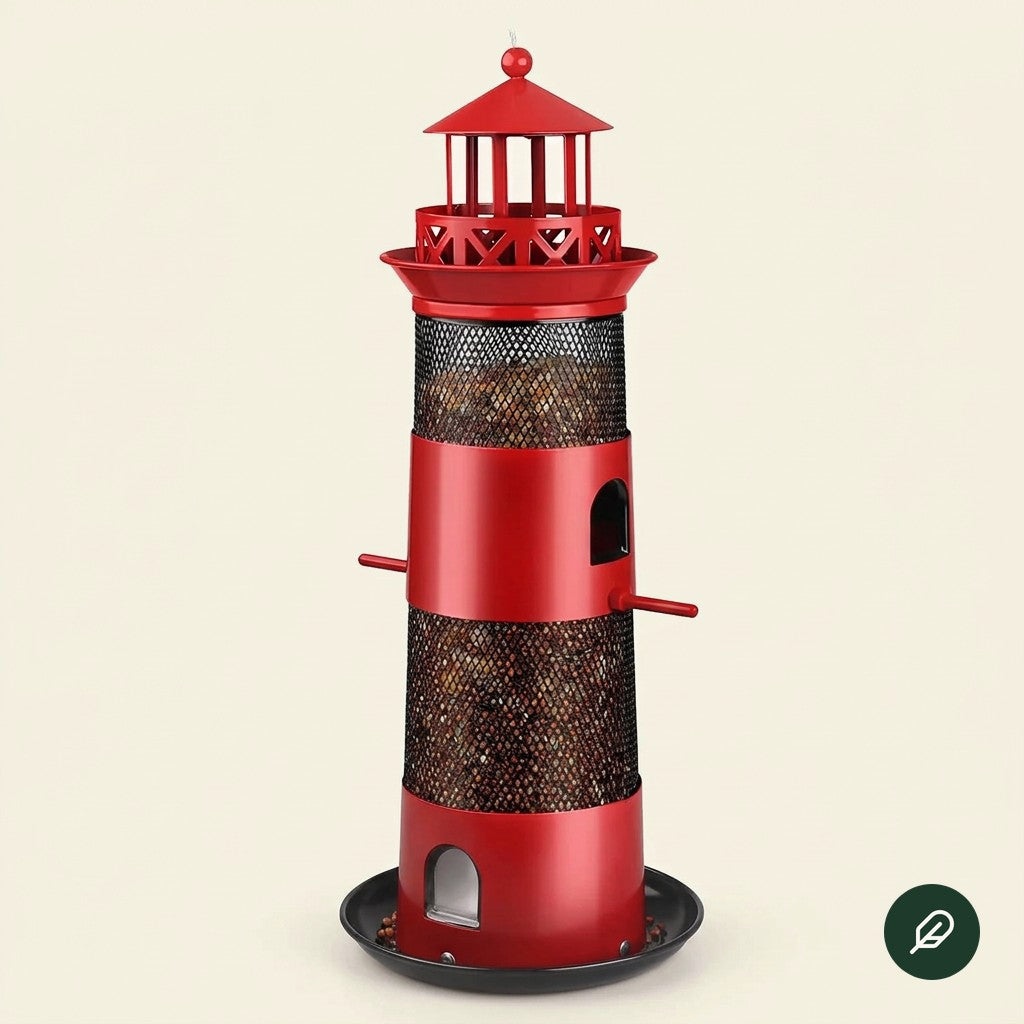
Lighthouse Metal Seed Feeder
A red-and-black metal seed feeder built in the shape of a lighthouse. The tall mesh body holds up to 4 lb of seed, with four feeding openings and perches arranged around the body. A circular tray catches some loose seed, and the top wire loop is used for hanging. Check and clean the feeder regularly, especially after wet weather.

- Height off ground
- 5–6 ft: safe from cats and ground predators, easy to fill
- Window distance
- Either under 3 ft or over 30 ft — nothing in between
- Squirrel clearance
- 10 ft horizontal from any jump-off; baffled pole below
- Cover distance
- Escape shrubs within ~10 ft, never closer than 3 ft
- Sun and cleaning
- Morning sun, afternoon shade; access for weekly cleaning
Height: the five-to-six-foot rule
The seed ports of a hanging or pole-mounted feeder should sit about five to six feet above the ground. Below five feet, cats can reach launching birds from the ground and deer, raccoons and squirrels treat the feeder as a standing snack; much above six feet and you'll stop filling and cleaning it, which matters more than any other placement factor — a dirty feeder is worse for birds than no feeder. Five to six feet is also eye level for filling a tube from a bag without a ladder.
Exceptions are real but narrow. Ground-platform feeders for doves, juncos, towhees and sparrows sit a few inches off the soil by design — place those in open lawn, ten feet from shrub cover, and bring them in at night. Nyjer tubes for goldfinches can run lower (three to four feet) since finches feed acrobatically and cats pose less risk in fenced yards. Suet cages work from four to six feet, mounted on the shaded side of a trunk or on a pole.
- Standard feeders: 5–6 ft to the seed ports.
- Ground trays: inches off the soil, in the open, brought in at night.
- Nyjer finch tubes: 3–4 ft is fine.
- Whatever the height, keep filling and cleaning easy — neglected feeders hurt birds.
Windows: the three-or-thirty rule
Window strikes kill hundreds of millions of birds a year in the US, and feeder placement is the biggest controllable factor. The physics: a bird flushed from a feeder needs either a very short flight (so it can't build lethal speed) or a very long one (so it sees the glass as part of the landscape). The deadly zone is the middle — a feeder 10 to 20 feet from a window gives birds a running start directly at the glass.
So follow the three-or-thirty rule. Within three feet of the window, flushing birds can't accelerate to lethal speed, and window-attached feeders put on a close-up show. Beyond thirty feet, birds see the window's reflection as architecture and route around it. If your feeder must sit in the dead zone (10–30 ft), add strike prevention: patterned decals or exterior screens breaking the glass into four-inch gaps, applied to the OUTSIDE of the glass. Interior decals and hawk silhouettes barely work; exterior patterns are what the research supports.
- Under 3 ft from the window, or over 30 ft — never 10–20 ft unmitigated.
- Window-attached feeders are the safest placement of all for strikes.
- In the dead zone: exterior-pattern decals or screens, covering the glass densely.
Cover: escape routes without ambush points
Songbirds at feeders are prey, and they know it. A feeder standing in the middle of a mowed lawn gets light traffic because chickadees and cardinals won't cross open ground far from cover. The sweet spot: dense shrubs or a brush pile within about ten feet of the feeder, giving flushed birds a one-second flight to safety. Much closer than three feet, though, and the cover becomes a predator platform — cats, Cooper's hawks and squirrels ambush from exactly that spot, and House Sparrows stage in it to mob the ports.
The geometry that works: feeder pole in open ground, escape cover a short flight away, and no overhanging branch within ten feet (that's a squirrel runway and a perch for hawks). Evergreens are the best cover since they work in winter, when feeder traffic peaks. If hawks are hunting your yard, tighten this: pause feeding five to seven days and add denser evergreen cover — the standard response, and it works because it restores the small birds' escape advantage.
Squirrels, raccoons and the access math
Placement is also pest control, and it's cheaper than hardware. Squirrels jump eight to ten feet horizontally, so every launch point — branches, fences, deck rails, rooflines, woodpiles — within ten feet compromises a feeder no matter what hangs on it. Raccoons climb well but jump poorly, so a steel pole in open ground eight-plus feet from structures, with a stovepipe baffle at four to five feet, defeats them. Put the numbers together and the ideal station is a baffled steel pole, five to six feet tall, standing alone in open lawn with escape shrubs nearby and nothing to jump from within ten feet.
One more placement factor people forget: sun and weather. A feeder in blazing afternoon sun spoils seed and suet faster and drives birds to shaded stations; a feeder under a roof drip line fills with rain. Morning sun with afternoon shade, or bright open shade, keeps seed fresh longest. And check your own access in bad weather — if you won't trudge out to refill and scrub it in January, the placement has failed its main test.
A stations layout that works for most yards
Rather than one feeder doing everything, most productive yards run two or three stations, each tuned to a clientele. Station one: a baffled pole five to six feet up in open lawn, ten feet from evergreens — sunflower tube or hopper for cardinals, chickadees, finches. Station two: a nyjer tube in a similar spot for goldfinches, or merged into station one if traffic is light. Station three: a suet cage on the shaded north side of a tree or pole for woodpeckers, nuthatches and creepers. Add a birdbath (year-round, and the single best summer magnet) and a ground tray used only in daylight.
Spacing matters between stations, too. Cramming feeders together concentrates birds and spreads disease — the reason feeder-borne salmonella outbreaks run through clustered yards. Give stations ten or more feet of separation, clean each on a two-week rotation, and rake hulls weekly. That spacing also lets the shy species feed at one station while the bold ones (jays, grackles) dominate another, which quietly doubles the number of species you see.
Frequently asked
How high should a bird feeder be off the ground?
About 5–6 feet to the seed ports — above cat and squirrel reach from the ground, and low enough to fill and clean comfortably. Nyjer tubes can hang at 3–4 feet; ground trays sit in the open and come in at night.
How far should a bird feeder be from a window?
Either under 3 feet (birds can't build lethal speed) or over 30 feet (they see the glass). The 10–20 foot dead zone causes the most strikes unless you add exterior window patterns.
How close should cover be to a feeder?
Dense shrubs or evergreens within about 10 feet give birds escape cover — but never closer than 3 feet, or the cover becomes a predator ambush point.
Where should I put a feeder to avoid squirrels?
On a baffled pole in open ground, 5–6 ft tall, with 10 ft of horizontal clearance from every branch, fence and roofline. Placement beats gadgets.
More troubleshooting
- Why Birds Stopped Coming to Your Feeder (and What to Do by Season)
- Keeping House Sparrows Out of Bluebird and Chickadee Boxes
- A Hawk Is Hunting at My Bird Feeder: What It Means and What to Do
- Keep Squirrels Off a Shepherd's Hook and Out of Feeders
- How to Get Rid of Grackles at Your Feeders (Without Losing the Birds You Want)
- How to Keep Starlings Off Your Feeders (Suet, Seed and Nest-Box Problems)
- How to Stop Raccoons Raiding Your Bird Feeders (and Your Nest Boxes)
- Bears and Bird Feeders: When to Take Feeders Down (and How to Feed Birds in Bear Country)
- How to Stop Rats and Mice Moving In Under Your Bird Feeders
- How to Keep Cats Away From Your Bird Feeders (Yours and the Neighbors')
- Sick Birds at Your Feeder: House Finch Eye Disease, Salmonella and What To Do
- How to Keep Crows and Jays From Taking Over Your Feeders
- Why a Woodpecker Is Pecking Your House (and How to Make It Stop)
- Choosing and Placing a Bird Bath: Depth, Material, Moving Water and Location
- How to Clean a Bird Bath: Algae, Safe Cleaning and Mosquitoes
- Bird Bath Water Through the Seasons: Freezing Winters and Summer Heat
- Why Birds Won't Use Your Bird Bath: 8 Common Reasons and Fixes
- Window Bird Feeders in the UK: Which Birds Use Them and How to Make One Stick
- How to Set Up a Bird Feeding Station in a UK Garden
- Robin Bird Box: Open-Front Design, Height and Where to Put It
- Squirrel-Proof Bird Feeders in the UK: What Stops Grey Squirrels
- Bird Baths for UK Gardens: Depth, Placement and Keeping Ice Off
- Heated Bird Baths in Canada: Keeping Water Open at -20°C
- Winter Bird Feeding in Canada: Foods, Feeders and What Shows Up
- Squirrel-Proof Bird Feeders in Canada: Red, Grey and Black Squirrels
- Bird Feeders for Condos and Balconies in Canada
- How to Attract Chickadees in Canada: Food, Nest Boxes and Winter Care
- Caged Bird Feeders: Keep Out Squirrels, Starlings and Grackles
- Upside-Down Suet Feeders: Feed Woodpeckers, Not Starlings
- Window Bird Feeders: Which Ones Stay Up, and Which Birds Come
- Bird Feeder Pole Setup: Height, Depth and Baffle Placement
- Deck Railing Bird Feeders: Mounting, Mess and Squirrels