Robin Bird Box: Open-Front Design, Height and Where to Put It
Robins won't use a box with a small round hole. They want an open-fronted box, low down and well hidden. The dimensions, the best spots in a British garden, and when to put it up.
7 min read · Updated 2026-10-27
Equipment for this job
These are hole-fronted boxes suited to tits and sparrows, not Robins. Use them alongside an open-fronted Robin box; perches on boxes aren't needed by native birds and can be removed.
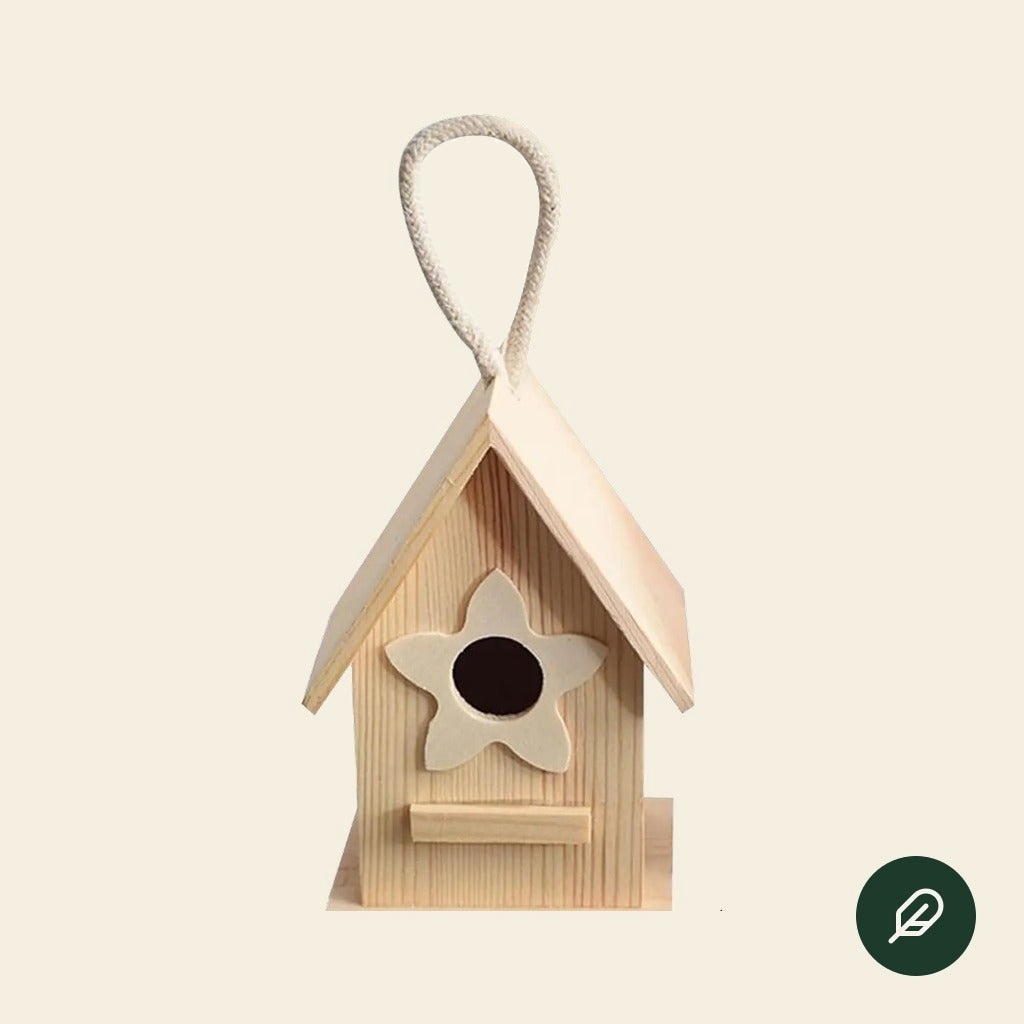
Classic Wooden Nest Box
A straightforward wooden nest box for small garden birds. The enclosed design gives cavity nesters shelter from weather and predators through the breeding season.Place in a quiet spot with a clear flight path to the entrance, and clean annually after fledging. Natural wood Enclosed cavity design For wrens, chickadees, tits and similar species
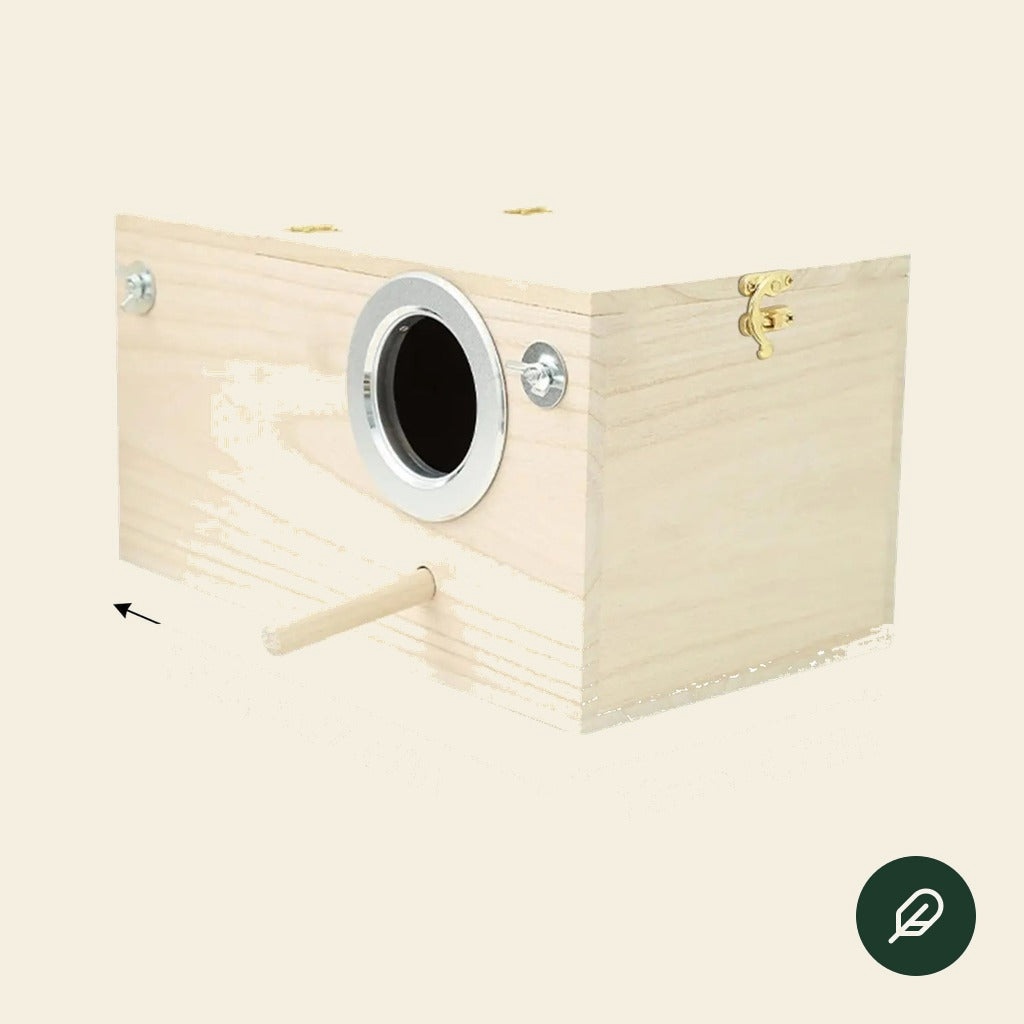
Wooden Nest Box with Perch
A simple wooden nest box (19.5 × 12 cm) with a small entrance perch, sized for small parrots and similar cavity nesters in aviaries or sheltered outdoor spaces.Made from natural wood with a hinged or sliding panel for cleaning between seasons. 19.5 × 12 cm Entrance perch included Natural wood construction
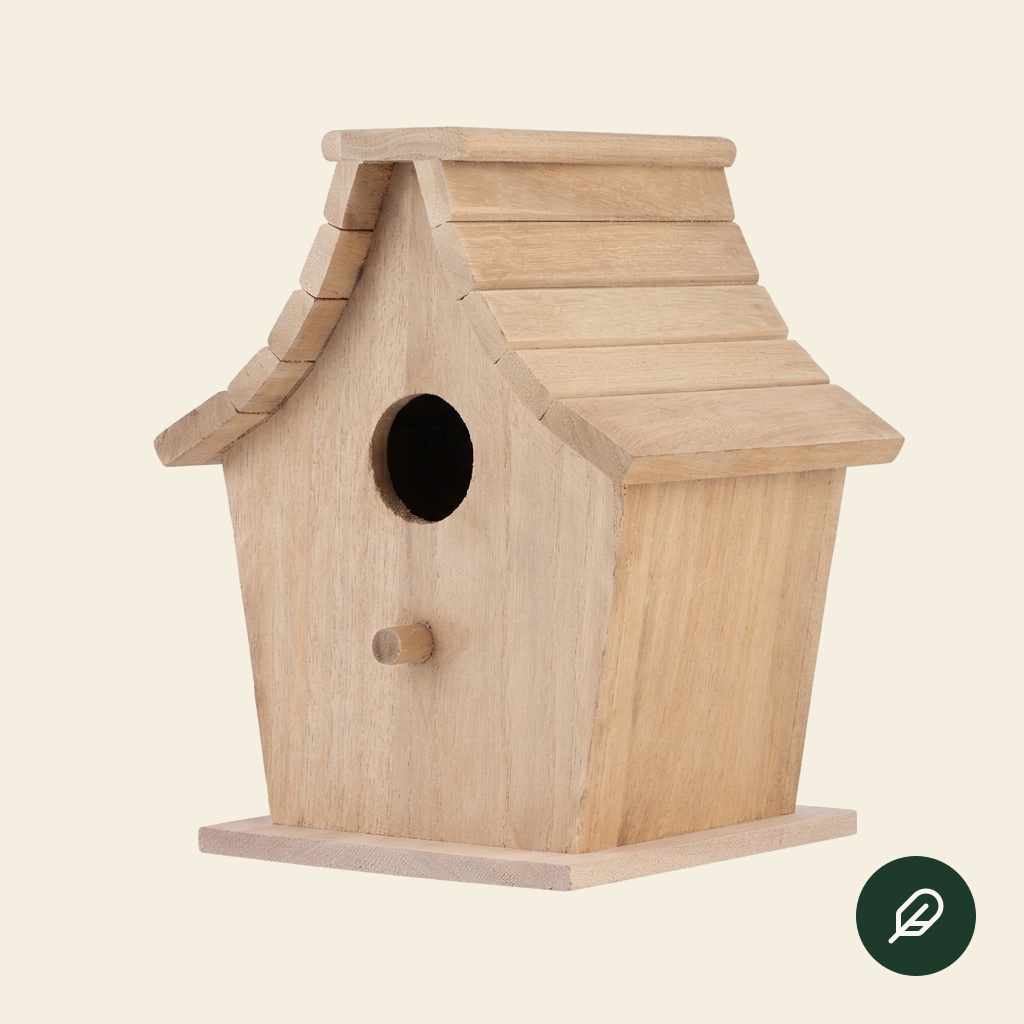
Hanging Wooden Nest Box
A lightweight wooden nest box that hangs from a branch, beam or hook. Suited to small birds that nest in enclosed cavities.Hang it in a sheltered spot out of full afternoon sun, and clean it out once a year after the breeding season ends. Natural wood Hanging design with attached loop For small cavity-nesting birds

- Box type
- Open-fronted — front panel roughly half the height of the box
- Height
- Below 2 m, often around 1–1.5 m
- Placement
- Hidden in ivy, climbers or a dense hedge
- Nesting season
- March to July, often 2–3 broods
- Put it up
- Autumn or winter; National Nest Box Week starts 14 February
Why the usual bird box doesn't work for Robins
The classic garden bird box has a small round hole — 25 mm for Blue Tits, 28 mm for Great Tits, 32 mm for House Sparrows. Robins don't nest in holes like that. In the wild they build in hollows and ledges: a gap in an ivy-covered wall, a bank under tree roots, a shelf in a shed, an old kettle in a hedge. They want a recess with a wide view out, not a tunnel.
That is why the BTO recommends an open-fronted box for Robins, along with Wrens, Pied Wagtails and Spotted Flycatchers. The front is cut away so roughly the top half is open. Inside, the floor should be at least about 10 × 10 cm, with drainage holes, and a roof that overhangs the front to keep rain out.
Where to put a Robin box
Hide it. An open front means eggs and chicks are visible to anything that looks in, so the box has to rely on concealment. The best Robin boxes are tucked behind ivy, honeysuckle, clematis or a dense hedge, where you can barely see them from a couple of metres away.
- Height: low. Below 2 m, and many are used at 1–1.5 m.
- Cover: dense growth around and in front of it — but leave a clear flight path to the opening.
- Direction: facing between north and east if possible, out of strong midday sun and the prevailing wet wind.
- Away from feeders: a busy feeding station brings competitors and attention close to the nest.
- Away from cat routes: avoid the top of a fence or a wall cats walk along.
When to put it up
Any time from autumn through winter. Robins are among the first garden birds to nest; in mild southern gardens they can be building in March, sometimes earlier. A box put up in autumn has time to weather and gives birds a chance to notice it. National Nest Box Week runs from 14 February each year, which is a useful deadline, but a box put up in March can still be used the same spring.
Don't move a box once it is up; birds that have been prospecting it will lose it. Be patient. Open-fronted boxes are used less predictably than hole boxes, and it may take a season or two.
The Robin nesting cycle
The female builds a cup of moss, dead leaves and grass lined with hair and fine roots, usually in under a week. She lays four to six eggs, one a day, and incubates them for about two weeks. Both parents feed the chicks, which leave the nest after roughly two weeks and are fed by the male for a further few weeks while the female often starts a second clutch. Two broods are normal and three happen in a good year.
Young Robins have no red breast. They are speckled golden-brown, which surprises people who see them hopping round the lawn in June. They develop the red after their first moult in late summer.
Watching without disturbing
All wild birds, their nests and eggs are protected by law in the UK — the Wildlife and Countryside Act 1981 in Great Britain and the Wildlife (Northern Ireland) Order 1985. It is an offence to intentionally damage or destroy an active nest. Keep checks brief and few. If you want to monitor the box properly, the BTO Nest Record Scheme explains how to do it safely and how your records feed national research.
Cleaning out the box
Once the season is over and the box is definitely empty, clear out old nest material in autumn or winter to remove fleas and mites. Use boiling water rather than insecticide, and leave the box to dry before refitting. The law allows unhatched eggs to be removed only between 1 September and 31 January, so wait until then.
What if you only have a hole-fronted box?
Put it up for tits instead — they will use it. Mount a hole box higher, 1–3 m up a tree or wall, facing between north and east, and keep it clear of the Robin box so the two pairs aren't squabbling over the same corner. A garden with both box types, a feeding station a few metres away and a thick hedge covers most of the common nesting birds.
Sources
Box dimensions and siting follow BTO and RSPB guidance.
Frequently asked
What kind of bird box does a Robin use?
An open-fronted box with roughly the top half of the front cut away. Robins don't use small round-hole boxes.
How high should a Robin box be?
Low — below 2 m and often around 1 to 1.5 m, hidden in ivy, climbers or a dense hedge.
When should I put up a Robin box?
In autumn or winter, ideally before mid-February. Robins can start building in March.
When can I clean out a bird box in the UK?
After the nesting season, between autumn and the end of January. Unhatched eggs may only be removed from 1 September to 31 January.
More UK garden guides
- Window Bird Feeders in the UK: Which Birds Use Them and How to Make One Stick
A suction-cup feeder on the glass is the easiest way to feed birds from a flat, a terrace with no garden, or a kitchen window. What visits, what to put in it, and how to stop it sliding off in the cold.
- How to Set Up a Bird Feeding Station in a UK Garden
A good feeding station is about placement more than the pole. Where to put it, how high, what to hang on each arm, and how to keep it from feeding the local squirrels, pigeons and Sparrowhawk.
- Squirrel-Proof Bird Feeders in the UK: What Stops Grey Squirrels
Grey squirrels are clever, persistent and widespread across Britain. Which feeders actually keep them out, how far they jump, and what to do if red squirrels visit your garden.
- Bird Baths for UK Gardens: Depth, Placement and Keeping Ice Off
A bird bath is often more useful than another feeder. How deep it should be, where to put it, how often to clean it, and how to keep water open on a frosty British morning without chemicals.
More troubleshooting
- Why Birds Stopped Coming to Your Feeder (and What to Do by Season)
- Keeping House Sparrows Out of Bluebird and Chickadee Boxes
- A Hawk Is Hunting at My Bird Feeder: What It Means and What to Do
- Keep Squirrels Off a Shepherd's Hook and Out of Feeders
- How to Get Rid of Grackles at Your Feeders (Without Losing the Birds You Want)
- How to Keep Starlings Off Your Feeders (Suet, Seed and Nest-Box Problems)
- How to Stop Raccoons Raiding Your Bird Feeders (and Your Nest Boxes)
- Bears and Bird Feeders: When to Take Feeders Down (and How to Feed Birds in Bear Country)
- How to Stop Rats and Mice Moving In Under Your Bird Feeders
- Bird Feeder Placement: Height, Distance and Sightlines That Actually Work
- How to Keep Cats Away From Your Bird Feeders (Yours and the Neighbors')
- Sick Birds at Your Feeder: House Finch Eye Disease, Salmonella and What To Do
- How to Keep Crows and Jays From Taking Over Your Feeders
- Why a Woodpecker Is Pecking Your House (and How to Make It Stop)
- Choosing and Placing a Bird Bath: Depth, Material, Moving Water and Location
- How to Clean a Bird Bath: Algae, Safe Cleaning and Mosquitoes
- Bird Bath Water Through the Seasons: Freezing Winters and Summer Heat
- Why Birds Won't Use Your Bird Bath: 8 Common Reasons and Fixes
- Heated Bird Baths in Canada: Keeping Water Open at -20°C
- Winter Bird Feeding in Canada: Foods, Feeders and What Shows Up
- Squirrel-Proof Bird Feeders in Canada: Red, Grey and Black Squirrels
- Bird Feeders for Condos and Balconies in Canada
- How to Attract Chickadees in Canada: Food, Nest Boxes and Winter Care
- Caged Bird Feeders: Keep Out Squirrels, Starlings and Grackles
- Upside-Down Suet Feeders: Feed Woodpeckers, Not Starlings
- Window Bird Feeders: Which Ones Stay Up, and Which Birds Come
- Bird Feeder Pole Setup: Height, Depth and Baffle Placement
- Deck Railing Bird Feeders: Mounting, Mess and Squirrels