Window Bird Feeders: Which Ones Stay Up, and Which Birds Come
A suction-cup feeder on the glass gives the closest view of backyard birds you'll get, and it's safer for birds than a feeder a few yards from the window. How to choose one, make it stick, and what to fill it with.
7 min read · Updated 2026-10-27
Equipment for this job
All three mount with suction cups on smooth exterior glass.
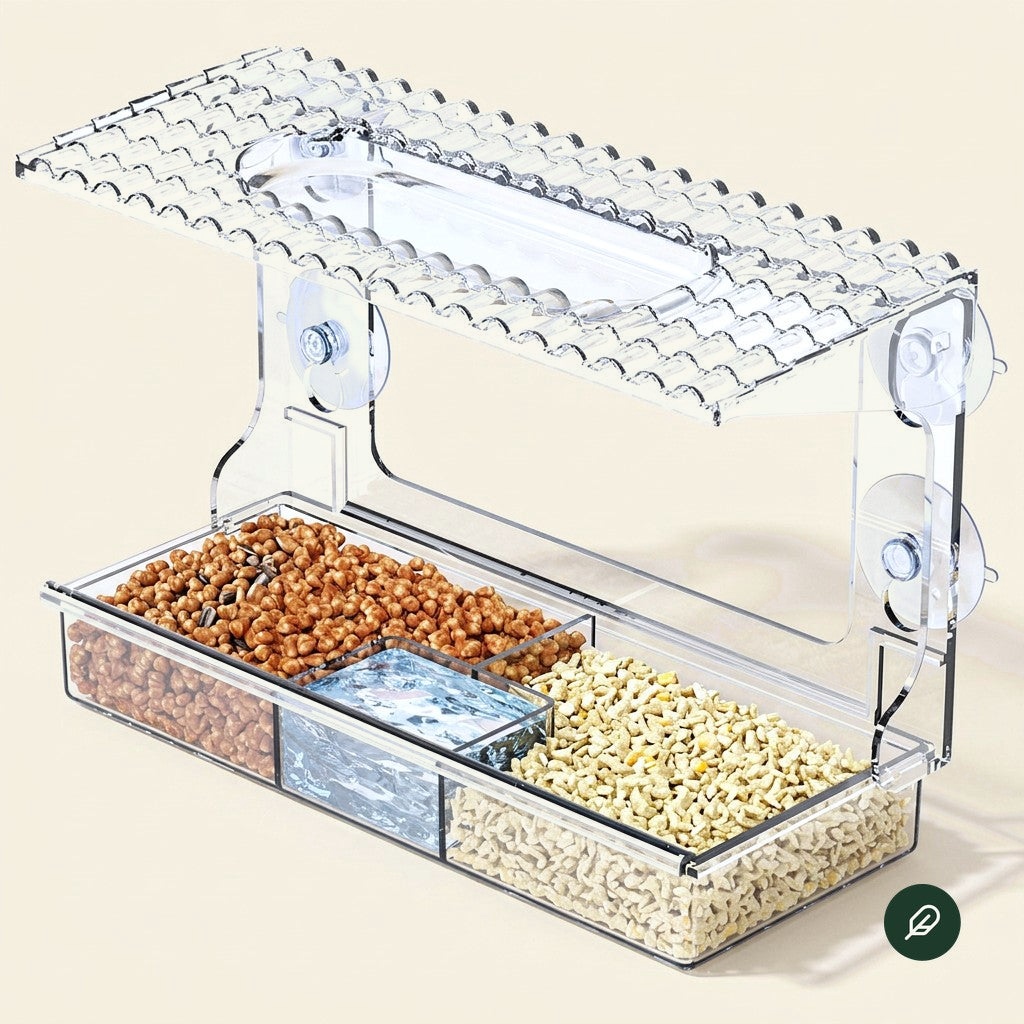
Window Feeder with Roof Bath
A wide clear acrylic window feeder with a textured roof that holds a shallow pool of water for small birds, plus a lift-out tray split into seed and water sections.Specs Clear acrylic, 4 suction cups Removable tray with drainage holes Roof basin catches rain; top it up in dry spells Tips Small birds only; jays and larger birds will crowd it. Pull the tray and rinse it weekly so wet seed doesn't mold.
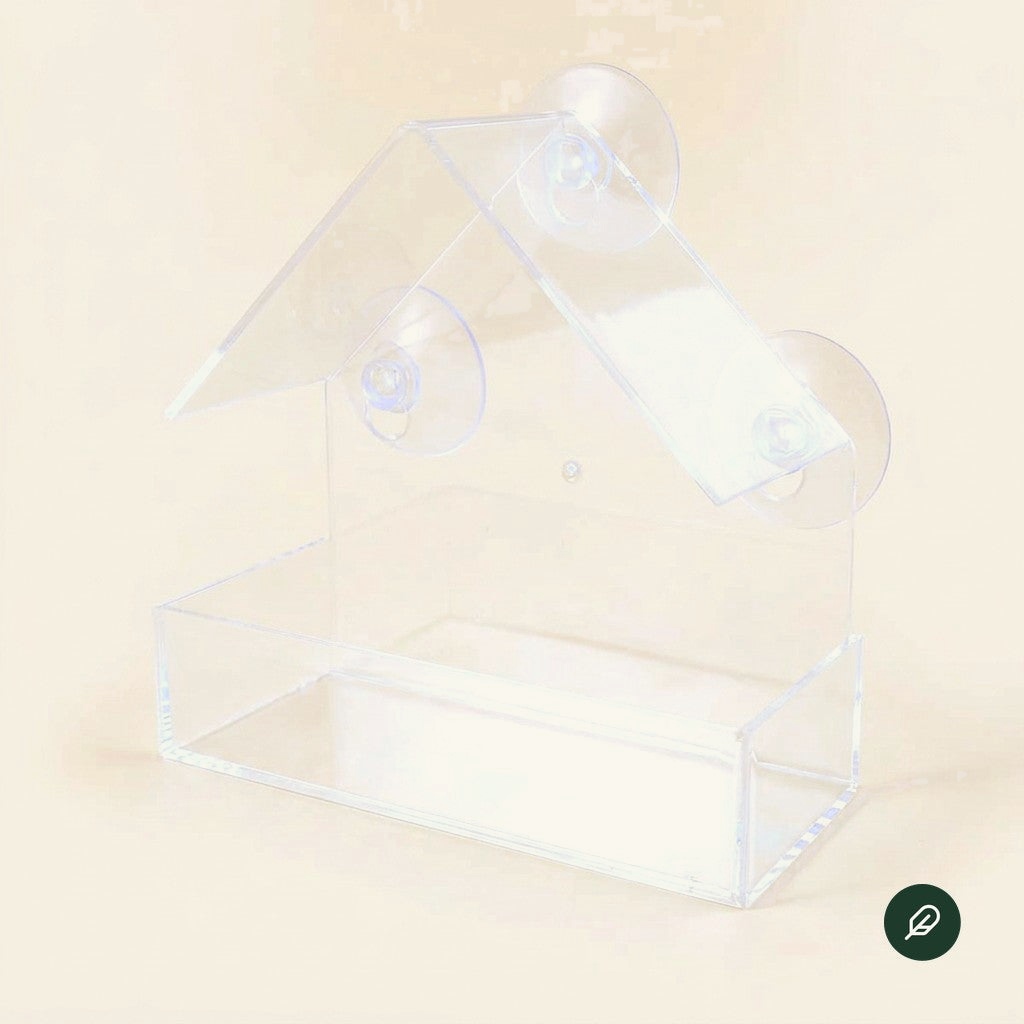
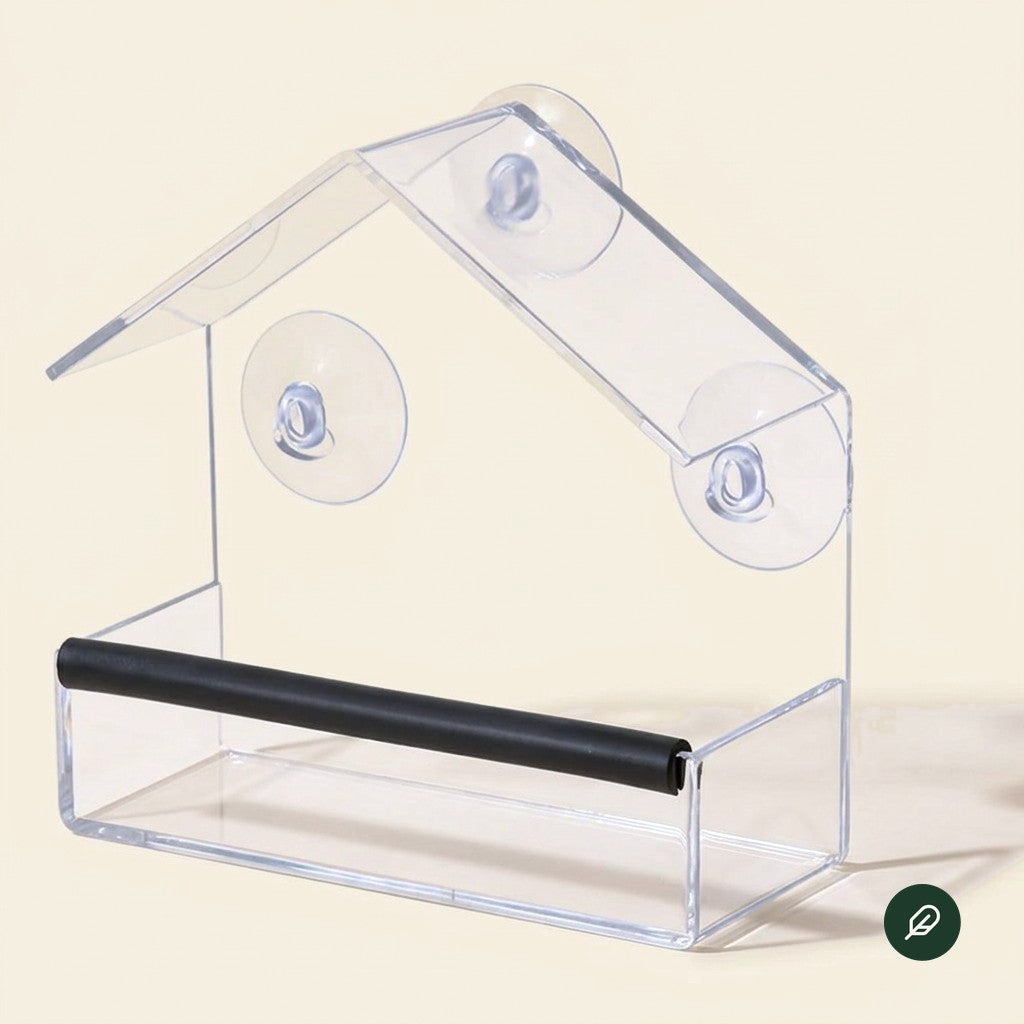
Clear Acrylic Window Feeder
Three clear acrylic window feeders that mount with suction cups. Pick the size that fits your window. Small House — peaked roof, open tray, about 15 x 15 x 7 cm. Arched Roof — about 25 x 19 x 9.5 cm, green perch bar, two-section drain tray. Slanted Roof — about 21 x 20.5 x 14.5 cm, black perch bar, two-section drain tray. TipsClean the glass before mounting. Suction cups hold best above freezing.
Suction-Cup Window Feeder, Five Shapes
Clear window feeders that mount with suction cups, no tools. Five shapes: Small House — about 15 x 6.5 x 15 cm, perch bar. Round Window — about 20 x 10 x 20.7 cm, viewing hole, two-section tray. Curved Tray — curved roof, oval split tray for seed and water. Long Tray — about 25 x 13 x 11 cm, three-section tray, perch bar. Tile Roof — textured roof, three-section tray with water cup. Tips Clean glass first; suction cups hold best above freezing. Rinse trays weekly.

- Safe distances
- On the glass or within 3 ft; otherwise more than 30 ft away
- Common visitors
- Chickadees, titmice, nuthatches, House Finches, cardinals, juncos
- Best food
- Sunflower hearts or black-oil sunflower
- Suction cups
- Clean glass, warm cups, replace when stiff
- First visits
- Often within 1–3 weeks
Why a feeder on the glass is safer
Window collisions kill hundreds of millions of birds in the US each year. Most happen when a bird flies at full speed toward a reflection of sky or trees. A feeder far enough from the house that birds never fly toward the window avoids that, and so does one close enough that a bird leaving it can't build up speed. The Cornell Lab recommends feeders either within 3 feet of the glass or more than 30 feet away.
A window feeder is the extreme version of the close option: it is on the glass. A bird that bumps the pane on take-off from a window feeder is moving slowly and is very rarely hurt. The middle distance, around 5 to 20 feet, is where collisions become serious.
If you also have big reflective windows elsewhere in the house, treat the outside of the glass with dot or line patterns no more than 2 inches apart. Single silhouettes don't work; birds fly around them.
Choosing a window feeder
Look for clear, UV-resistant acrylic or polycarbonate that won't cloud in a year of sun. A removable seed tray makes cleaning a five-minute job instead of a project. Drain holes in the tray are essential; seed sitting in rainwater turns into mould within days.
A small roof keeps seed drier and gives birds some cover. Some models add a water dish, which works well in spring and fall but freezes in winter. Two suction cups are the minimum; three spread the load better and keep the feeder from rocking when a heavier bird such as a cardinal or a Blue Jay lands on the edge.
Size matters less than people expect. A tray that holds a cup or two of seed is plenty. Small amounts refilled often stay fresher than a big load that sits for a week.
Making the suction cups hold
A feeder that falls off is the number one complaint. It is almost always fixable.
- Clean the outside of the glass with rubbing alcohol or vinegar and let it dry. Dust and film break the seal.
- Warm the cups in hot water before pressing them on. Cold cups are stiff, which is why feeders fall in fall and winter.
- Press from the center out to push all the air out. Let the feeder sit empty for an hour before loading it.
- Use smooth glass. Textured, frosted, low-E coated exterior surfaces and screens don't hold suction well.
- Every few months, remove the cups, wash them in warm soapy water and refit. Replace cups that have hardened or yellowed.
What to put in it and who comes
Sunflower hearts are ideal: everything that visits a window feeder eats them, and there are no shells to drop on the sill. Black-oil sunflower in the shell is cheaper and works as well, but expect hulls. Safflower is a good choice if grackles or squirrels find the feeder, and cardinals love it.
The usual visitors are the bold feeder regulars: Black-capped or Carolina Chickadees, Tufted Titmice, White-breasted and Red-breasted Nuthatches, House Finches, Northern Cardinals, and in winter Dark-eyed Juncos. Chickadees are almost always first. Ground-feeding sparrows and doves visit less, and some birds never come to glass at all.
If nothing arrives after a few weeks, check that the feeder is visible from a tree or shrub and that there is a feeder elsewhere in the yard to draw birds in. Putting a little seed on the sill below helps birds find it.
Squirrels, cats and cleaning
Mount the feeder high on the pane and well away from sills, railings and gutters a squirrel could jump from, roughly 5 feet or more. If cats sit on the sill outside, move the feeder up or to another window; a feeder at cat-ambush height does more harm than good.
Clean it every week or two. Tip out old seed, wash the tray in hot soapy water, rinse with a weak bleach solution (1 part bleach to 9 parts water) if it is mouldy, and dry it before refilling. Clean the glass behind it at the same time; droppings on the window are easier to remove when they are fresh.
Frequently asked
Do window bird feeders cause birds to hit the window?
No. Feeders on the glass or within 3 feet reduce serious collisions because birds can't gain speed. The risky distance is roughly 5 to 20 feet away.
Why does my window feeder keep falling off?
Dirty glass and cold, stiff suction cups. Clean the glass with alcohol, warm the cups in hot water, press from the center and let it set before loading.
What birds come to window feeders?
Chickadees, titmice, nuthatches, House Finches, cardinals and in winter juncos. Chickadees usually arrive first.
What seed should I use in a window feeder?
Sunflower hearts leave no mess. Black-oil sunflower is cheaper; safflower suits cardinals and puts off grackles.
More Canadian winter guides
- Caged Bird Feeders: Keep Out Squirrels, Starlings and Grackles
A wire cage around a tube feeder lets chickadees, titmice and finches in while keeping squirrels and big blackbirds out. How cage spacing works, which birds get through, and where a cage feeder falls short.
- Upside-Down Suet Feeders: Feed Woodpeckers, Not Starlings
Woodpeckers, nuthatches and chickadees will hang underneath a suet cake to feed. Starlings mostly won't. How a bottom-feeding suet feeder works, how well it actually deters starlings, and how to set one up.
- Bird Feeder Pole Setup: Height, Depth and Baffle Placement
A pole is the most squirrel-resistant way to hang feeders, but only if it is the right height, far enough from launch points and fitted with a baffle in the right place. The measurements that matter.
- Deck Railing Bird Feeders: Mounting, Mess and Squirrels
A clamp-on arm or rail-mounted feeder brings birds right to a deck or porch. How to mount one without damaging the railing, keep seed off the boards, and stop the deck becoming a squirrel buffet.
More troubleshooting
- Why Birds Stopped Coming to Your Feeder (and What to Do by Season)
- Keeping House Sparrows Out of Bluebird and Chickadee Boxes
- A Hawk Is Hunting at My Bird Feeder: What It Means and What to Do
- Keep Squirrels Off a Shepherd's Hook and Out of Feeders
- How to Get Rid of Grackles at Your Feeders (Without Losing the Birds You Want)
- How to Keep Starlings Off Your Feeders (Suet, Seed and Nest-Box Problems)
- How to Stop Raccoons Raiding Your Bird Feeders (and Your Nest Boxes)
- Bears and Bird Feeders: When to Take Feeders Down (and How to Feed Birds in Bear Country)
- How to Stop Rats and Mice Moving In Under Your Bird Feeders
- Bird Feeder Placement: Height, Distance and Sightlines That Actually Work
- How to Keep Cats Away From Your Bird Feeders (Yours and the Neighbors')
- Sick Birds at Your Feeder: House Finch Eye Disease, Salmonella and What To Do
- How to Keep Crows and Jays From Taking Over Your Feeders
- Why a Woodpecker Is Pecking Your House (and How to Make It Stop)
- Choosing and Placing a Bird Bath: Depth, Material, Moving Water and Location
- How to Clean a Bird Bath: Algae, Safe Cleaning and Mosquitoes
- Bird Bath Water Through the Seasons: Freezing Winters and Summer Heat
- Why Birds Won't Use Your Bird Bath: 8 Common Reasons and Fixes
- Window Bird Feeders in the UK: Which Birds Use Them and How to Make One Stick
- How to Set Up a Bird Feeding Station in a UK Garden
- Robin Bird Box: Open-Front Design, Height and Where to Put It
- Squirrel-Proof Bird Feeders in the UK: What Stops Grey Squirrels
- Bird Baths for UK Gardens: Depth, Placement and Keeping Ice Off
- Heated Bird Baths in Canada: Keeping Water Open at -20°C
- Winter Bird Feeding in Canada: Foods, Feeders and What Shows Up
- Squirrel-Proof Bird Feeders in Canada: Red, Grey and Black Squirrels
- Bird Feeders for Condos and Balconies in Canada
- How to Attract Chickadees in Canada: Food, Nest Boxes and Winter Care