Winter Bird Feeding in Canada: Foods, Feeders and What Shows Up
From chickadees and nuthatches to redpolls and grosbeaks, what to feed through a Canadian winter, which feeders cope with snow and ice, and how to plan for the finch years.
8 min read · Updated 2026-10-27
Equipment for this job
Metal and caged feeders that handle snow and cold better than open trays. We deliver to Canada.
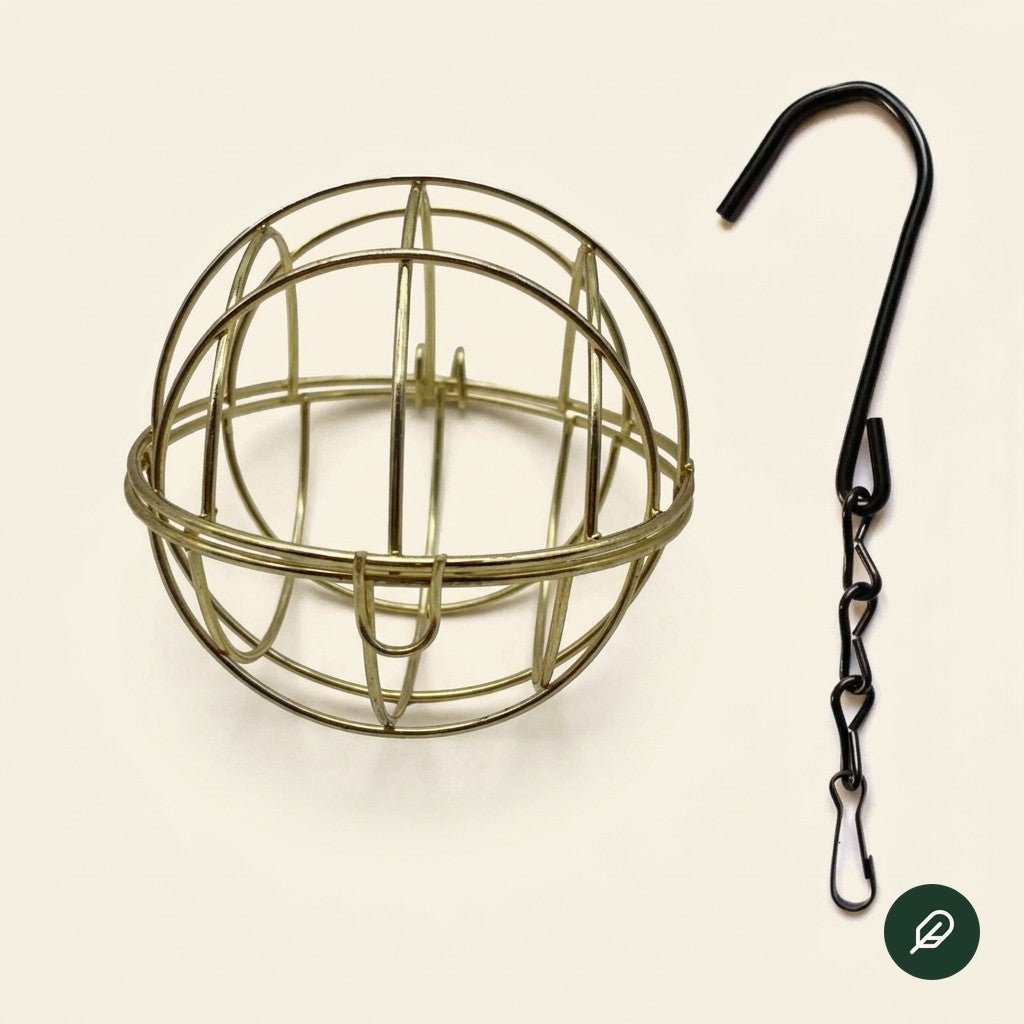
Round Suet Ball Cage
A small round wire cage made to hold one suet or fat ball. The hinged cage opens for refilling and closes with a simple wire latch. A short chain and hook are included for hanging. Available in gold-colored or black finish. This is a suet holder, not a hummingbird feeder.
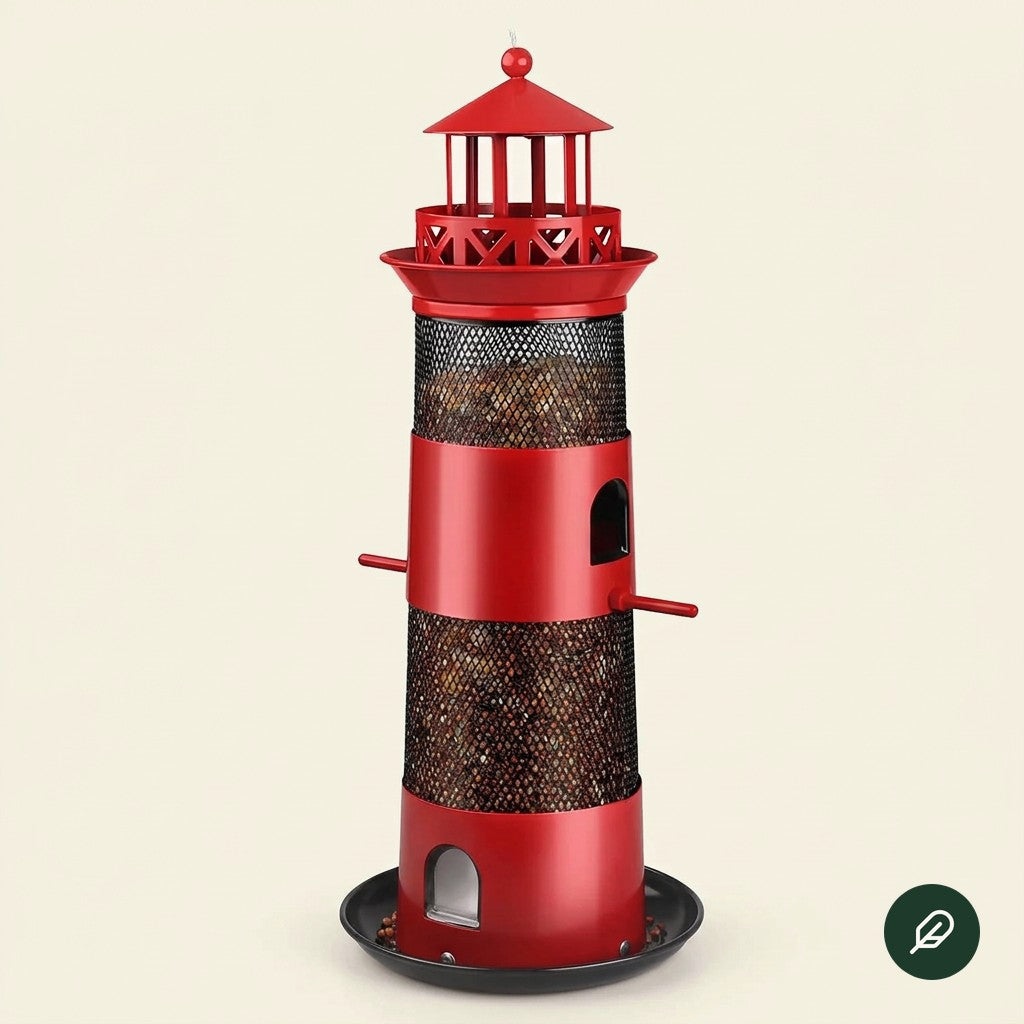
Lighthouse Metal Seed Feeder
A red-and-black metal seed feeder built in the shape of a lighthouse. The tall mesh body holds up to 4 lb of seed, with four feeding openings and perches arranged around the body. A circular tray catches some loose seed, and the top wire loop is used for hanging. Check and clean the feeder regularly, especially after wet weather.
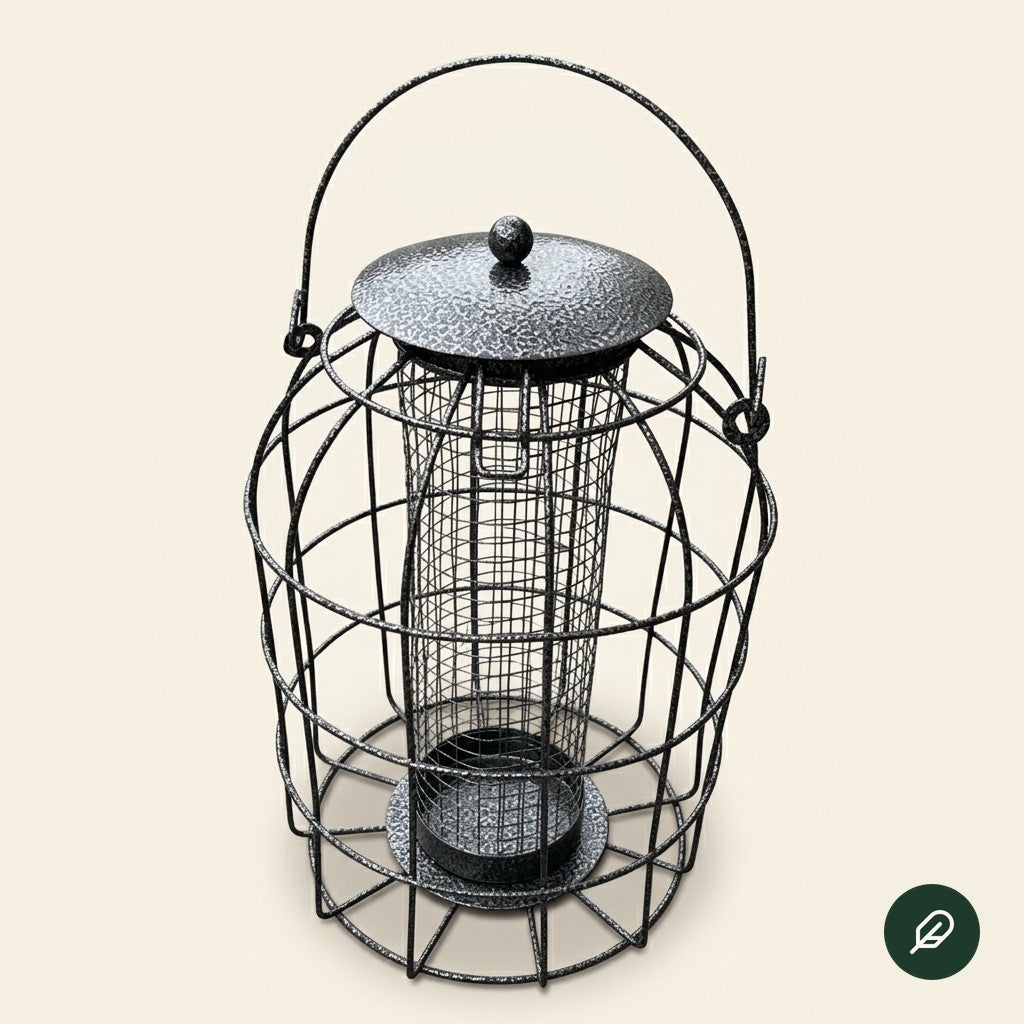
Caged Tube Bird Feeder
A metal tube feeder inside a wide protective cage. The outer cage limits access by squirrels and larger birds while smaller birds can reach the inner seed tube. A top handle makes it easy to hang, and the lid lifts for refilling. Available in black or green. No feeder is completely squirrel-proof, so placement still matters.

- Core seed
- Black-oil sunflower
- Fat
- Rendered suet — safe in freezing weather
- Small finches
- Nyjer for redpolls and siskins
- Start
- By late October, before the first hard freeze
- Bear country
- Feeders down from spring to late fall
Who you'll see
A Canadian winter feeder is a small, tough crowd. Almost everywhere south of the treeline you can expect Black-capped Chickadees, Red-breasted and White-breasted Nuthatches, Downy and Hairy Woodpeckers, Blue Jays, Dark-eyed Juncos and House Finches or House Sparrows near towns. American Tree Sparrows come down from the north to forage under feeders.
Then there are the irruptive finches: Common Redpolls, Pine Siskins, Evening and Pine Grosbeaks, crossbills. Some winters they flood south in big numbers when seed crops fail in the boreal forest; other winters you won't see one. Each autumn, the Finch Research Network publishes a winter finch forecast based on cone and seed crops, which is worth reading in October.
What to feed
Keep it simple and high in fat. Birds in -20°C (-4°F) weather burn through reserves overnight.
- Black-oil sunflower: the best single seed. Thin shells, high oil, taken by almost every feeder bird.
- Sunflower hearts: no shells left on the snow, which matters on condo balconies and decks.
- Suet: rendered beef suet or commercial cakes. In freezing weather it won't go rancid or soften, and woodpeckers, nuthatches and chickadees depend on it.
- Peanuts: shelled for chickadees and nuthatches, in a mesh or caged feeder; whole for jays.
- Nyjer: in a fine-port feeder for redpolls and siskins in an irruption year. Buy small amounts so it stays fresh.
- Millet or mixed seed scattered on a tray or swept patch of ground for juncos and tree sparrows.
Feeders that cope with snow and ice
Snow and freezing rain clog trays and freeze seed into blocks. Tube feeders with drainage, hopper feeders with a deep roof, and caged suet holders all handle winter better than open platforms. Knock snow off roofs after a storm and check ports haven't iced over. Metal feeders last longer than plastic in deep cold, which can make plastic brittle.
Put feeders where you can reach them without wading through a metre of snow, and within sight of a window. Dense evergreens within a few metres give birds shelter from wind and from Sharp-shinned Hawks and Northern Shrikes, both regular winter visitors at feeders.
When to start and stop
Start by late October so birds have found the feeders before the first big storm. Once you start, be consistent through the coldest weeks; a winter flock builds its daily route around reliable food, and a sudden gap during a cold snap is hard on them. In spring, taper off gradually.
In bear country — much of BC, Alberta, northern Ontario and Quebec, and plenty of rural areas elsewhere — take seed feeders and suet down when bears wake in spring, usually March or April, and don't put them back until bears have denned, often late November. Some municipalities and parks have bylaws restricting feeders. Check yours.
Hygiene in winter
Cold slows disease but doesn't stop it. House Finch eye disease and salmonellosis show up at crowded winter feeders. Clean feeders every couple of weeks with hot soapy water or a weak bleach solution, rinse and let them dry. Rake up shells and droppings when the snow allows. If you see sick birds, take feeders down for a week or two.
Count your birds
Project FeederWatch, run in Canada by Birds Canada and the Cornell Lab of Ornithology, runs from November to April. Participants count the birds at their feeders on chosen days and the data tracks winter bird populations across the continent. It's a good use of a cold morning at the window.
Placing feeders against the wind
Wind is often harder on small birds than temperature. Put feeders on the sheltered side of the house or a row of evergreens, out of the prevailing northwest wind across most of the Prairies and Ontario. Birds will spend longer at a feeder that is out of the wind, and seed stays drier. On a deck, a corner protected on two sides works well. If snow drifts around the station, shovel a small patch underneath so juncos and tree sparrows can feed on the ground without disappearing into powder.
Sources
Food and hygiene advice follows Project FeederWatch and Birds Canada.
Frequently asked
What is the best food for birds in a Canadian winter?
Black-oil sunflower seed plus rendered suet. Add peanuts for chickadees and nuthatches and nyjer in finch irruption years.
When should I start feeding birds in winter in Canada?
By late October, so birds find your feeders before the first major storm.
Is suet safe to put out in winter?
Yes. In freezing weather rendered suet stays firm and doesn't go rancid, and it's a key food for woodpeckers and nuthatches.
Should I take feeders down because of bears?
In bear country, yes — from spring until bears den in late fall. Some municipalities require it.
More Canadian winter guides
- Heated Bird Baths in Canada: Keeping Water Open at -20°C
In a Canadian winter, open water can draw more birds than any feeder. How deicers work, what wattage you need for prairie cold versus a coastal winter, and the safety marks to look for.
- Squirrel-Proof Bird Feeders in Canada: Red, Grey and Black Squirrels
Canada has two very different feeder raiders: the small, fearless red squirrel and the larger eastern grey (often black). What stops each one, and why snow depth changes your baffle height.
- Bird Feeders for Condos and Balconies in Canada
You can feed birds from a Toronto, Vancouver or Calgary condo — but check your building's rules, choose no-mess food and pick the right floor height. A practical guide to window and balcony feeders.
- How to Attract Chickadees in Canada: Food, Nest Boxes and Winter Care
Canada has four regular chickadees — Black-capped, Boreal, Chestnut-backed and Mountain. Which one lives near you, what they eat at feeders, and the nest box size that suits them.
More troubleshooting
- Why Birds Stopped Coming to Your Feeder (and What to Do by Season)
- Keeping House Sparrows Out of Bluebird and Chickadee Boxes
- A Hawk Is Hunting at My Bird Feeder: What It Means and What to Do
- Keep Squirrels Off a Shepherd's Hook and Out of Feeders
- How to Get Rid of Grackles at Your Feeders (Without Losing the Birds You Want)
- How to Keep Starlings Off Your Feeders (Suet, Seed and Nest-Box Problems)
- How to Stop Raccoons Raiding Your Bird Feeders (and Your Nest Boxes)
- Bears and Bird Feeders: When to Take Feeders Down (and How to Feed Birds in Bear Country)
- How to Stop Rats and Mice Moving In Under Your Bird Feeders
- Bird Feeder Placement: Height, Distance and Sightlines That Actually Work
- How to Keep Cats Away From Your Bird Feeders (Yours and the Neighbors')
- Sick Birds at Your Feeder: House Finch Eye Disease, Salmonella and What To Do
- How to Keep Crows and Jays From Taking Over Your Feeders
- Why a Woodpecker Is Pecking Your House (and How to Make It Stop)
- Choosing and Placing a Bird Bath: Depth, Material, Moving Water and Location
- How to Clean a Bird Bath: Algae, Safe Cleaning and Mosquitoes
- Bird Bath Water Through the Seasons: Freezing Winters and Summer Heat
- Why Birds Won't Use Your Bird Bath: 8 Common Reasons and Fixes
- Window Bird Feeders in the UK: Which Birds Use Them and How to Make One Stick
- How to Set Up a Bird Feeding Station in a UK Garden
- Robin Bird Box: Open-Front Design, Height and Where to Put It
- Squirrel-Proof Bird Feeders in the UK: What Stops Grey Squirrels
- Bird Baths for UK Gardens: Depth, Placement and Keeping Ice Off
- Caged Bird Feeders: Keep Out Squirrels, Starlings and Grackles
- Upside-Down Suet Feeders: Feed Woodpeckers, Not Starlings
- Window Bird Feeders: Which Ones Stay Up, and Which Birds Come
- Bird Feeder Pole Setup: Height, Depth and Baffle Placement
- Deck Railing Bird Feeders: Mounting, Mess and Squirrels