Upside-Down Suet Feeders: Feed Woodpeckers, Not Starlings
Woodpeckers, nuthatches and chickadees will hang underneath a suet cake to feed. Starlings mostly won't. How a bottom-feeding suet feeder works, how well it actually deters starlings, and how to set one up.
7 min read · Updated 2026-10-27
Equipment for this job
We don't stock a covered upside-down suet feeder yet. The ball cage suits woodpeckers and chickadees; the caged tube can hold suet away from starlings.
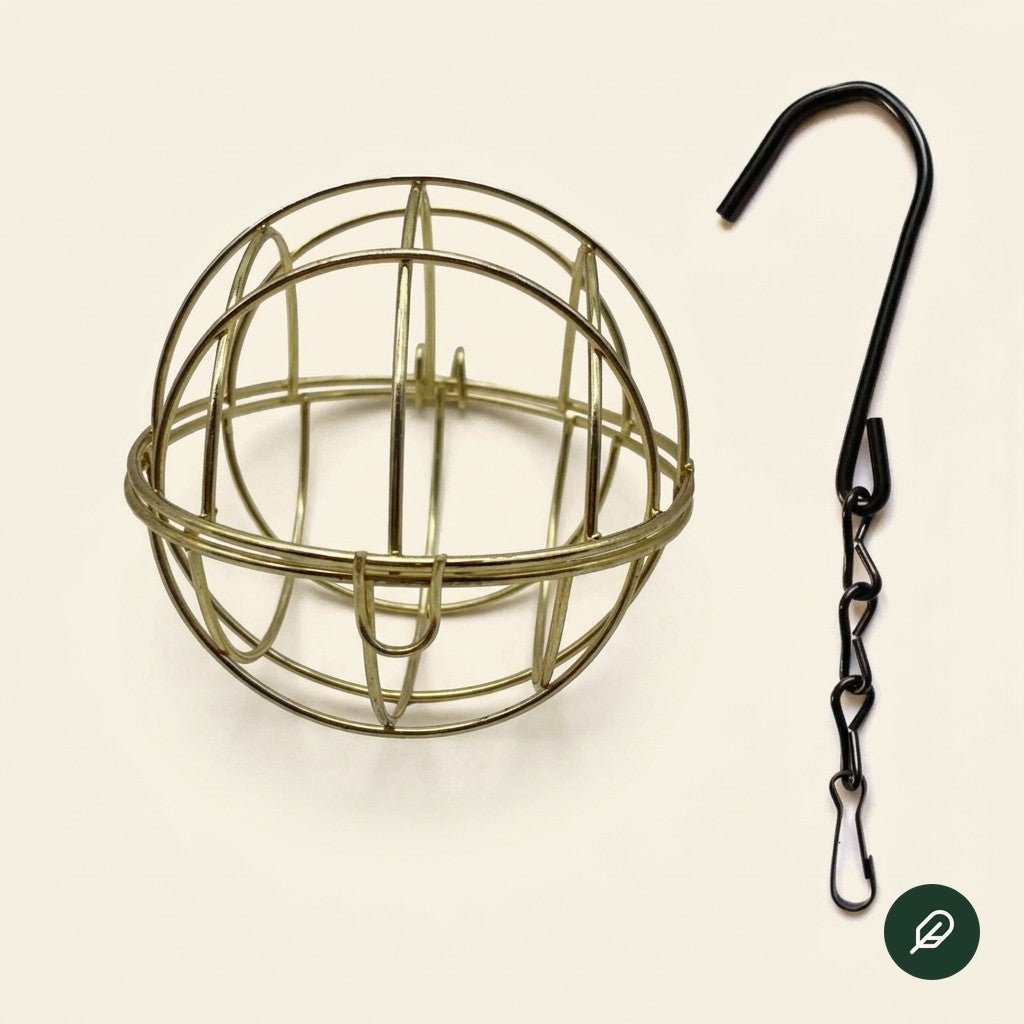
Round Suet Ball Cage
A small round wire cage made to hold one suet or fat ball. The hinged cage opens for refilling and closes with a simple wire latch. A short chain and hook are included for hanging. Available in gold-colored or black finish. This is a suet holder, not a hummingbird feeder.
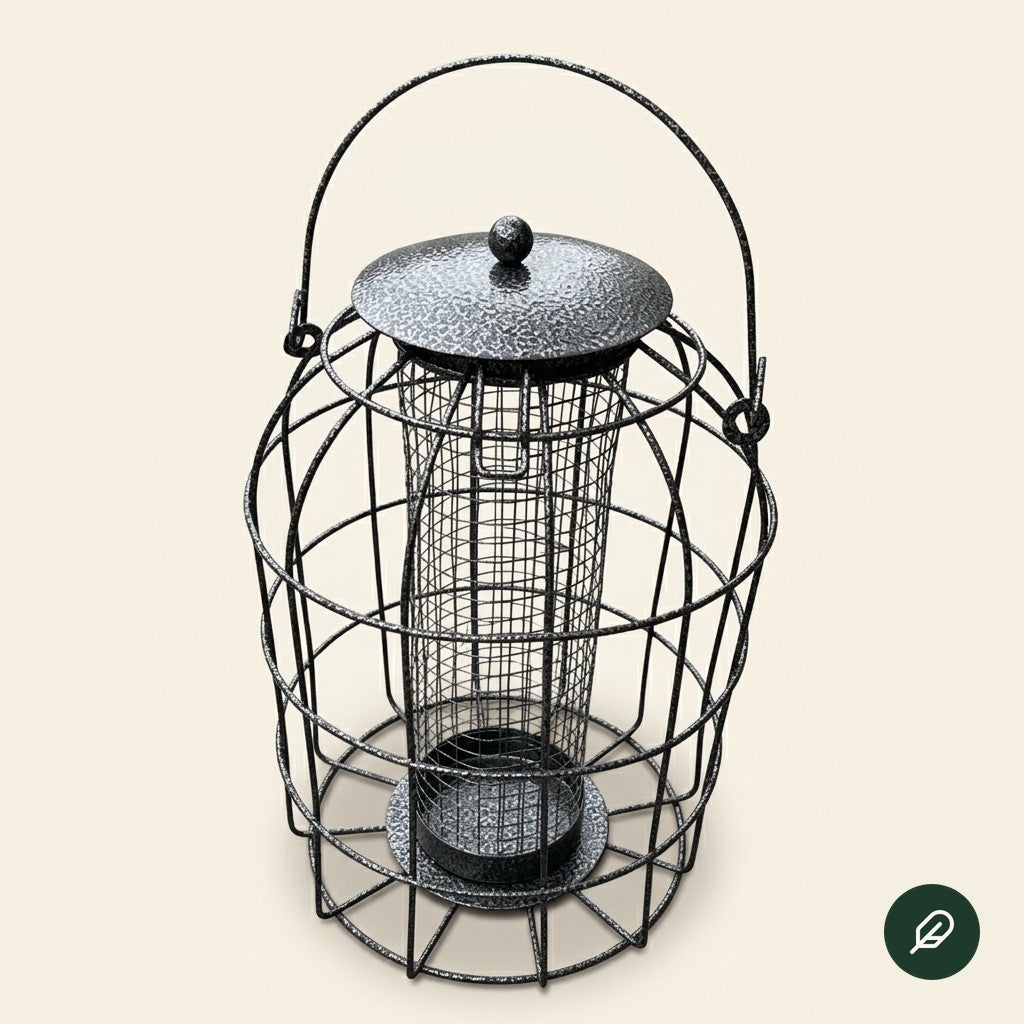
Caged Tube Bird Feeder
A metal tube feeder inside a wide protective cage. The outer cage limits access by squirrels and larger birds while smaller birds can reach the inner seed tube. A top handle makes it easy to hang, and the lid lifts for refilling. Available in black or green. No feeder is completely squirrel-proof, so placement still matters.

- Feeds from
- The underside only — the top and sides are covered
- Birds that adapt
- Downy, Hairy and Red-bellied Woodpeckers, nuthatches, chickadees, titmice
- Birds it slows down
- European Starlings, grackles, House Sparrows
- Best season
- Late fall to early spring; use no-melt suet in heat
- Height
- 5–6 ft, near a trunk or pole woodpeckers already use
Why feeding upside down works
Woodpeckers and nuthatches spend their lives clinging to bark at odd angles. A Downy Woodpecker will hang under a branch to probe for insects without a second thought, and White-breasted Nuthatches routinely forage head-down. An upside-down suet feeder uses that. The suet cake sits in a cage with a solid roof and sides, so the only exposed face is the bottom. Birds have to cling to the wire and feed hanging underneath.
European Starlings can cling, but they are far less comfortable doing it. They prefer to stand on top of a suet cage and pull chunks out, and a flock of them can strip a full cake in a day. Take away the standing room and most starlings give up and move on. Grackles and House Sparrows behave in a similar way.
This is the cheapest starling fix there is. No special food, no electronics, just a feeder that suits the birds you want and not the ones you don't.
How well it actually works
It reduces starlings rather than eliminating them. Some individual starlings learn to hang and feed, especially in a hard winter when food is scarce. Expect a big drop in how fast the suet disappears, not a feeder no starling ever touches. Project FeederWatch participants regularly report the same thing: bottom-feeding suet holders are one of the more reliable ways to keep suet for woodpeckers.
Squirrels are a separate problem. An upside-down design does little to stop a squirrel, which can hang from its back feet. If squirrels are taking the suet, hang the feeder on a baffled pole or from a wire well away from launch points, or use hot-pepper suet. Birds don't taste capsaicin; mammals do.
Which suet to use
Standard square cakes fit most upside-down feeders. Pure rendered beef suet and suet mixed with peanuts or seed both work; woodpeckers take either. Cakes heavy in millet attract sparrows, which is the opposite of what you want here.
In summer, use no-melt or dough-style suet. Soft, melting suet can smear onto feathers, and a greasy feather loses some of its waterproofing. Many people simply stop offering suet in the hottest months and switch to a peanut or sunflower feeder. If you feed year-round, check the cake every few days and throw out anything that has gone rancid or soft.
Round suet balls are an alternative. In a ball cage, birds feed from all sides, so it is a less effective starling deterrent than a covered upside-down feeder, but woodpeckers and chickadees use them well and they are easier to refill.
Where to hang it
Woodpeckers find suet fastest near trees they already forage on. Hang the feeder 5 to 6 feet up on a trunk-side branch, on a post near mature trees, or from a pole within sight of woods. If you have a tree with a dead limb that woodpeckers drum on, that is the place.
Keep the feeder in partial shade, which keeps suet firmer. Give it a clear approach from below: birds feeding upside down fly up into it, so dense shrubs right underneath make it harder for them to land. If you already have a seed station, a suet feeder hung a few feet away spreads the birds out and reduces squabbling.
Cleaning and upkeep
Suet leaves grease on the cage. Every few cakes, take the feeder down and scrub it with hot soapy water, then rinse and dry it before refilling. Grease that builds up collects dirt and mould, and a sticky cage can foul feathers. Wooden frames absorb fat over time; a metal or coated-wire feeder is easier to keep clean.
Watch for wear on the cage wire. Woodpeckers hammer as they feed, and a cheap thin wire can bend open enough for starlings to get a foothold. Replace a feeder that no longer closes properly.
If you run more than one suet feeder, rotate them: one in use, one soaking clean. Keeping a spare also means the woodpeckers that have learned your feeding spot never find it empty, which matters most in a cold snap when birds burn through fat reserves overnight and need to refuel early in the morning.
Frequently asked
Do upside-down suet feeders keep starlings away?
They cut starling feeding sharply because starlings dislike hanging upside down, but a few individuals learn. Expect suet to last much longer, not zero starlings.
Which birds use upside-down suet feeders?
Downy, Hairy and Red-bellied Woodpeckers, nuthatches, chickadees and titmice all feed from underneath readily.
Can I put suet out in summer?
Use no-melt suet in hot weather, keep the feeder in shade and replace soft or rancid cakes quickly.
Do upside-down suet feeders stop squirrels?
No. Squirrels hang by their back feet. Use a baffled pole or hot-pepper suet for squirrels.
More Canadian winter guides
- Caged Bird Feeders: Keep Out Squirrels, Starlings and Grackles
A wire cage around a tube feeder lets chickadees, titmice and finches in while keeping squirrels and big blackbirds out. How cage spacing works, which birds get through, and where a cage feeder falls short.
- Window Bird Feeders: Which Ones Stay Up, and Which Birds Come
A suction-cup feeder on the glass gives the closest view of backyard birds you'll get, and it's safer for birds than a feeder a few yards from the window. How to choose one, make it stick, and what to fill it with.
- Bird Feeder Pole Setup: Height, Depth and Baffle Placement
A pole is the most squirrel-resistant way to hang feeders, but only if it is the right height, far enough from launch points and fitted with a baffle in the right place. The measurements that matter.
- Deck Railing Bird Feeders: Mounting, Mess and Squirrels
A clamp-on arm or rail-mounted feeder brings birds right to a deck or porch. How to mount one without damaging the railing, keep seed off the boards, and stop the deck becoming a squirrel buffet.
More troubleshooting
- Why Birds Stopped Coming to Your Feeder (and What to Do by Season)
- Keeping House Sparrows Out of Bluebird and Chickadee Boxes
- A Hawk Is Hunting at My Bird Feeder: What It Means and What to Do
- Keep Squirrels Off a Shepherd's Hook and Out of Feeders
- How to Get Rid of Grackles at Your Feeders (Without Losing the Birds You Want)
- How to Keep Starlings Off Your Feeders (Suet, Seed and Nest-Box Problems)
- How to Stop Raccoons Raiding Your Bird Feeders (and Your Nest Boxes)
- Bears and Bird Feeders: When to Take Feeders Down (and How to Feed Birds in Bear Country)
- How to Stop Rats and Mice Moving In Under Your Bird Feeders
- Bird Feeder Placement: Height, Distance and Sightlines That Actually Work
- How to Keep Cats Away From Your Bird Feeders (Yours and the Neighbors')
- Sick Birds at Your Feeder: House Finch Eye Disease, Salmonella and What To Do
- How to Keep Crows and Jays From Taking Over Your Feeders
- Why a Woodpecker Is Pecking Your House (and How to Make It Stop)
- Choosing and Placing a Bird Bath: Depth, Material, Moving Water and Location
- How to Clean a Bird Bath: Algae, Safe Cleaning and Mosquitoes
- Bird Bath Water Through the Seasons: Freezing Winters and Summer Heat
- Why Birds Won't Use Your Bird Bath: 8 Common Reasons and Fixes
- Window Bird Feeders in the UK: Which Birds Use Them and How to Make One Stick
- How to Set Up a Bird Feeding Station in a UK Garden
- Robin Bird Box: Open-Front Design, Height and Where to Put It
- Squirrel-Proof Bird Feeders in the UK: What Stops Grey Squirrels
- Bird Baths for UK Gardens: Depth, Placement and Keeping Ice Off
- Heated Bird Baths in Canada: Keeping Water Open at -20°C
- Winter Bird Feeding in Canada: Foods, Feeders and What Shows Up
- Squirrel-Proof Bird Feeders in Canada: Red, Grey and Black Squirrels
- Bird Feeders for Condos and Balconies in Canada
- How to Attract Chickadees in Canada: Food, Nest Boxes and Winter Care