Bird Feeders for Condos and Balconies in Canada
You can feed birds from a Toronto, Vancouver or Calgary condo — but check your building's rules, choose no-mess food and pick the right floor height. A practical guide to window and balcony feeders.
7 min read · Updated 2026-10-27
Equipment for this job
Suction-cup window feeders that don't hang over the railing. We deliver to Canada.
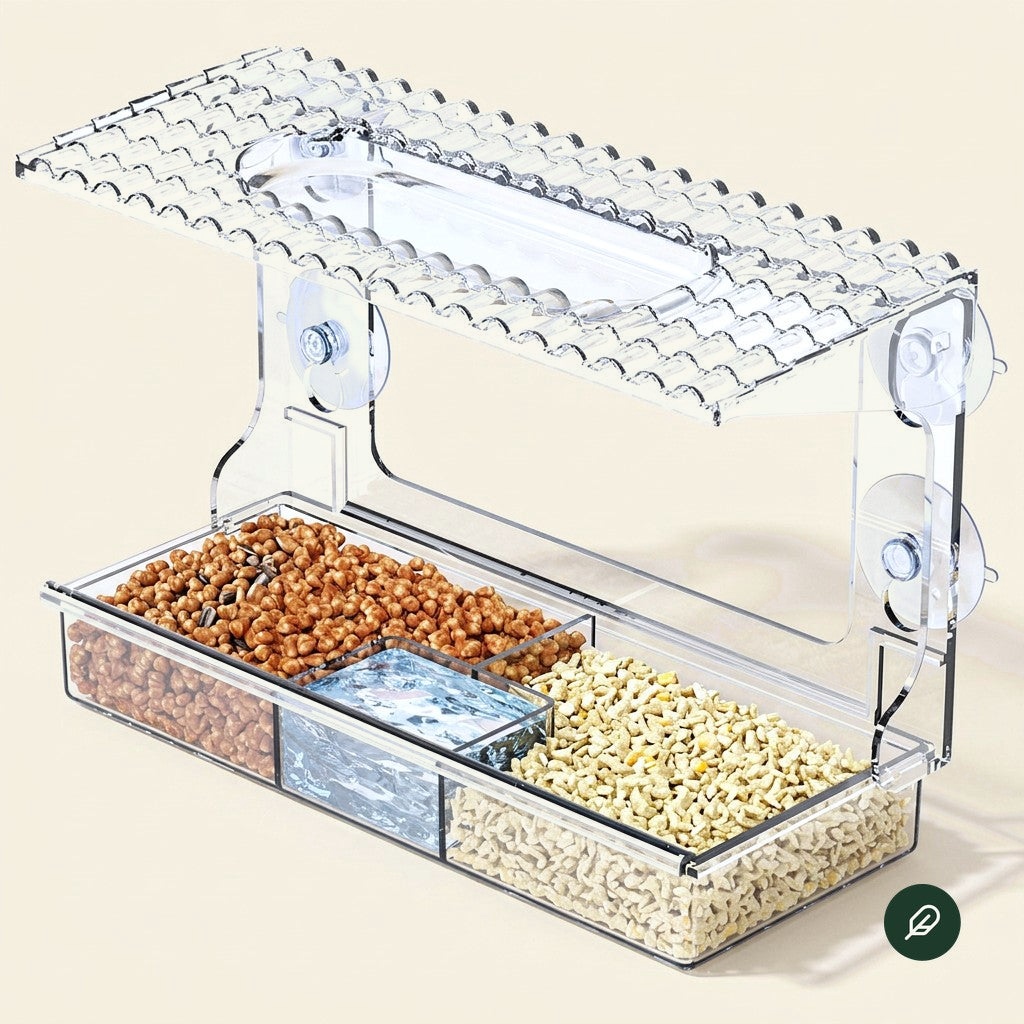
Window Feeder with Roof Bath
A wide clear acrylic window feeder with a textured roof that holds a shallow pool of water for small birds, plus a lift-out tray split into seed and water sections.Specs Clear acrylic, 4 suction cups Removable tray with drainage holes Roof basin catches rain; top it up in dry spells Tips Small birds only; jays and larger birds will crowd it. Pull the tray and rinse it weekly so wet seed doesn't mold.
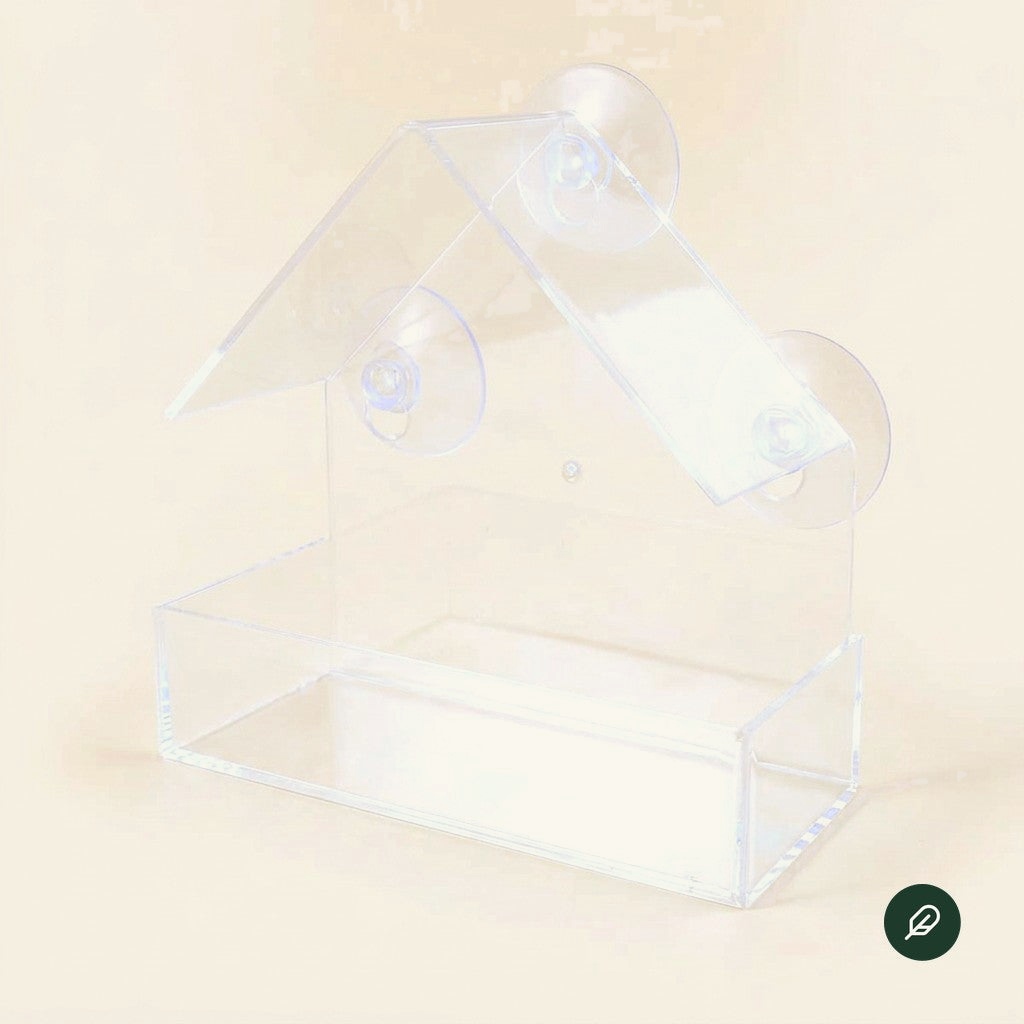
Clear Acrylic Window Feeder
Three clear acrylic window feeders that mount with suction cups. Pick the size that fits your window. Small House — peaked roof, open tray, about 15 x 15 x 7 cm. Arched Roof — about 25 x 19 x 9.5 cm, green perch bar, two-section drain tray. Slanted Roof — about 21 x 20.5 x 14.5 cm, black perch bar, two-section drain tray. TipsClean the glass before mounting. Suction cups hold best above freezing.
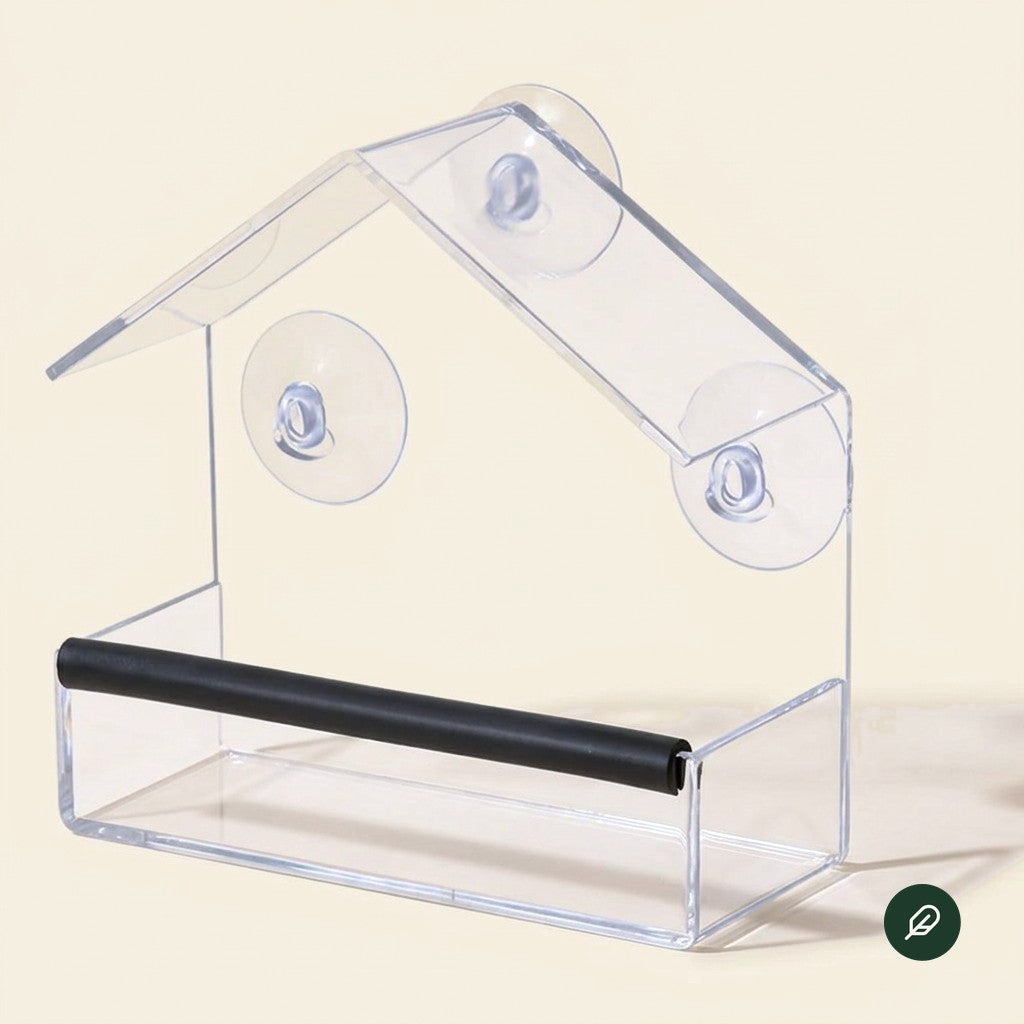
Suction-Cup Window Feeder, Five Shapes
Clear window feeders that mount with suction cups, no tools. Five shapes: Small House — about 15 x 6.5 x 15 cm, perch bar. Round Window — about 20 x 10 x 20.7 cm, viewing hole, two-section tray. Curved Tray — curved roof, oval split tray for seed and water. Long Tray — about 25 x 13 x 11 cm, three-section tray, perch bar. Tile Roof — textured roof, three-section tray with water cup. Tips Clean glass first; suction cups hold best above freezing. Rinse trays weekly.

- Check first
- Condo or strata rules and bylaws
- Best feeder
- Suction-cup window feeder on the glass
- No-mess food
- Sunflower hearts
- Floor height
- Low and mid floors get the most visits
- Avoid
- Food that attracts pigeons — mixed seed, bread, scatter
Check the rules first
Many Canadian condominium corporations (and strata corporations in BC) have rules about balconies: what can hang over the railing, what can be attached to the building, and often feeding pigeons or wildlife. Some ban bird feeders outright, usually because of pigeons and droppings. Read your declaration and rules, or ask property management, before you buy anything. A small suction-cup feeder on your own window glass is often acceptable where a hanging balcony feeder isn't, but don't assume.
Which floor works
Birds use feeders where they already travel, and in a city that's mostly at tree height. Feeders on low and mid floors, near street trees, a park or a ravine, get far more visits than those high up a tower. Above the canopy, traffic usually thins out. Chickadees and nuthatches will come up a few storeys; House Finches and House Sparrows are common on lower floors. A balcony facing green space beats one facing a parking lot.
Be patient. A feeder on a new balcony can take weeks to be found.
Window feeders: the condo-friendly option
A clear acrylic feeder fixed to the outside of your window with suction cups is the easiest setup. It doesn't hang over the railing, it's quick to take down, and birds leaving a feeder on the glass don't hit the window at speed. Feeders placed a few metres from big windows are the ones that cause strikes, so on a glass-walled balcony, closer is safer.
- Clean the glass with vinegar or rubbing alcohol before fitting.
- Warm the suction cups before pressing them on; in a Canadian winter, cold cups are the main reason feeders fall.
- Fit it in mild weather if possible and let it sit before loading.
- Make sure you can reach it to refill — from the balcony or an opening pane.
Keep it tidy
Seed hulls and droppings on a neighbour's balcony are how feeders get banned. Use sunflower hearts, which have no shells. Avoid mixed seed with millet and corn, which pigeons love, and never scatter food on the floor or railing. Put out only what the birds clear in a day. Sweep the balcony regularly, and fit a tray under any hanging feeder to catch spills.
If pigeons start using it, take the feeder down for a couple of weeks. They'll move on, and smaller birds will return faster than they do.
Water on a balcony
A shallow dish of water is welcome from spring to fall. Change it every day or two so mosquitoes can't breed and it stays clean. In winter, most balconies have no safe outdoor outlet for a heater, so bring the dish in at night or swap two dishes.
Window safety in glass towers
Glass buildings are a serious hazard to migrating birds in Canada, and organisations such as FLAP Canada in Toronto have documented large numbers of collisions. Some cities, including Toronto, have bird-friendly design guidelines for new buildings. At home, turn off unnecessary lights at night during spring and fall migration, close blinds, and if birds hit your windows, apply dot-pattern markers on the outside of the glass spaced no more than 2 inches (5 cm) apart.
What you're likely to see
Black-capped Chickadees, House Finches, House Sparrows and Dark-eyed Juncos are the most likely visitors in most cities. Juncos are ground birds and may pick up spilled hearts on a lower balcony. In winter, Red-breasted Nuthatches and the occasional Downy Woodpecker turn up where there are trees nearby, and in an irruption year redpolls and siskins can arrive in flocks.
Winter on a balcony
Balconies are windy. A feeder on the sheltered side of the balcony, against the building wall, holds seed better and gets more use in a cold snap. Check the suction cups after big temperature swings, which can loosen them. Snow and freezing rain can bury a window feeder's tray; brush it out and refill with fresh hearts so birds aren't left with frozen clumps.
Sources
Feeding and window-safety advice follows Project FeederWatch and Birds Canada.
Frequently asked
Can I put a bird feeder on my condo balcony?
It depends on your condominium or strata rules. Check your declaration and rules first; some buildings ban feeders because of pigeons.
Do birds come to feeders on high floors?
Low and mid floors near trees get the most visits. Above tree height, traffic usually drops.
What is the best bird food for a balcony?
Sunflower hearts. They have no shells, so there's less mess for you and your neighbours, and they don't attract pigeons the way mixed seed does.
Will a window feeder stay on in a Canadian winter?
Yes, if the glass is clean and the suction cups are warmed before fitting. Cold, stiff cups are the main reason feeders fall in winter.
More Canadian winter guides
- Heated Bird Baths in Canada: Keeping Water Open at -20°C
In a Canadian winter, open water can draw more birds than any feeder. How deicers work, what wattage you need for prairie cold versus a coastal winter, and the safety marks to look for.
- Winter Bird Feeding in Canada: Foods, Feeders and What Shows Up
From chickadees and nuthatches to redpolls and grosbeaks, what to feed through a Canadian winter, which feeders cope with snow and ice, and how to plan for the finch years.
- Squirrel-Proof Bird Feeders in Canada: Red, Grey and Black Squirrels
Canada has two very different feeder raiders: the small, fearless red squirrel and the larger eastern grey (often black). What stops each one, and why snow depth changes your baffle height.
- How to Attract Chickadees in Canada: Food, Nest Boxes and Winter Care
Canada has four regular chickadees — Black-capped, Boreal, Chestnut-backed and Mountain. Which one lives near you, what they eat at feeders, and the nest box size that suits them.
More troubleshooting
- Why Birds Stopped Coming to Your Feeder (and What to Do by Season)
- Keeping House Sparrows Out of Bluebird and Chickadee Boxes
- A Hawk Is Hunting at My Bird Feeder: What It Means and What to Do
- Keep Squirrels Off a Shepherd's Hook and Out of Feeders
- How to Get Rid of Grackles at Your Feeders (Without Losing the Birds You Want)
- How to Keep Starlings Off Your Feeders (Suet, Seed and Nest-Box Problems)
- How to Stop Raccoons Raiding Your Bird Feeders (and Your Nest Boxes)
- Bears and Bird Feeders: When to Take Feeders Down (and How to Feed Birds in Bear Country)
- How to Stop Rats and Mice Moving In Under Your Bird Feeders
- Bird Feeder Placement: Height, Distance and Sightlines That Actually Work
- How to Keep Cats Away From Your Bird Feeders (Yours and the Neighbors')
- Sick Birds at Your Feeder: House Finch Eye Disease, Salmonella and What To Do
- How to Keep Crows and Jays From Taking Over Your Feeders
- Why a Woodpecker Is Pecking Your House (and How to Make It Stop)
- Choosing and Placing a Bird Bath: Depth, Material, Moving Water and Location
- How to Clean a Bird Bath: Algae, Safe Cleaning and Mosquitoes
- Bird Bath Water Through the Seasons: Freezing Winters and Summer Heat
- Why Birds Won't Use Your Bird Bath: 8 Common Reasons and Fixes
- Window Bird Feeders in the UK: Which Birds Use Them and How to Make One Stick
- How to Set Up a Bird Feeding Station in a UK Garden
- Robin Bird Box: Open-Front Design, Height and Where to Put It
- Squirrel-Proof Bird Feeders in the UK: What Stops Grey Squirrels
- Bird Baths for UK Gardens: Depth, Placement and Keeping Ice Off
- Caged Bird Feeders: Keep Out Squirrels, Starlings and Grackles
- Upside-Down Suet Feeders: Feed Woodpeckers, Not Starlings
- Window Bird Feeders: Which Ones Stay Up, and Which Birds Come
- Bird Feeder Pole Setup: Height, Depth and Baffle Placement
- Deck Railing Bird Feeders: Mounting, Mess and Squirrels