How to Keep Starlings Off Your Feeders (Suet, Seed and Nest-Box Problems)
European Starlings are the most aggressive birds at North American feeders. Here's the hardware and seed that shut them out — plus what to do about starlings in your bluebird boxes.
8 min read · Updated 2026-10-01
Equipment for this job
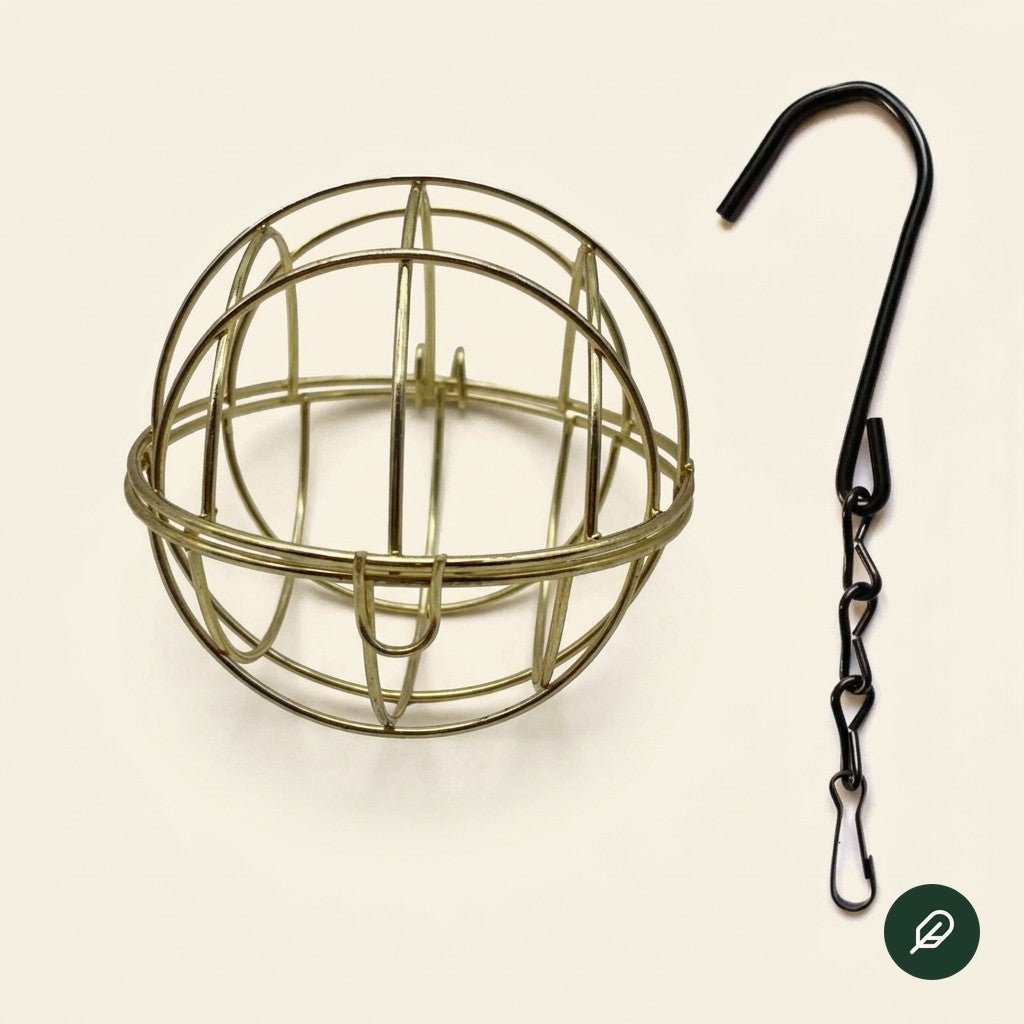
Upside-down and caged suet feeders are the classic starling solution — the birds you want feed fine, starlings give up.

- Status
- Non-native, invasive; not protected by the MBTA
- Weak point
- Poor at clinging and hanging; needs flat perches
- Seed they avoid
- Safflower, nyjer; they swamp sunflower, suet, corn
- Suet fix
- Upside-down or caged suet feeders
- Nest-box fix
- 1½" hole + deep box; no perch; monitor and remove nests
The bird you're up against
European Starlings were introduced to New York's Central Park in 1890 and now number somewhere around 200 million across North America. At feeders they behave like the invasive they are: they arrive in noisy flocks, eat everything (sunflower, suet, corn, bread, pet food), dominate every perch by weight and attitude, and they don't leave. They're also cavity-nesting competitors that evict bluebirds, woodpeckers and flickers from natural cavities — and will take over nest boxes given the chance.
One legal fact changes the calculus: starlings are non-native and are not protected by the Migratory Bird Treaty Act. That doesn't mean shooting them in a suburb is practical or legal under local ordinances, but it does mean you may legally remove their nests from your boxes and manage them aggressively. For most yards, though, the winning approach is the same as with grackles: make your feeders physically unsuitable for a seven-ounce bird that can't cling.
Suet: the upside-down solution
Suet is where starlings do their worst damage — a dozen starlings can demolish a suet cake in twenty minutes. Their weakness is anatomy: starlings are perching birds with weak feet and a long tail. They need to sit on top of food and peck down. Nuthatches, chickadees, titmouses and woodpeckers hang head-down or cling to vertical surfaces all day.
An upside-down suet feeder puts the cake in a cage that only opens from below. Woodpeckers, nuthatches and chickadees feed hanging; starlings try for a minute, fail to hang, and leave. A caged suet feeder with a wire grid (gaps too narrow for a starling's body) achieves the same thing. Both are passive, permanent fixes — no batteries, no adjusting. If starlings have ruined your suet feeding, one of these two feeders ends the problem in a week.
- Upside-down suet feeder: woodpeckers and nuthatches feed hanging; starlings can't.
- Caged suet feeder with ~1.5 in grid gaps blocks starlings, grackles and squirrels.
- Avoid loose crumble suet and suet balls on trays — that's starling fast food.
- Feed suet in cool weather only, or use no-melt suet in summer.
Seed feeders: small ports, awkward perches, wrong seed
Starlings prefer open trays, hoppers and platform feeders where they can stand. Tube feeders with short perches and small ports are clumsy for them, and caged tube feeders shut them out entirely. As with grackles, the menu matters: starlings relish sunflower, corn and mixes but largely ignore safflower and nyjer. A safflower tube plus a nyjer finch feeder keeps the cardinals, chickadees, finches and doves fed while offering starlings nothing worth the trip.
Feeding volume is part of the system. Starlings recruit by flock call — a feeder that pays out steadily all day becomes a gathering point, and a gathering point becomes a mob. Feed smaller amounts that finish by mid-morning during heavy starling season, and skip the ground-scatter feeding entirely. Starlings are also ground-feeding birds in nature; spilled seed under your feeders is their preferred entry point into your yard.
Starlings in nest boxes: what's legal and what works
Because starlings are non-native, you may legally remove their nests, eggs and young from nest boxes in the United States (check your state for any local rules; Canada's rules differ and are stricter). The practical defense is design: starlings can't enter a box with a 1½-inch entrance hole — that's bluebird and chickadee sizing. Starling problems in boxes usually mean the hole has been enlarged by squirrels, or the box is a decorative one with an oversized opening.
Fix the box: correct the entrance hole with a metal hole-guard plate, remove any perch (starlings use perches; bluebirds don't need them), and make sure the interior floor is deep enough that a bluebird nest sits well below the hole. If a starling still builds, remove the nest repeatedly — starlings often give up after two or three attempts, while bluebirds and chickadees typically rebuild faster than the starlings. Never do this if you're not certain the nest belongs to a starling; native swallows, wrens and bluebirds are protected and their nests are illegal to disturb.
Realistic expectations
In neighborhoods with large starling flocks — near shopping centers, livestock, or big lawns — expect pressure waves rather than elimination. Flocks descend seasonally (fall and winter especially), hit whatever is open, and move on. Your job is to have no open target: upside-down suet, caged tubes, safflower and nyjer only, no tray feeding, no spillage. Yards that run this setup report starlings becoming occasional visitors instead of permanent residents.
Don't bother with plastic owls, mirror balls or ultrasonic devices. Starlings are among the most habituation-proof birds in the world — city birds by nature, they've seen every scarecrow. The physics and menu changes above work because they don't depend on the bird being fooled; they depend on the bird being unable to eat.
Frequently asked
How do I stop starlings from eating all my suet?
Use an upside-down suet feeder or a caged suet feeder. Starlings can't hang upside-down or fit through cage grids; woodpeckers, nuthatches and chickadees feed fine at both.
What seed do starlings not like?
Safflower and nyjer. They strip sunflower, corn and mixed seed. A safflower tube feeder plus a nyjer finch feeder starves them out.
Can I remove starling nests from my birdhouse?
In the US, yes — starlings are non-native and unprotected. Be certain of the ID first; native swallows, bluebirds and wrens are protected. Canada's rules are stricter.
Will an owl decoy scare off starlings?
No. Starlings habituate to static decoys within days — faster than almost any other bird.
More troubleshooting
- Why Birds Stopped Coming to Your Feeder (and What to Do by Season)
- Keeping House Sparrows Out of Bluebird and Chickadee Boxes
- A Hawk Is Hunting at My Bird Feeder: What It Means and What to Do
- Keep Squirrels Off a Shepherd's Hook and Out of Feeders
- How to Get Rid of Grackles at Your Feeders (Without Losing the Birds You Want)
- How to Stop Raccoons Raiding Your Bird Feeders (and Your Nest Boxes)
- Bears and Bird Feeders: When to Take Feeders Down (and How to Feed Birds in Bear Country)
- How to Stop Rats and Mice Moving In Under Your Bird Feeders
- Bird Feeder Placement: Height, Distance and Sightlines That Actually Work
- How to Keep Cats Away From Your Bird Feeders (Yours and the Neighbors')
- Sick Birds at Your Feeder: House Finch Eye Disease, Salmonella and What To Do
- How to Keep Crows and Jays From Taking Over Your Feeders
- Why a Woodpecker Is Pecking Your House (and How to Make It Stop)
- Choosing and Placing a Bird Bath: Depth, Material, Moving Water and Location
- How to Clean a Bird Bath: Algae, Safe Cleaning and Mosquitoes
- Bird Bath Water Through the Seasons: Freezing Winters and Summer Heat
- Why Birds Won't Use Your Bird Bath: 8 Common Reasons and Fixes
- Window Bird Feeders in the UK: Which Birds Use Them and How to Make One Stick
- How to Set Up a Bird Feeding Station in a UK Garden
- Robin Bird Box: Open-Front Design, Height and Where to Put It
- Squirrel-Proof Bird Feeders in the UK: What Stops Grey Squirrels
- Bird Baths for UK Gardens: Depth, Placement and Keeping Ice Off
- Heated Bird Baths in Canada: Keeping Water Open at -20°C
- Winter Bird Feeding in Canada: Foods, Feeders and What Shows Up
- Squirrel-Proof Bird Feeders in Canada: Red, Grey and Black Squirrels
- Bird Feeders for Condos and Balconies in Canada
- How to Attract Chickadees in Canada: Food, Nest Boxes and Winter Care
- Caged Bird Feeders: Keep Out Squirrels, Starlings and Grackles
- Upside-Down Suet Feeders: Feed Woodpeckers, Not Starlings
- Window Bird Feeders: Which Ones Stay Up, and Which Birds Come
- Bird Feeder Pole Setup: Height, Depth and Baffle Placement
- Deck Railing Bird Feeders: Mounting, Mess and Squirrels