Squirrel-Proof Bird Feeders in Canada: Red, Grey and Black Squirrels
Canada has two very different feeder raiders: the small, fearless red squirrel and the larger eastern grey (often black). What stops each one, and why snow depth changes your baffle height.
8 min read · Updated 2026-10-27
Equipment for this job
A wide baffle and a metal caged tube feeder. We deliver to Canada.
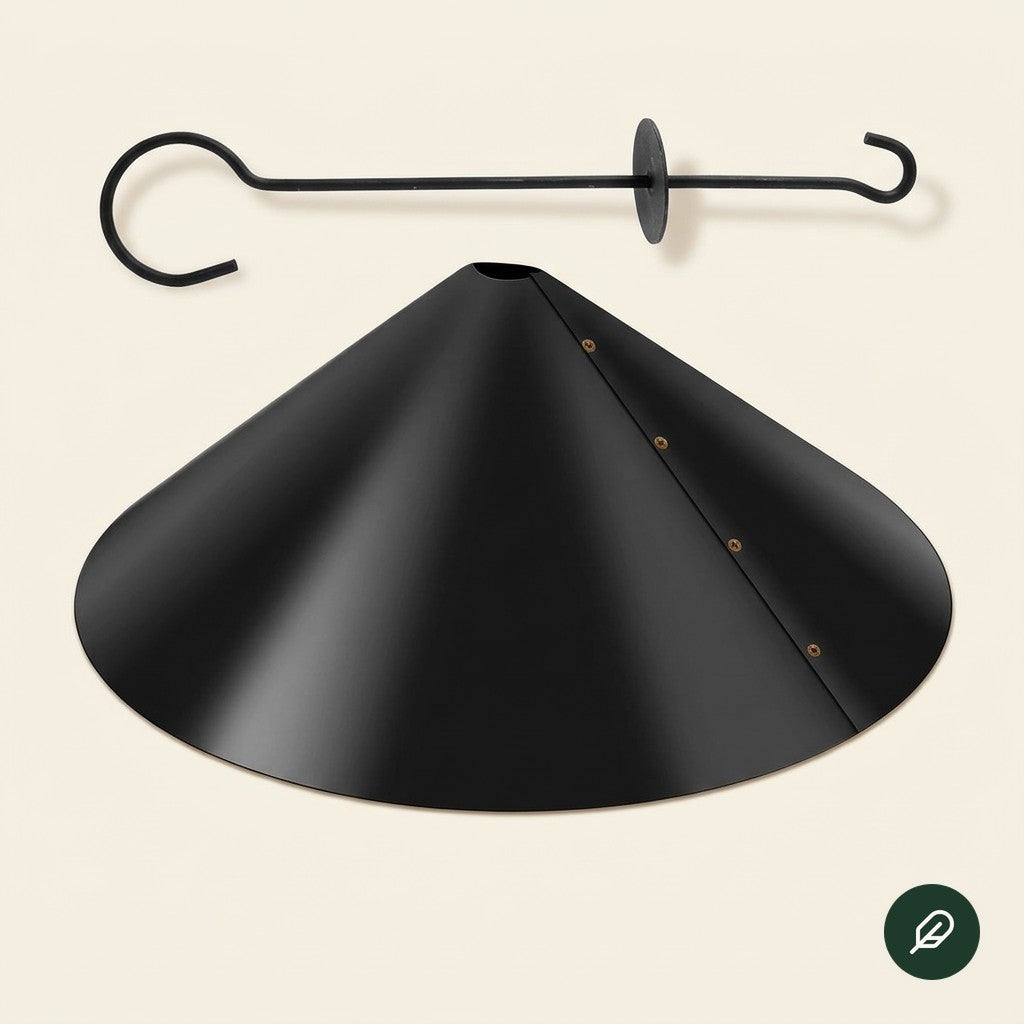
18-Inch Squirrel Baffle
A wide black baffle for helping keep squirrels from reaching a hanging or pole-mounted feeder. The cone measures 18 inches (45.7 cm) across. Choose the hanging-hook setup or pole-collar setup to suit your feeder station. Position the baffle so squirrels cannot bypass it from a nearby branch, railing, or roof.
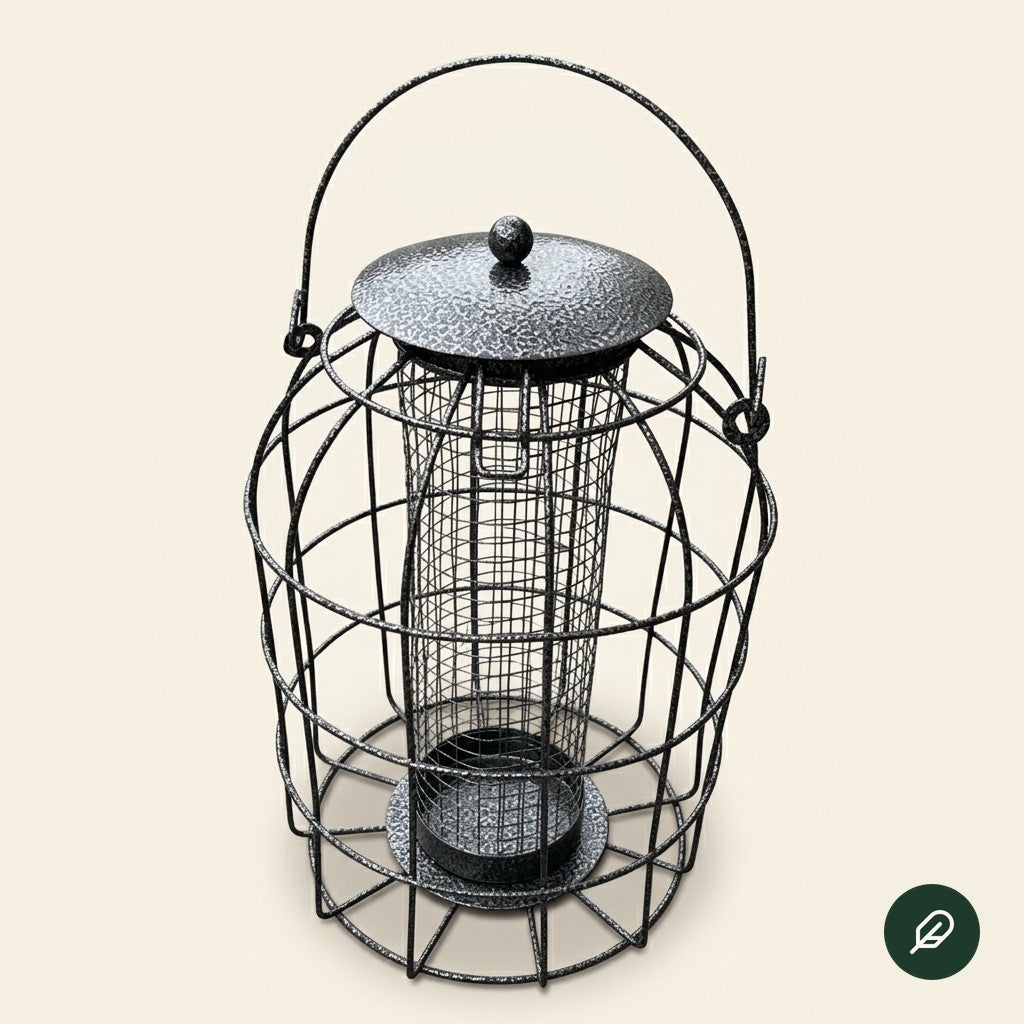
Caged Tube Bird Feeder
A metal tube feeder inside a wide protective cage. The outer cage limits access by squirrels and larger birds while smaller birds can reach the inner seed tube. A top handle makes it easy to hang, and the lid lifts for refilling. Available in black or green. No feeder is completely squirrel-proof, so placement still matters.

- Red squirrel
- About 200–250 g; can fit through some cages
- Eastern grey/black
- About 400–700 g; stopped by most cages
- Vertical jump
- Up to about 5 ft (1.5 m)
- Sideways leap
- Up to about 8–10 ft (2.5–3 m)
- Baffle
- Bottom edge 4–5 ft above the snow, not the lawn
Two kinds of squirrel problem
Across most of Canada, the squirrel at your feeder is the American red squirrel: small, rust-coloured, loud, and territorial. It lives in conifer and mixed forest from Newfoundland to the Yukon and is common in towns with spruce and pine. In southern Ontario, southern Quebec, parts of the Maritimes and some western cities, you'll also see eastern grey squirrels — many of them black, a colour form that is especially common in Toronto, Ottawa and Montreal.
The difference matters. Most "squirrel-proof" feeders are designed around the grey. Greys are roughly two to three times the weight of a red. A cage gap that keeps out a grey will sometimes let a determined red squirrel squeeze through, and weight-activated feeders set for a grey may not close for a red.
Distance first
Both species jump, the greys further. Keep feeders at least 8 to 10 feet (about 2.5–3 m) from fences, decks, eaves, trees and anything else a squirrel could launch from, and at least 5 feet (1.5 m) off the ground. Check from the squirrel's point of view: the branch overhead, the deck railing, the recycling bin someone leaves beside the pole.
Baffles, and the snow problem
A cone or tube baffle on a pole, below the feeder, stops climbing. A wide dome over a hanging feeder stops a squirrel coming down from above. Both work for reds and greys if the gaps are right.
Here's the Canadian complication: snow. A baffle set 4 feet up on a lawn in October may be 2 feet above a packed snowbank by February, and a squirrel can simply step over it. Measure baffle height from the top of the snow, not the ground. Mount it higher than you think in fall, or plan to raise it after the big storms, and clear snow from around the pole base.
Cages and feeder design
A caged tube feeder keeps greys and jays out and lets chickadees, nuthatches, finches and juncos in. Against reds, look for smaller gaps and enough space between the cage and the inner tube that a squirrel can't reach the ports with its paws. Metal ports and lids matter; red squirrels chew plastic quickly.
- Choose metal over plastic for tubes, ports and lids.
- Pair a cage with a baffle and distance; a cage alone just slows them down.
- Avoid platform and tray feeders if squirrels are a problem — they're open buffets.
- Safflower seed is less popular with squirrels than sunflower, though some learn to eat it.
Ground spill is the real attraction
Squirrels often learn your feeder exists because of what falls beneath it. Sunflower hearts leave nothing to scavenge; whole seed leaves shells and a few kernels. In winter, a red squirrel will dig through snow to reach a seed pile and set up a cache nearby. Sweep or rake under feeders when you can, and don't scatter food on the ground near the station.
Rules and welfare
Squirrel management rules vary by province and municipality, and relocating trapped animals is restricted or discouraged in many places because relocated squirrels rarely survive. Exclusion — feeders they can't reach — is the humane and simpler approach. Never use grease or sticky substances on poles; they foul birds' feathers as well.
Checking your setup
After you install a baffle or caged feeder, watch for a morning. Squirrels test every route: the pole, the deck rail, the eavestrough, the tree two metres away that you thought was too far. The first place they try is usually the weak point. Fix that and watch again.
Re-check after every big snowfall and after any change to the yard — a new shed, a parked trailer, a snowbank pushed up by the plough. In Canada, the geometry of your yard changes over a winter, and a station that was squirrel-proof in November may not be by February.
Sources
Feeder and placement guidance follows Project FeederWatch.
Frequently asked
Do squirrel-proof feeders stop red squirrels?
Not always. Many are designed for heavier grey squirrels, and red squirrels can sometimes fit through cage gaps. Combine a cage with a baffle and distance.
How high should a squirrel baffle be in snow?
Measure from the top of the snow. The bottom edge should be at least 4–5 feet above the snowpack, so raise it after big storms.
How far can squirrels jump to a bird feeder?
About 5 feet straight up and 8–10 feet sideways, so keep feeders that far from launch points.
Are black squirrels a different species?
No. Black squirrels in Canada are a colour form of the eastern grey squirrel.
More Canadian winter guides
- Heated Bird Baths in Canada: Keeping Water Open at -20°C
In a Canadian winter, open water can draw more birds than any feeder. How deicers work, what wattage you need for prairie cold versus a coastal winter, and the safety marks to look for.
- Winter Bird Feeding in Canada: Foods, Feeders and What Shows Up
From chickadees and nuthatches to redpolls and grosbeaks, what to feed through a Canadian winter, which feeders cope with snow and ice, and how to plan for the finch years.
- Bird Feeders for Condos and Balconies in Canada
You can feed birds from a Toronto, Vancouver or Calgary condo — but check your building's rules, choose no-mess food and pick the right floor height. A practical guide to window and balcony feeders.
- How to Attract Chickadees in Canada: Food, Nest Boxes and Winter Care
Canada has four regular chickadees — Black-capped, Boreal, Chestnut-backed and Mountain. Which one lives near you, what they eat at feeders, and the nest box size that suits them.
More troubleshooting
- Why Birds Stopped Coming to Your Feeder (and What to Do by Season)
- Keeping House Sparrows Out of Bluebird and Chickadee Boxes
- A Hawk Is Hunting at My Bird Feeder: What It Means and What to Do
- Keep Squirrels Off a Shepherd's Hook and Out of Feeders
- How to Get Rid of Grackles at Your Feeders (Without Losing the Birds You Want)
- How to Keep Starlings Off Your Feeders (Suet, Seed and Nest-Box Problems)
- How to Stop Raccoons Raiding Your Bird Feeders (and Your Nest Boxes)
- Bears and Bird Feeders: When to Take Feeders Down (and How to Feed Birds in Bear Country)
- How to Stop Rats and Mice Moving In Under Your Bird Feeders
- Bird Feeder Placement: Height, Distance and Sightlines That Actually Work
- How to Keep Cats Away From Your Bird Feeders (Yours and the Neighbors')
- Sick Birds at Your Feeder: House Finch Eye Disease, Salmonella and What To Do
- How to Keep Crows and Jays From Taking Over Your Feeders
- Why a Woodpecker Is Pecking Your House (and How to Make It Stop)
- Choosing and Placing a Bird Bath: Depth, Material, Moving Water and Location
- How to Clean a Bird Bath: Algae, Safe Cleaning and Mosquitoes
- Bird Bath Water Through the Seasons: Freezing Winters and Summer Heat
- Why Birds Won't Use Your Bird Bath: 8 Common Reasons and Fixes
- Window Bird Feeders in the UK: Which Birds Use Them and How to Make One Stick
- How to Set Up a Bird Feeding Station in a UK Garden
- Robin Bird Box: Open-Front Design, Height and Where to Put It
- Squirrel-Proof Bird Feeders in the UK: What Stops Grey Squirrels
- Bird Baths for UK Gardens: Depth, Placement and Keeping Ice Off
- Caged Bird Feeders: Keep Out Squirrels, Starlings and Grackles
- Upside-Down Suet Feeders: Feed Woodpeckers, Not Starlings
- Window Bird Feeders: Which Ones Stay Up, and Which Birds Come
- Bird Feeder Pole Setup: Height, Depth and Baffle Placement
- Deck Railing Bird Feeders: Mounting, Mess and Squirrels