How to Set Up a Bird Feeding Station in a UK Garden
A good feeding station is about placement more than the pole. Where to put it, how high, what to hang on each arm, and how to keep it from feeding the local squirrels, pigeons and Sparrowhawk.
8 min read · Updated 2026-10-27
Equipment for this job
Feeders and a baffle that fit a standard station arm or pole. We deliver to the UK.
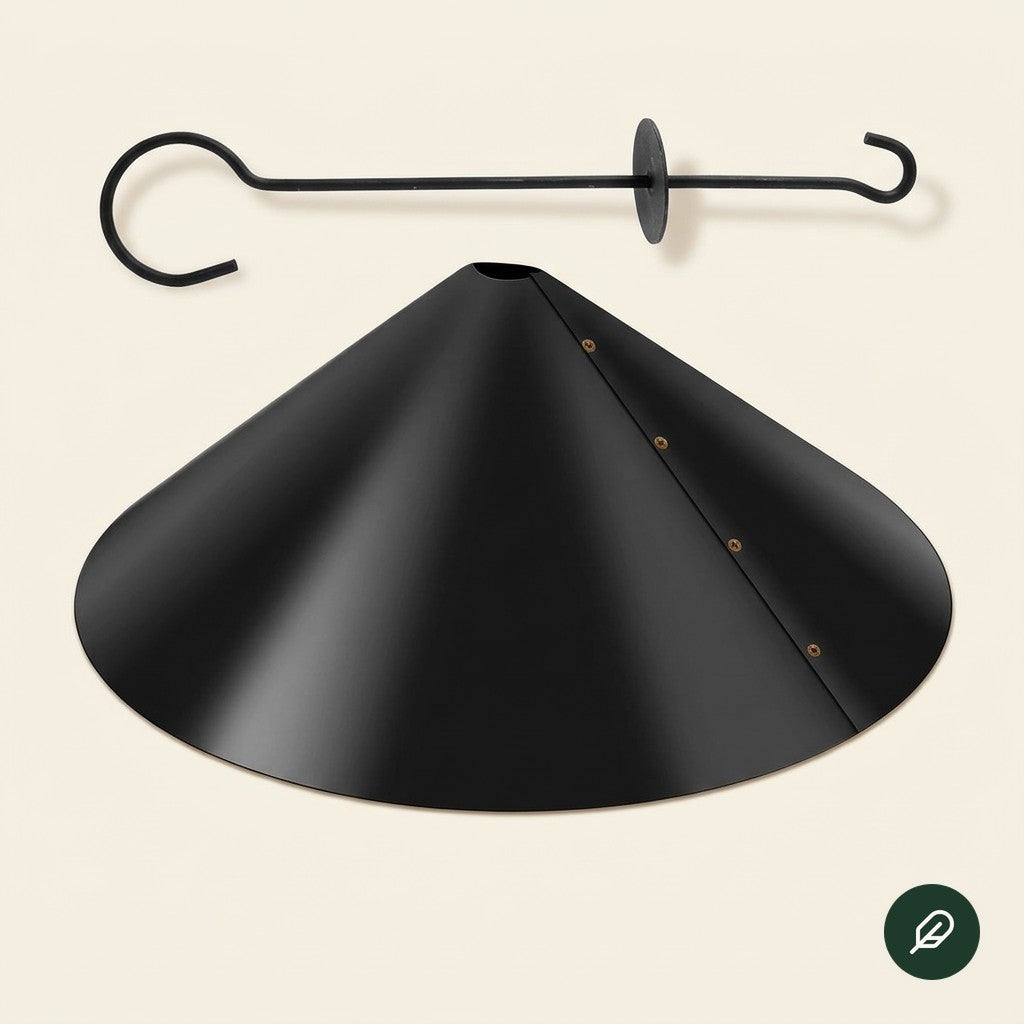
18-Inch Squirrel Baffle
A wide black baffle for helping keep squirrels from reaching a hanging or pole-mounted feeder. The cone measures 18 inches (45.7 cm) across. Choose the hanging-hook setup or pole-collar setup to suit your feeder station. Position the baffle so squirrels cannot bypass it from a nearby branch, railing, or roof.
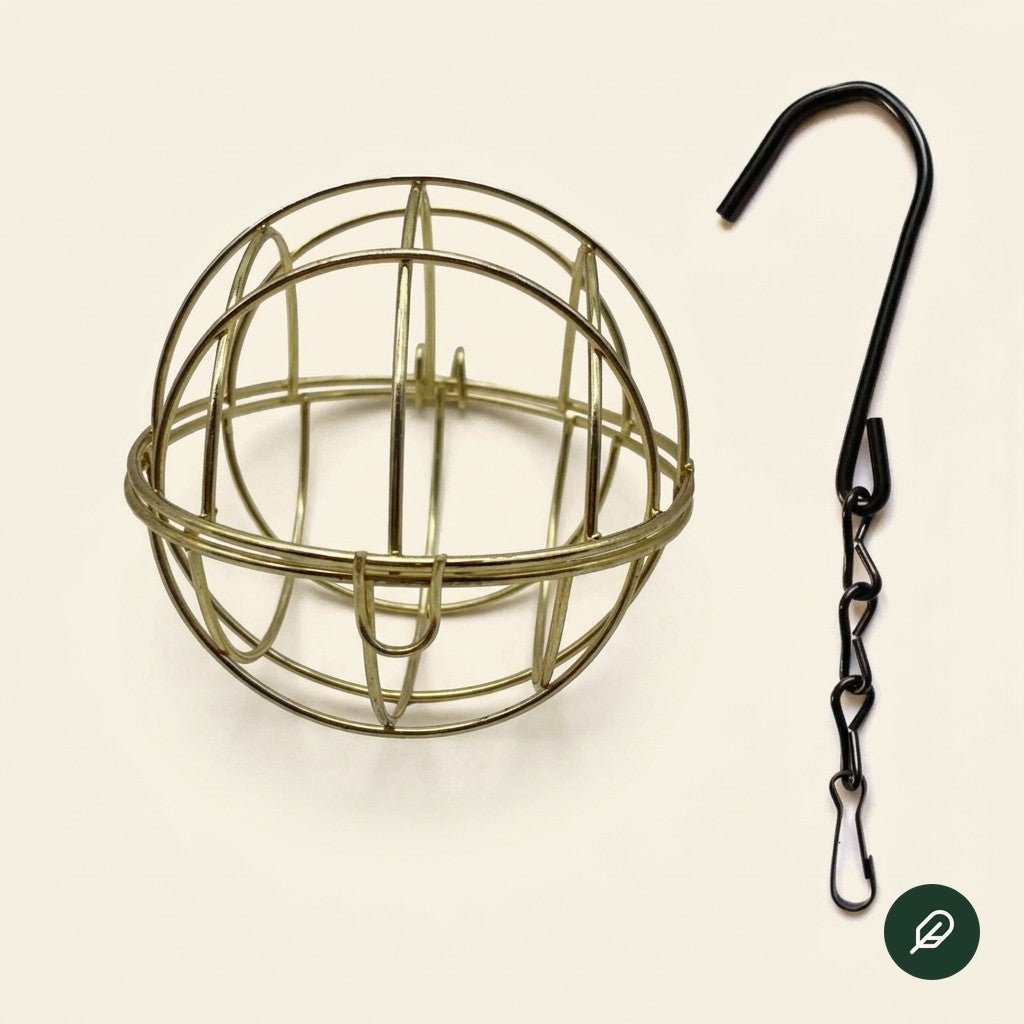
Round Suet Ball Cage
A small round wire cage made to hold one suet or fat ball. The hinged cage opens for refilling and closes with a simple wire latch. A short chain and hook are included for hanging. Available in gold-colored or black finish. This is a suet holder, not a hummingbird feeder.
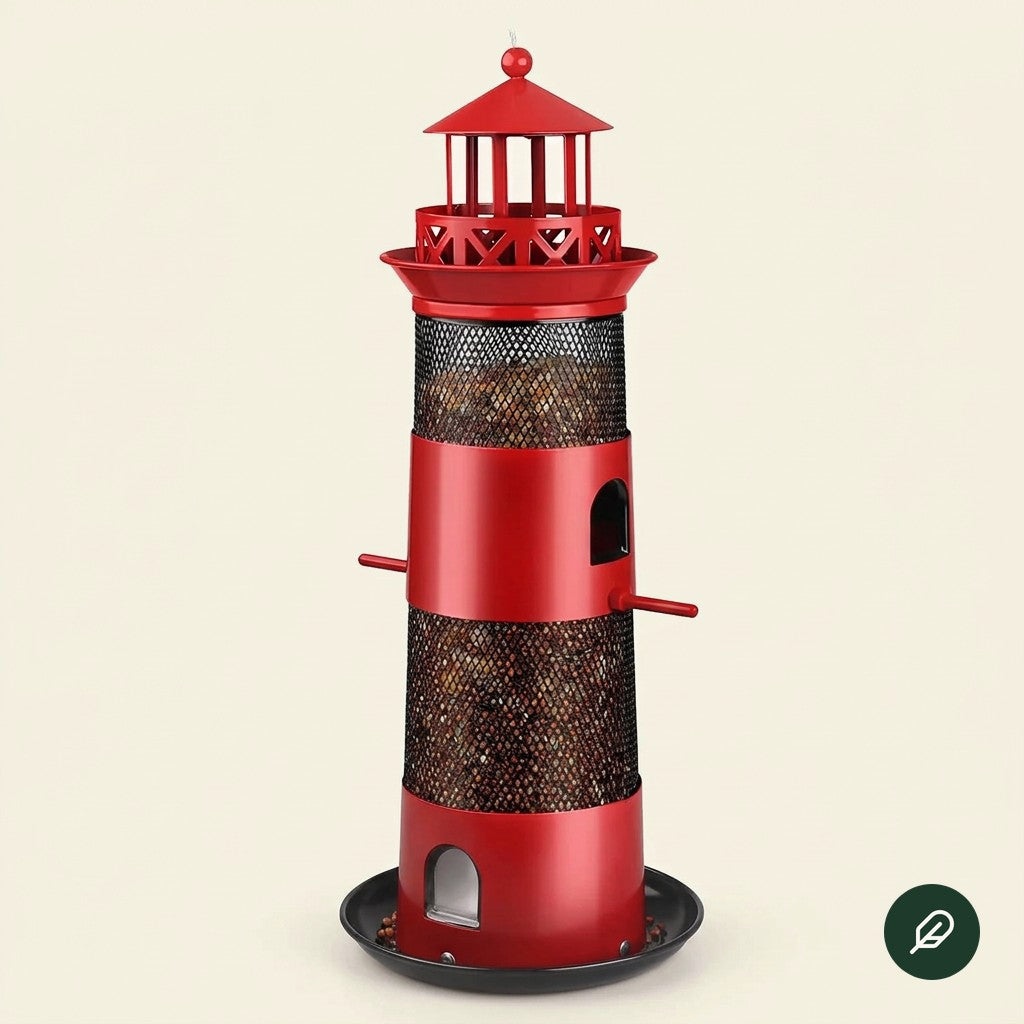
Lighthouse Metal Seed Feeder
A red-and-black metal seed feeder built in the shape of a lighthouse. The tall mesh body holds up to 4 lb of seed, with four feeding openings and perches arranged around the body. A circular tray catches some loose seed, and the top wire loop is used for hanging. Check and clean the feeder regularly, especially after wet weather.
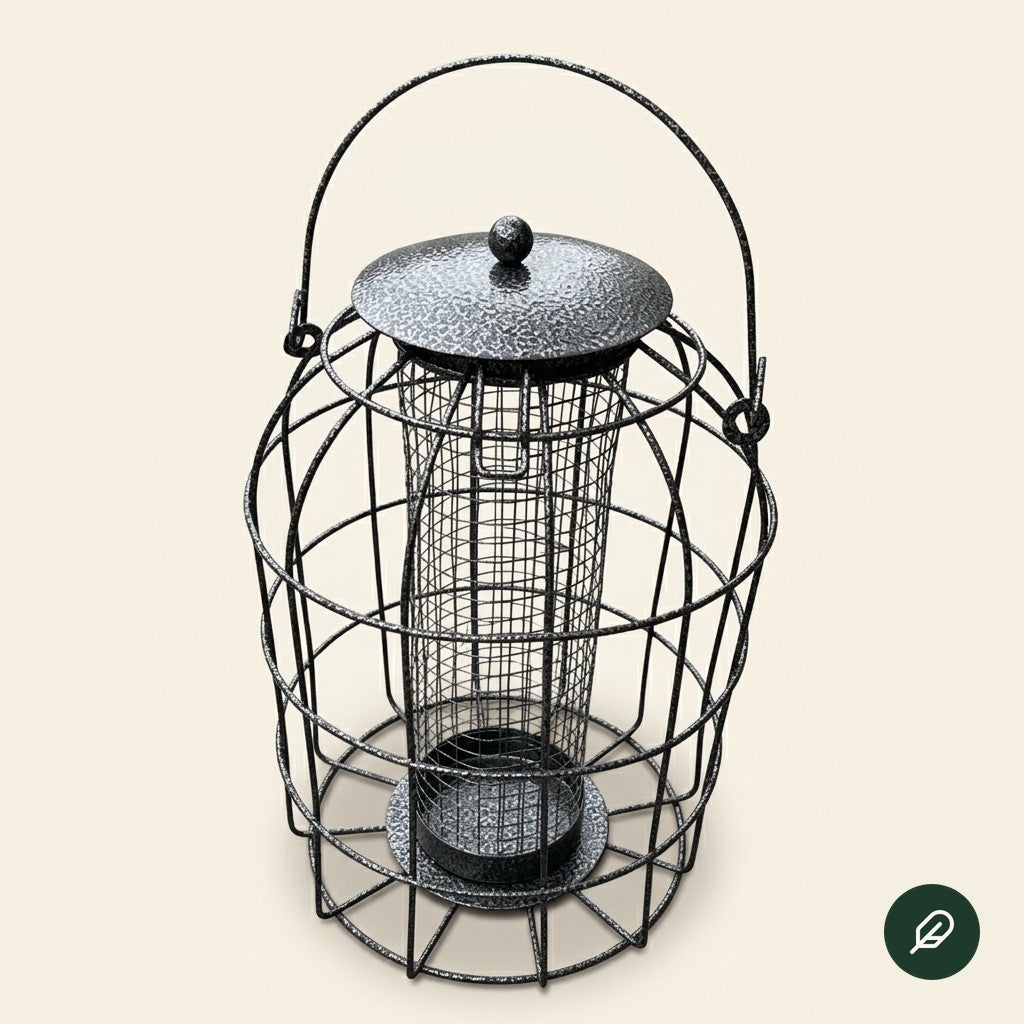
Caged Tube Bird Feeder
A metal tube feeder inside a wide protective cage. The outer cage limits access by squirrels and larger birds while smaller birds can reach the inner seed tube. A top handle makes it easy to hang, and the lid lifts for refilling. Available in black or green. No feeder is completely squirrel-proof, so placement still matters.

- Height
- Feeders about 1.5–2 m off the ground
- Cover
- Dense shrub or hedge within about 2 m
- Squirrel jump
- Keep 3 m clear of fences, walls and branches
- Core feeders
- Seed tube, sunflower hearts, suet, plus water
- Clean
- Every 1–2 weeks; move the station a metre or so occasionally
Start with where, not what
Most people buy a feeding station, push it into the middle of the lawn and wonder why the birds stay in the hedge. Small birds judge a feeder on one thing first: how far is the nearest cover if a Sparrowhawk or a cat appears? Sparrowhawks are now common in towns and suburbs across Britain, and garden birds know it.
The sweet spot is a feeder roughly two metres from a dense shrub, hedge or climber. That is close enough for a tit to dash back into cover, but not so close that a cat can sit in the hedge and pounce on birds feeding on the ground. A station in the open middle of a lawn will be used, but more nervously and by fewer species.
- Within view of a window you actually use — kitchen or living room.
- On level ground that drains, so dropped seed doesn't sit in a wet patch.
- Away from the spot where you hang washing or park bikes; spilt seed and droppings land below.
- At least 3 m from fences, walls, sheds and overhanging branches if grey squirrels live nearby.
Height and spacing
Hang feeders roughly 1.5 to 2 metres off the ground. Higher than that and refilling becomes a chore; lower and cats find it easy. Space feeders on separate arms so a dominant bird on one can't guard them all, and so larger birds such as Starlings or Woodpigeons don't block the smaller ones.
If you have room, run two smaller stations rather than one crowded one. Spreading food out reduces squabbling and, importantly, reduces the number of birds packed onto the same perches, which is how diseases such as trichomonosis spread.
What to hang on each arm
A balanced station feeds the main UK garden groups without wasting food. Think of it as one feeder per diet.
- Sunflower hearts in a tube feeder: the single most useful food. Tits, Goldfinches, Greenfinches, Chaffinches, sparrows and Robins all take them.
- Suet balls or a suet block in a cage: Great Spotted Woodpeckers, Starlings, tits and Long-tailed Tits in winter. Take netting off suet balls; birds catch feet and tongues in it.
- Nyjer seed in a fine-port feeder if you want Goldfinches and Siskins. Buy small quantities — it goes stale.
- Peanuts only in a steel mesh feeder, especially from spring to late summer, so whole nuts can't be carried to chicks.
- A shallow dish of water nearby. Birds need to drink and bathe all year, and water is often the hardest thing to find in a frozen January.
Keeping squirrels, pigeons and rats in check
Grey squirrels will find a feeding station within days. They jump about 1.5 m straight up and much further sideways from a fence or branch. A dome or cone baffle on the pole, mounted at least 1.2 m above the ground, stops a climb from below; distance stops the jump. Caged feeders with a gap a little over 3 cm let tits and finches in and keep squirrels and Woodpigeons out.
Rats and pigeons come for the food on the ground, not the feeders. Put out only what the birds clear in a day, use a seed tray under the feeders if spillage builds up, and choose husk-free foods. Bringing feeders in at night is the quickest way to stop rats if they appear.
Hygiene and moving the station
Clean feeders every one to two weeks with hot soapy water, rinse and let them dry before refilling. Brush up droppings and old seed beneath the station. Every few weeks, move the whole station a metre or two onto fresh ground so the area underneath doesn't become contaminated. If you see sick finches, stop feeding for at least two weeks and clean everything.
Through the year
Feed all year if you can keep it clean. Winter and early spring are when food matters most, and BTO Garden BirdWatch counts show garden use peaking then. In summer, cut back to sunflower hearts, mealworms and water, and avoid loose peanuts and large chunks of fat. In late summer, traffic drops because birds are moulting and wild seed and fruit are everywhere. That is normal. They return as autumn turns cold.
Sources
Feeding and hygiene advice follows RSPB and BTO guidance.
Frequently asked
Where is the best place to put a bird feeding station?
About two metres from dense cover such as a hedge or shrub, in view of a window, and at least three metres from fences or branches squirrels could jump from.
How high should bird feeders be in the UK?
Roughly 1.5 to 2 metres off the ground — high enough to deter cats, low enough to refill and clean easily.
How do I stop squirrels on my feeding station?
Fit a baffle on the pole at least 1.2 m up, keep the station 3 m from launch points, and use caged feeders for seed.
Should I feed garden birds in summer?
Yes, with care. Offer sunflower hearts, soaked mealworms and water; keep peanuts in mesh feeders and keep everything clean.
More UK garden guides
- Window Bird Feeders in the UK: Which Birds Use Them and How to Make One Stick
A suction-cup feeder on the glass is the easiest way to feed birds from a flat, a terrace with no garden, or a kitchen window. What visits, what to put in it, and how to stop it sliding off in the cold.
- Robin Bird Box: Open-Front Design, Height and Where to Put It
Robins won't use a box with a small round hole. They want an open-fronted box, low down and well hidden. The dimensions, the best spots in a British garden, and when to put it up.
- Squirrel-Proof Bird Feeders in the UK: What Stops Grey Squirrels
Grey squirrels are clever, persistent and widespread across Britain. Which feeders actually keep them out, how far they jump, and what to do if red squirrels visit your garden.
- Bird Baths for UK Gardens: Depth, Placement and Keeping Ice Off
A bird bath is often more useful than another feeder. How deep it should be, where to put it, how often to clean it, and how to keep water open on a frosty British morning without chemicals.
More troubleshooting
- Why Birds Stopped Coming to Your Feeder (and What to Do by Season)
- Keeping House Sparrows Out of Bluebird and Chickadee Boxes
- A Hawk Is Hunting at My Bird Feeder: What It Means and What to Do
- Keep Squirrels Off a Shepherd's Hook and Out of Feeders
- How to Get Rid of Grackles at Your Feeders (Without Losing the Birds You Want)
- How to Keep Starlings Off Your Feeders (Suet, Seed and Nest-Box Problems)
- How to Stop Raccoons Raiding Your Bird Feeders (and Your Nest Boxes)
- Bears and Bird Feeders: When to Take Feeders Down (and How to Feed Birds in Bear Country)
- How to Stop Rats and Mice Moving In Under Your Bird Feeders
- Bird Feeder Placement: Height, Distance and Sightlines That Actually Work
- How to Keep Cats Away From Your Bird Feeders (Yours and the Neighbors')
- Sick Birds at Your Feeder: House Finch Eye Disease, Salmonella and What To Do
- How to Keep Crows and Jays From Taking Over Your Feeders
- Why a Woodpecker Is Pecking Your House (and How to Make It Stop)
- Choosing and Placing a Bird Bath: Depth, Material, Moving Water and Location
- How to Clean a Bird Bath: Algae, Safe Cleaning and Mosquitoes
- Bird Bath Water Through the Seasons: Freezing Winters and Summer Heat
- Why Birds Won't Use Your Bird Bath: 8 Common Reasons and Fixes
- Heated Bird Baths in Canada: Keeping Water Open at -20°C
- Winter Bird Feeding in Canada: Foods, Feeders and What Shows Up
- Squirrel-Proof Bird Feeders in Canada: Red, Grey and Black Squirrels
- Bird Feeders for Condos and Balconies in Canada
- How to Attract Chickadees in Canada: Food, Nest Boxes and Winter Care
- Caged Bird Feeders: Keep Out Squirrels, Starlings and Grackles
- Upside-Down Suet Feeders: Feed Woodpeckers, Not Starlings
- Window Bird Feeders: Which Ones Stay Up, and Which Birds Come
- Bird Feeder Pole Setup: Height, Depth and Baffle Placement
- Deck Railing Bird Feeders: Mounting, Mess and Squirrels