How to Clean a Bird Bath: Algae, Safe Cleaning and Mosquitoes
A cleaning schedule that works, safe cleaners, how to stop algae coming back and how to keep a bath from breeding mosquitoes without harming birds.
12 min read · Updated 2026-10-24
Equipment for this job
A basin you can empty and reach with a brush makes cleaning easier. These are small drinking and bathing bowls, not automatic algae-control products; change their water and scrub them regularly.
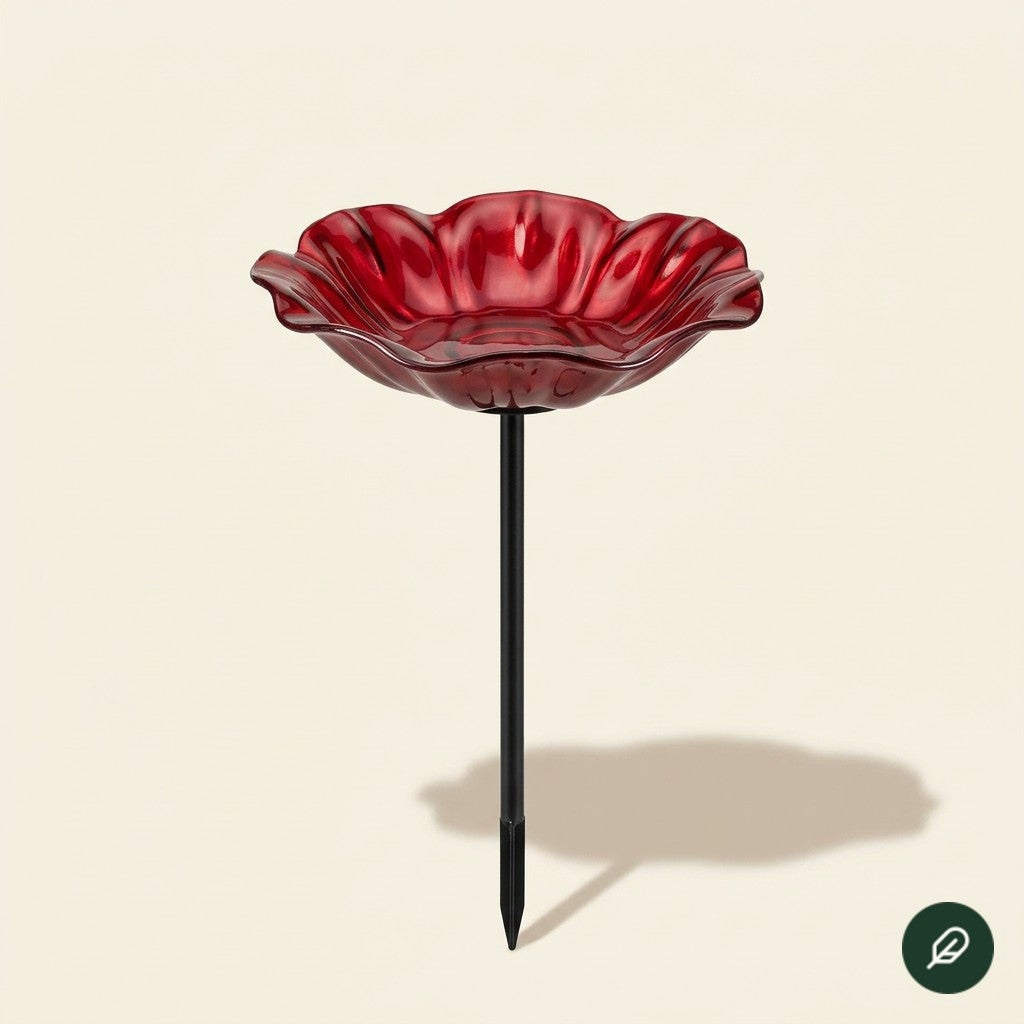
Flower Stake Bird Bath
A flower-shaped bird bath on a slim garden stake. The metal bowl holds water for drinking and bathing, and the dark center gives small birds a textured spot to grip. Push the stake into a flower bed or lawn and it's ready — no tools, no assembly beyond threading the bowl onto the stake. Bowl: 5.1 in (13 cm) across, flower-shaped, painted metal Stake: 17.3 in (44 cm) tall, black metal, pushes into soil Colors: Red, Blue, Orange, Purple Use: water for drinking and bathing; shallow depth suits small songbirds Care: tip out and rinse every few days in summer to keep water fresh and mosquitoes down Best placed near shrubs or cover so birds feel safe stopping to drink. Bring it in over hard freezes to protect the finish.
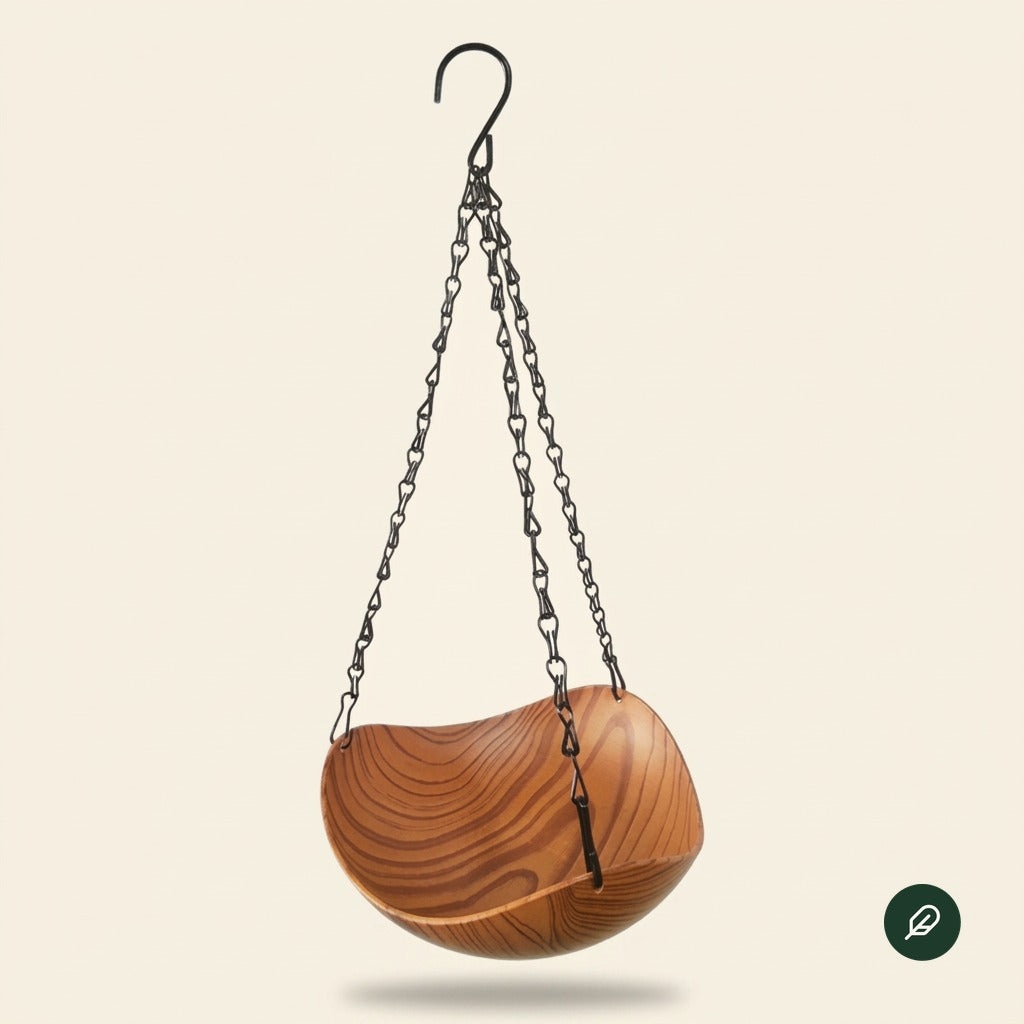
Hanging Basin Feeder and Water Bowl
A single open basin that hangs from a hook and does two jobs: a seed tray through the growing season, a shallow water bowl the rest of the year. Seed or water goes straight in — no reservoir, no perches, nothing to assemble beyond the hanging chains.Three chains run from the rim to one S-hook, so the basin hangs level under a bracket, a shepherd's hook or a low branch. Put it where you can watch it from a window, and where a cat can't launch from a fence.The rim is low and the floor is open, so birds can land anywhere around the edge instead of fighting over a perch. It also means the bowl needs wiping out every few days: hulls and droppings land in the water, and a rinse with hot water and a brush keeps it clean.The basin has a wood-grain finish and hangs from black metal chains.

- Water change
- Every 2–3 days; daily in hot weather
- Full scrub
- Weekly, or when you see film or droppings
- Vinegar mix
- 1 part white vinegar to 9 parts water
- Bleach mix
- 1 part bleach to 9 parts water, then rinse well
- Never use
- Dish soap residue, algaecides, pool or pond chemicals
- Causes
- Sunlight, warm water, droppings and debris
- Biggest fix
- Partial shade
- Routine
- Refill every 2–3 days, scrub weekly
- Basin
- Smooth metal or glazed resists algae better than concrete
The short cleaning routine
Empty the basin completely, remove leaves and droppings, and scrub the surface and waterline with a dedicated brush. Rinse thoroughly, then refill with fresh water. Audubon recommends replacing bath water daily or every other day; scrub sooner whenever you see slime or droppings. Topping up old water is not the same as changing it.
Remove stones and lift out any pump before cleaning, following the equipment's instructions. Slime collects underneath stones and around an intake even when the open basin looks clear. For electrical equipment, unplug before handling it. Keep cleaning solutions away from birds and never mix bleach with vinegar or any other cleaner.
Why cleaning matters more than people think
A bird bath is a shared drinking glass. Dozens of birds may drink and bathe in the same basin over a day, and they leave behind droppings, feathers, seed hulls and saliva. In warm weather, bacteria and algae multiply quickly in shallow water. Diseases that spread among backyard birds, including salmonellosis, avian pox and trichomonosis, can pass through contaminated water and surfaces. Trichomonosis in particular has caused serious declines in finch populations in parts of North America and Europe, and wildlife agencies routinely advise cleaning baths and feeders during outbreaks.
Stagnant water also breeds mosquitoes, which complete their life cycle from egg to flying adult in roughly a week in warm weather. A bath that is emptied and refilled every few days cannot produce mosquitoes at all. So a simple water-change routine solves two problems at once.
The routine: daily rinse, weekly scrub
The easiest habit is to tip out the old water and refill every two to three days, and every day during hot spells or when the bath is busy. Use a hose with a jet nozzle to blast loose debris out before refilling. This takes under a minute and keeps the water from ever going green or smelly.
Once a week, or any time you see a slimy film, droppings, or discoloration, give the basin a full scrub. Empty it, scrub every surface with a stiff brush, apply a cleaning solution, let it sit, scrub again, then rinse very thoroughly and refill. Keep one brush only for the bath; do not use a brush that has been in household chemicals or the kitchen.
- Every 2–3 days: dump, hose out, refill with fresh water.
- Weekly: empty, scrub, apply vinegar or diluted bleach, rinse, refill.
- During a local disease outbreak: clean every 1–2 days, or take the bath down temporarily.
- Wear gloves and wash hands afterward; some bird pathogens can affect people.
Vinegar or bleach: which to use
For routine cleaning, white vinegar diluted at one part vinegar to nine parts water is enough. Pour or spray it over the basin, leave it for ten to fifteen minutes, scrub, and rinse. Vinegar loosens mineral deposits and light algae and is low-risk if a small amount remains.
For a basin with heavy algae, visible droppings, or after a known disease case in the area, use a solution of one part household bleach to nine parts water. This ratio is the one commonly recommended for feeders and baths by bird conservation organizations. Leave it on for about ten minutes, scrub, then rinse until you cannot smell bleach at all, and let the bath air-dry in sun before refilling if you can. Never mix bleach with vinegar or other cleaners, since that releases harmful gas.
What never goes in a bird bath
Do not add anything to the water to keep it clean. Pool chlorine, pond algaecides, copper sulfate, and products sold for fountains or water features are not intended for wildlife drinking water. Some fountain products claim to be safe for birds; the safer approach is still to rely on fresh water and scrubbing. Dish soap leaves a residue that can strip the natural oils from feathers, so if you use it, rinse it out completely, or skip it in favor of vinegar.
Avoid putting coins or copper pennies in the basin as an algae fix; the effect is minimal and modern coins are mostly zinc. Glycerin or salt to stop freezing should never be used either, as both are harmful to birds. In winter, use a heater or a heated bath instead.
- No pool, pond or fountain chemicals.
- No antifreeze, glycerin or salt to prevent freezing.
- No soap residue — it strips waterproofing oils from feathers.
- No pesticides or mosquito oils on the water surface.
Stains, mineral crust and concrete baths
Hard water leaves a white crust of calcium around the waterline. A vinegar solution left on for thirty minutes, or a paste of baking soda and water scrubbed with a brush, removes most of it. For concrete baths, which are porous, stains go deeper; a bleach solution and a stiff brush will lighten them, but expect some permanent discoloration over the years. That is cosmetic and does not affect birds.
If algae keeps coming back quickly, the bath is probably in full sun. Moving it to partial shade, or adding moving water, slows regrowth more than any cleaner. Metal and glazed baths are much faster to clean than concrete, which is worth considering if cleaning time is the main thing stopping you from keeping a bath.
Making cleaning easier
A few choices cut the work in half. Choose a bath with a removable basin so you can tip it out and scrub it at the hose. Place the bath where a hose reaches easily. Keep it away from directly under feeders so seed hulls and droppings do not fall into it. Use a shallow basin, which empties and refills faster and gives algae less water to grow in.
If you cannot keep up with cleaning, a smaller bath that you clean faithfully is better for birds than a large one left for weeks. Clean water is the whole point.
What makes the water green
Algae are simple organisms that grow wherever there is water, light and nutrients. A bird bath provides all three. Sunlight powers their growth, warm water speeds it up, and droppings, seed hulls, pollen and leaves supply nitrogen and phosphorus. In midsummer full sun, a basin can go from clear to green in two or three days.
Green water is not just ugly. It usually signals that bacteria are also growing, and it hides droppings and debris. Birds will drink from it, but it is not good for them, and many birds will choose a cleaner source if one is available.
Fix the light first
Shade is the most effective algae control because it removes the energy source. Moving a bath from full sun to partial shade can cut algae growth dramatically. Morning sun and afternoon shade is a good balance between keeping the water visible and attractive to birds and keeping it cool. If you cannot move the bath, consider planting a shrub or placing a tall potted plant to its south or west side to throw afternoon shade, keeping it at least several feet away so it does not hide cats.
Change and scrub
Fresh water every two to three days gives algae little time to establish, because each refill removes the cells and nutrients that built up. A hose jet blasts off loose growth. Once a week, scrub with a stiff brush and a solution of one part white vinegar to nine parts water. For heavy, established algae, use one part bleach to nine parts water, scrub, and rinse thoroughly until no smell remains.
Pay attention to the waterline and any rough patches, where algae roots first. In concrete baths, algae gets into the pores and comes back faster, which is why concrete needs more frequent scrubbing than smooth metal or glazed basins.
- Refill every 2–3 days.
- Weekly scrub with 1:9 vinegar.
- Heavy growth: 1:9 bleach, then rinse until odorless.
- Focus on the waterline and rough spots.
Reduce the nutrients
Keep the bath out from under feeders and trees that drop flowers, berries or sap. Every handful of seed hulls and droppings that lands in the water is algae fertilizer. Rake or sweep around the bath so wind does not blow debris in, and remove leaves floating on the surface between refills.
Moving water can help a little by disturbing the surface and adding oxygen, but a fountain in full sun will still grow algae. Treat it as a bonus, not a cure.
Choose a basin that is easier to keep clean
Smooth, non-porous materials such as metal, glazed ceramic and resin are easier to wipe clean than concrete or unglazed stone. Copper is sometimes sold as algae-resistant and does slow some growth, but it still needs cleaning. Lighter colored basins stay a little cooler in sun. A removable basin you can tip and scrub at the hose makes the weekly job faster.
Shallower water also helps. A one-to-two-inch basin is refilled with a larger share of fresh water each time, and there is less volume to warm up and grow algae.
What not to use
Do not use pond algaecides, copper sulfate, chlorine, or pool chemicals. Products marketed as bird-safe enzymes exist, but they are not a substitute for fresh water and have not been widely studied in bird baths. Barley straw extracts work slowly in ponds and do little in a basin changed every few days. The cheapest and safest algae control is the same routine that keeps the bath healthy anyway: shade, fresh water, and a weekly scrub.
A weekly routine that keeps it clear
Put the work on a fixed schedule so it does not slide. On refill days, dump the water, give the basin a quick hose blast, and refill. Once a week, add a scrub with the vinegar solution and a check of any stones, gravel or fountain pump, which collect algae out of sight. In the hottest weeks of the year, or when you see a green tint returning within two days, shift the bath into more shade rather than reaching for stronger cleaners. Most people find that once the bath is in the right spot, the weekly scrub takes only a few minutes and the water stays clear between refills. If the basin is concrete and stays stained, that is cosmetic; birds care about the water, not the color of the bowl.
How mosquitoes use a bird bath
Many common mosquitoes lay eggs on or just above the surface of still water. The eggs hatch into larvae, the wriggling 'wigglers' that hang from the surface, which turn into pupae and then emerge as flying adults. In warm weather this whole cycle takes roughly a week, sometimes a bit longer. The important point is that every stage before the adult lives in the water. Remove the water and you remove the next generation.
This is why a properly maintained bird bath does not breed mosquitoes. A bath that is dumped and refilled every two or three days never holds the same water long enough for larvae to mature. The bath only becomes a problem when it is left untouched for a week or more.
The water-change rule
Tip out and refill the bath at least every three days in mosquito season. Every two days is better in hot weather, when the life cycle speeds up. Dumping the water strands any eggs or larvae on the ground, where they die. Give the basin a quick spray with the hose before refilling to wash out eggs stuck to the sides.
If you go away for a week in summer, either ask someone to change the water or empty the bath and turn it upside down while you are gone. A few days without water does not hurt the birds; a week of breeding mosquitoes does hurt your evenings.
- Refill every 2–3 days from spring to first frost.
- Hose the sides to dislodge eggs.
- Empty and invert the bath when you travel.
- Check for other standing water: saucers, gutters, toys, tarps.
Moving water helps
Mosquitoes prefer calm water. A dripper, bubbler or small fountain that keeps the surface moving discourages them from laying eggs and makes it harder for larvae to breathe at the surface. Moving water is not a guarantee, especially near the edges or behind stones where the surface stays calm, so keep up water changes even with a fountain. But combined with regular refills, it all but eliminates the problem.
Bti: the bird-safe larvicide
If you truly cannot change the water often, for example in a large basin or water feature, the option used by public health agencies is Bti, short for Bacillus thuringiensis israelensis. It is a naturally occurring bacterium sold in donut-shaped 'dunks' or granules. Mosquito, black fly and fungus gnat larvae that eat it die; according to the US EPA it does not harm birds, fish, pets, people or most other insects at labeled rates. Follow the label for dose, usually a portion of a dunk for a small basin, replaced about every 30 days.
Bti is a backup, not a substitute for clean water. A bath with old water and a Bti dunk will still grow algae and bacteria that are bad for birds.
Birds help with mosquitoes too
A busy bath brings in insect-eating birds: swallows, swifts, flycatchers, wrens, warblers and purple martins all eat flying insects, including mosquitoes, though mosquitoes are a small part of most diets. Bats, dragonflies and other predators help as well. Keeping the bath clean and fresh supports the creatures that eat mosquitoes, instead of creating more mosquitoes for them to eat.
Checking the rest of the yard
A clean bird bath is rarely the main mosquito source in a yard. Plant saucers, clogged gutters, buckets, tarps, old tires, children's toys, wheelbarrows and the hollow tops of fence posts all hold small amounts of water that sit for weeks. Walk the yard after rain and tip out anything holding water. Treat rain barrels with tight screens or Bti. Doing this once a week, along with the bath refill, makes a far bigger difference to biting mosquitoes than anything done at the bath itself, and it means the bath can stay where the birds like it.
What is worth buying for easier upkeep?
Start with a dedicated brush and easy hose access, not another chemical treatment. If your present basin can be emptied and scrubbed safely, you may not need a new bath. A removable bowl helps when weight or awkward access is the reason cleaning gets skipped. Check the actual bowl size and how it detaches before ordering.
The Flower Stake Bird Bath has a small 5.1-inch bowl that threads onto its stake. The hanging basin offers an open surface without a reservoir, but its chains still need checking for buildup. Neither keeps water clean on its own. A fountain also adds a pump intake to clean; moving water does not replace fresh water or scrubbing.
Freeze dates and heater advice for your state →
Frequently asked
How often should I clean a bird bath?
Change the water every 2–3 days (daily in heat) and scrub the basin weekly, or sooner if you see film, droppings or green water.
Is vinegar safe for cleaning a bird bath?
Yes. Use 1 part white vinegar to 9 parts water, let it sit 10–15 minutes, scrub and rinse. It is the gentlest routine option.
Can I use bleach on a bird bath?
Yes, at 1 part bleach to 9 parts water, followed by a very thorough rinse until no smell remains. Never mix it with vinegar.
Can I add anything to keep the water clean?
No. Skip chemicals, algaecides and salt. Fresh water, shade, moving water and regular scrubbing are the safe approach.
Why does my bird bath turn green so fast?
Full sun, warm water and nutrients from droppings and debris. Partial shade and refilling every 2–3 days slow it down.
How do I get rid of algae in a bird bath?
Scrub with a 1:9 vinegar solution weekly, or 1:9 bleach for heavy growth, then rinse thoroughly.
Are algaecides safe for bird baths?
No. Skip pond and pool chemicals. Use shade, fresh water and scrubbing.
Does a copper bird bath prevent algae?
It can slow some growth but still needs regular cleaning.
Do bird baths attract mosquitoes?
Only if the water sits for about a week. Changing it every 2–3 days prevents mosquitoes from completing their life cycle.
How often should I change bird bath water for mosquitoes?
At least every 3 days in warm weather; every 2 days in heat.
Is Bti safe for birds?
According to the US EPA, Bti does not harm birds, pets, fish or people at labeled rates. Use it only as a backup to water changes.
Can I put oil in a bird bath to kill mosquito larvae?
No. Oil destroys feather waterproofing and can kill birds.
More Canadian winter guides
- Choosing and Placing a Bird Bath: Depth, Material, Moving Water and Location
Most bird baths are too deep, too slick or in the wrong spot. The measurements, materials, placement distances and moving-water options that decide whether birds use one.
- Bird Bath Water Through the Seasons: Freezing Winters and Summer Heat
Keeping water open in freezing weather, what never to add to it, and how to keep a bath cool, full and clean through heat waves.
- Why Birds Won't Use Your Bird Bath: 8 Common Reasons and Fixes
An ignored bath is almost always too deep, too slick, too exposed or too new. A checklist to work through, in order of how often each is the cause.
More troubleshooting
- Why Birds Stopped Coming to Your Feeder (and What to Do by Season)
- Keeping House Sparrows Out of Bluebird and Chickadee Boxes
- A Hawk Is Hunting at My Bird Feeder: What It Means and What to Do
- Keep Squirrels Off a Shepherd's Hook and Out of Feeders
- How to Get Rid of Grackles at Your Feeders (Without Losing the Birds You Want)
- How to Keep Starlings Off Your Feeders (Suet, Seed and Nest-Box Problems)
- How to Stop Raccoons Raiding Your Bird Feeders (and Your Nest Boxes)
- Bears and Bird Feeders: When to Take Feeders Down (and How to Feed Birds in Bear Country)
- How to Stop Rats and Mice Moving In Under Your Bird Feeders
- Bird Feeder Placement: Height, Distance and Sightlines That Actually Work
- How to Keep Cats Away From Your Bird Feeders (Yours and the Neighbors')
- Sick Birds at Your Feeder: House Finch Eye Disease, Salmonella and What To Do
- How to Keep Crows and Jays From Taking Over Your Feeders
- Why a Woodpecker Is Pecking Your House (and How to Make It Stop)
- Window Bird Feeders in the UK: Which Birds Use Them and How to Make One Stick
- How to Set Up a Bird Feeding Station in a UK Garden
- Robin Bird Box: Open-Front Design, Height and Where to Put It
- Squirrel-Proof Bird Feeders in the UK: What Stops Grey Squirrels
- Bird Baths for UK Gardens: Depth, Placement and Keeping Ice Off
- Heated Bird Baths in Canada: Keeping Water Open at -20°C
- Winter Bird Feeding in Canada: Foods, Feeders and What Shows Up
- Squirrel-Proof Bird Feeders in Canada: Red, Grey and Black Squirrels
- Bird Feeders for Condos and Balconies in Canada
- How to Attract Chickadees in Canada: Food, Nest Boxes and Winter Care
- Caged Bird Feeders: Keep Out Squirrels, Starlings and Grackles
- Upside-Down Suet Feeders: Feed Woodpeckers, Not Starlings
- Window Bird Feeders: Which Ones Stay Up, and Which Birds Come
- Bird Feeder Pole Setup: Height, Depth and Baffle Placement
- Deck Railing Bird Feeders: Mounting, Mess and Squirrels