Window Bird Feeders in the UK: Which Birds Use Them and How to Make One Stick
A suction-cup feeder on the glass is the easiest way to feed birds from a flat, a terrace with no garden, or a kitchen window. What visits, what to put in it, and how to stop it sliding off in the cold.
7 min read · Updated 2026-10-27
Equipment for this job
Clear acrylic window feeders that fix to smooth glass with suction cups. We deliver to the UK.
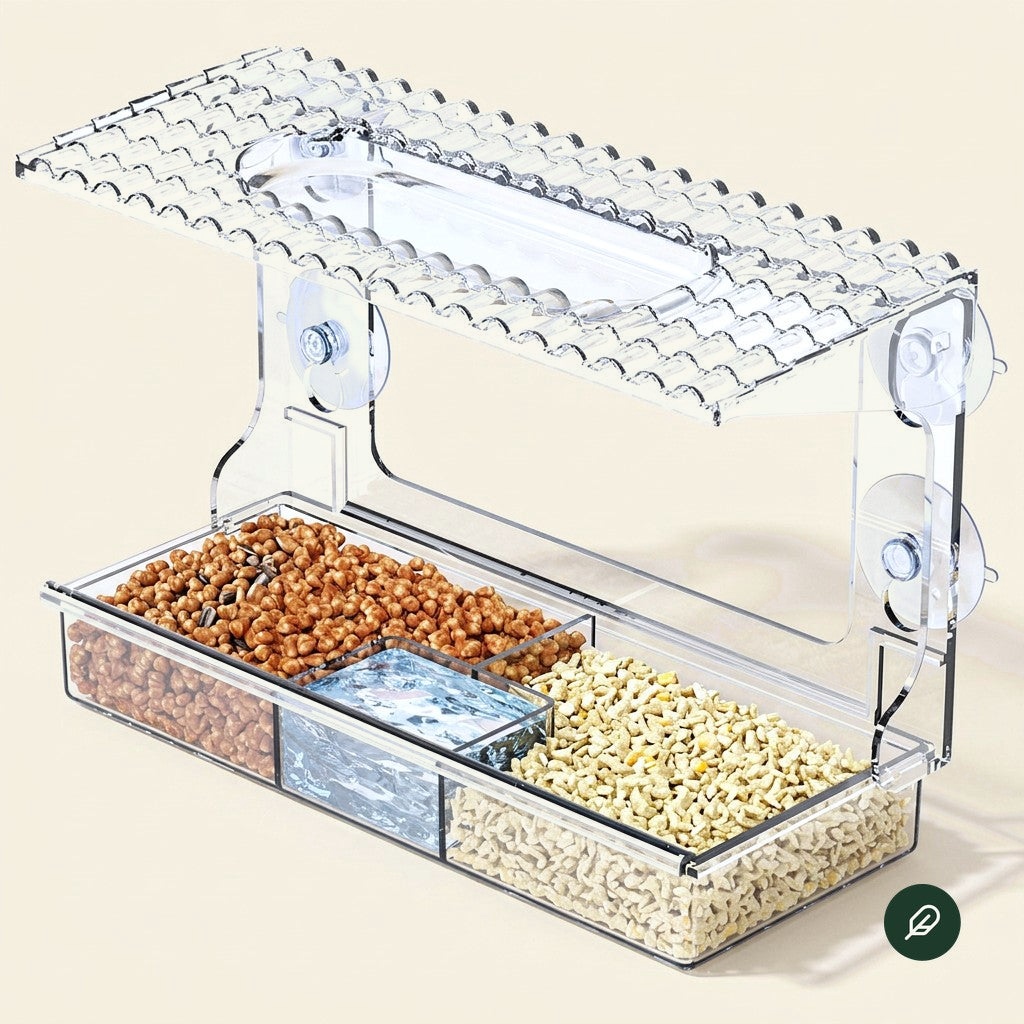
Window Feeder with Roof Bath
A wide clear acrylic window feeder with a textured roof that holds a shallow pool of water for small birds, plus a lift-out tray split into seed and water sections.Specs Clear acrylic, 4 suction cups Removable tray with drainage holes Roof basin catches rain; top it up in dry spells Tips Small birds only; jays and larger birds will crowd it. Pull the tray and rinse it weekly so wet seed doesn't mold.
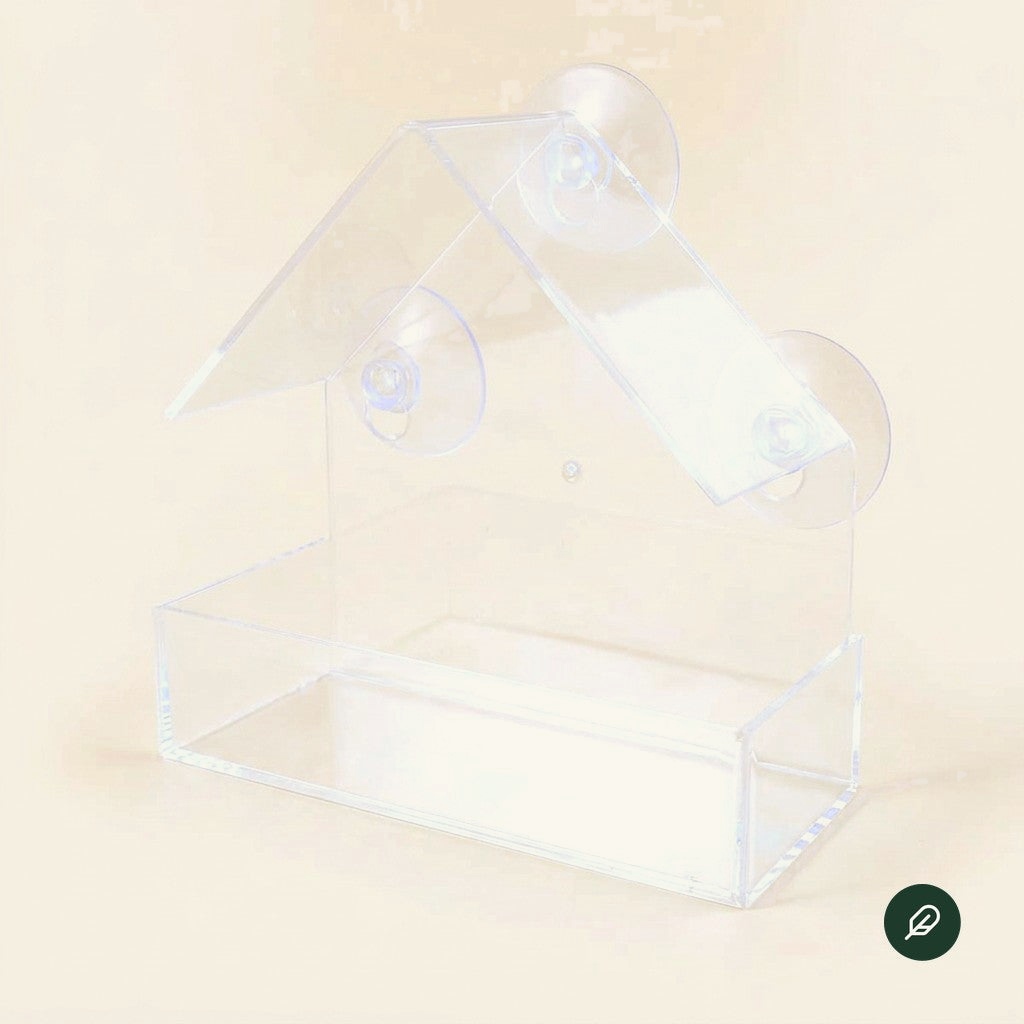
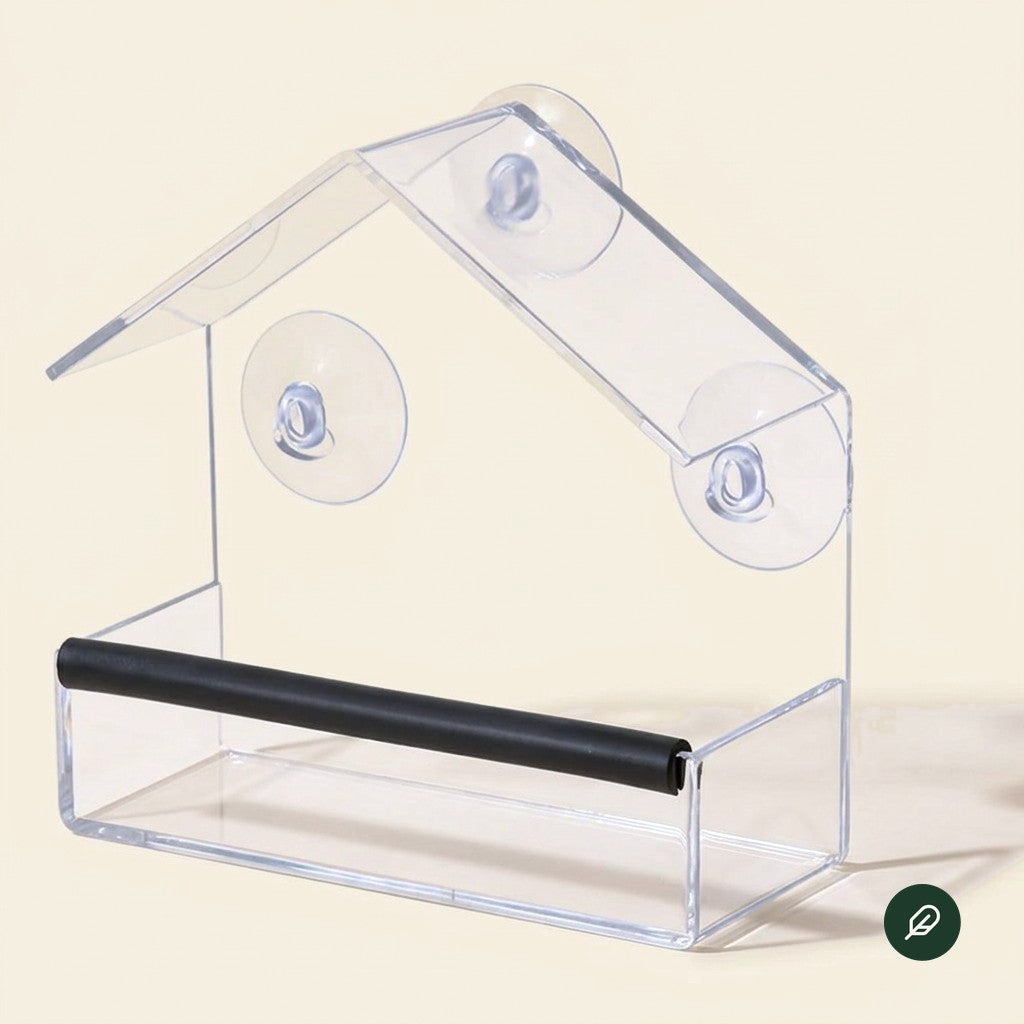
Clear Acrylic Window Feeder
Three clear acrylic window feeders that mount with suction cups. Pick the size that fits your window. Small House — peaked roof, open tray, about 15 x 15 x 7 cm. Arched Roof — about 25 x 19 x 9.5 cm, green perch bar, two-section drain tray. Slanted Roof — about 21 x 20.5 x 14.5 cm, black perch bar, two-section drain tray. TipsClean the glass before mounting. Suction cups hold best above freezing.
Suction-Cup Window Feeder, Five Shapes
Clear window feeders that mount with suction cups, no tools. Five shapes: Small House — about 15 x 6.5 x 15 cm, perch bar. Round Window — about 20 x 10 x 20.7 cm, viewing hole, two-section tray. Curved Tray — curved roof, oval split tray for seed and water. Long Tray — about 25 x 13 x 11 cm, three-section tray, perch bar. Tile Roof — textured roof, three-section tray with water cup. Tips Clean glass first; suction cups hold best above freezing. Rinse trays weekly.

- Likely visitors
- Blue Tit, Great Tit, Coal Tit, Robin, House Sparrow, Chaffinch, Goldfinch
- Best food
- Sunflower hearts — no husks to sweep up
- Distance from glass
- On the glass, or more than 10 m away — nothing in between
- Cleaning
- Every 1–2 weeks; weekly in wet, mild spells
- First visits
- Often 1–3 weeks after it goes up
Why a window feeder works so well in British homes
Around half of UK households feed garden birds, but plenty of people who would like to don't have a lawn or a tree to hang a feeder from. A window feeder needs nothing but a pane of glass. It works on a first-floor flat, a narrow terrace with a paved yard, a conservatory, or the kitchen window you stand at every morning. It also gives you the closest view you will ever get of a Blue Tit without binoculars.
The birds that use them are the confident, fast-moving garden regulars: Blue and Great Tits, Coal Tits, Robins, House Sparrows, Chaffinches and, once they find it, Goldfinches. Blackbirds and Dunnocks sometimes perch on a larger tray, but they prefer to feed on the ground. Do not expect Wrens, thrushes or Long-tailed Tits to use one regularly; they rarely come to glass.
Feeders on glass actually reduce window strikes
It sounds backwards, but a feeder fixed directly to the window is one of the safer places to feed birds. A bird leaving a feeder that is on the glass hasn't built up enough speed to be hurt if it touches the pane. The risky distance is the middle ground: a feeder one to five metres from a big window lets birds take off at full speed towards what looks like open sky or reflected trees.
So the rule is simple. Put feeders on the glass, or more than about 10 metres from it. If a feeder elsewhere in the garden is causing strikes, break up the reflection on the outside of the glass with stickers or tape spaced no more than about 5 cm apart vertically and 10 cm horizontally. One hawk silhouette on its own doesn't work; birds need a pattern dense enough that they read the window as a solid surface.
Making suction cups hold, including in winter
Almost every complaint about window feeders is the same: it fell off. Suction cups fail for three reasons — dirty glass, cold stiff cups, and too much weight hanging off one side. All three are fixable.
- Clean the outside of the glass with diluted white vinegar or surgical spirit, then dry it. Grease and limescale break the seal.
- Warm the cups in your hands or a bowl of warm water before pressing them on. A cold cup is stiff and seals badly.
- Press from the centre of each cup outwards to push all the air out, then load the feeder only after it has sat for an hour.
- Use smooth glass only. Textured, frosted or self-cleaning coated glass rarely holds a cup for long.
- Every couple of months, take it off, wash the cups in warm soapy water and refit. Cups that have hardened or yellowed should be replaced.
What to put in it
Sunflower hearts are the best all-round food for a window feeder. Tits, finches, sparrows and Robins all take them, and because the husk has already been removed there is nothing to drop on your sill, your neighbour's sill or the pavement below. That matters in a flat. Whole black sunflower seed is cheaper but leaves a pile of shells.
Mealworms (dried, soaked for a few minutes in warm water) bring Robins in quickly, especially in late winter and during the breeding season. Avoid loose whole peanuts from spring to late summer; the RSPB advises offering peanuts only in a mesh feeder then, because adults can carry whole nuts to chicks that may choke on them. Small suet pellets work in winter. Bread, salted food and cooking fat from a roasting tin should never go in.
Put in only as much as the birds clear in a day or two. Damp seed sitting in a tray goes mouldy fast in a British autumn.
Keeping it clean
Garden finches in the UK have been badly hit by trichomonosis, a parasite spread through contaminated food and water. Greenfinch numbers have fallen sharply since the disease appeared in 2005, and BTO Garden BirdWatch data tracks that decline. A window feeder is small, which makes it easy to keep clean: tip out old food, wash with hot soapy water, rinse and dry before refilling, every one to two weeks, and weekly in wet mild weather when disease spreads most easily.
If you see a finch that is fluffed up, lethargic, with wet matted feathers around the beak, take all feeders and baths down for at least two weeks so birds disperse, then clean everything before putting it back.
Choosing a window feeder
Look for clear acrylic thick enough not to flex when a bird lands, at least two good suction cups, and drainage holes in the tray so rain doesn't sit with the seed. A removable tray makes cleaning a two-minute job. A small roof helps on west-facing windows that take the brunt of the weather. If the window opens, check the feeder sits on the fixed pane or that you can reach it from inside to refill.
Give birds time. A feeder in a spot with no cover nearby may take two or three weeks before the first tit decides it is safe. A shrub, hedge or climber within a few metres speeds that up, because small birds like an escape route close by.
Sources
Advice on peanuts, hygiene and disease follows the RSPB and BTO guidance linked below.
Frequently asked
Will birds really use a feeder stuck to my window?
Yes. Blue Tits, Great Tits, Robins, House Sparrows and finches use window feeders regularly, usually within one to three weeks. Having a shrub or hedge nearby helps them feel safe.
Do window feeders cause birds to fly into the glass?
Feeders fixed to the glass are among the safest placements, because birds leaving them can't build up dangerous speed. The risky distance is one to five metres from a window.
Why does my window feeder keep falling off?
Usually dirty glass, cold stiff suction cups, or uneven weight. Clean the glass with vinegar, warm the cups before fitting, press the air out and let it settle before filling.
What is the best food for a window feeder in the UK?
Sunflower hearts. Most garden birds eat them and there are no husks to fall on sills or the pavement.
More UK garden guides
- How to Set Up a Bird Feeding Station in a UK Garden
A good feeding station is about placement more than the pole. Where to put it, how high, what to hang on each arm, and how to keep it from feeding the local squirrels, pigeons and Sparrowhawk.
- Robin Bird Box: Open-Front Design, Height and Where to Put It
Robins won't use a box with a small round hole. They want an open-fronted box, low down and well hidden. The dimensions, the best spots in a British garden, and when to put it up.
- Squirrel-Proof Bird Feeders in the UK: What Stops Grey Squirrels
Grey squirrels are clever, persistent and widespread across Britain. Which feeders actually keep them out, how far they jump, and what to do if red squirrels visit your garden.
- Bird Baths for UK Gardens: Depth, Placement and Keeping Ice Off
A bird bath is often more useful than another feeder. How deep it should be, where to put it, how often to clean it, and how to keep water open on a frosty British morning without chemicals.
More troubleshooting
- Why Birds Stopped Coming to Your Feeder (and What to Do by Season)
- Keeping House Sparrows Out of Bluebird and Chickadee Boxes
- A Hawk Is Hunting at My Bird Feeder: What It Means and What to Do
- Keep Squirrels Off a Shepherd's Hook and Out of Feeders
- How to Get Rid of Grackles at Your Feeders (Without Losing the Birds You Want)
- How to Keep Starlings Off Your Feeders (Suet, Seed and Nest-Box Problems)
- How to Stop Raccoons Raiding Your Bird Feeders (and Your Nest Boxes)
- Bears and Bird Feeders: When to Take Feeders Down (and How to Feed Birds in Bear Country)
- How to Stop Rats and Mice Moving In Under Your Bird Feeders
- Bird Feeder Placement: Height, Distance and Sightlines That Actually Work
- How to Keep Cats Away From Your Bird Feeders (Yours and the Neighbors')
- Sick Birds at Your Feeder: House Finch Eye Disease, Salmonella and What To Do
- How to Keep Crows and Jays From Taking Over Your Feeders
- Why a Woodpecker Is Pecking Your House (and How to Make It Stop)
- Choosing and Placing a Bird Bath: Depth, Material, Moving Water and Location
- How to Clean a Bird Bath: Algae, Safe Cleaning and Mosquitoes
- Bird Bath Water Through the Seasons: Freezing Winters and Summer Heat
- Why Birds Won't Use Your Bird Bath: 8 Common Reasons and Fixes
- Heated Bird Baths in Canada: Keeping Water Open at -20°C
- Winter Bird Feeding in Canada: Foods, Feeders and What Shows Up
- Squirrel-Proof Bird Feeders in Canada: Red, Grey and Black Squirrels
- Bird Feeders for Condos and Balconies in Canada
- How to Attract Chickadees in Canada: Food, Nest Boxes and Winter Care
- Caged Bird Feeders: Keep Out Squirrels, Starlings and Grackles
- Upside-Down Suet Feeders: Feed Woodpeckers, Not Starlings
- Window Bird Feeders: Which Ones Stay Up, and Which Birds Come
- Bird Feeder Pole Setup: Height, Depth and Baffle Placement
- Deck Railing Bird Feeders: Mounting, Mess and Squirrels