Caged Bird Feeders: Keep Out Squirrels, Starlings and Grackles
A wire cage around a tube feeder lets chickadees, titmice and finches in while keeping squirrels and big blackbirds out. How cage spacing works, which birds get through, and where a cage feeder falls short.
7 min read · Updated 2026-10-27
Equipment for this job
Check the cage-to-tube gap on the listing before you buy; that gap is what keeps squirrel paws out.
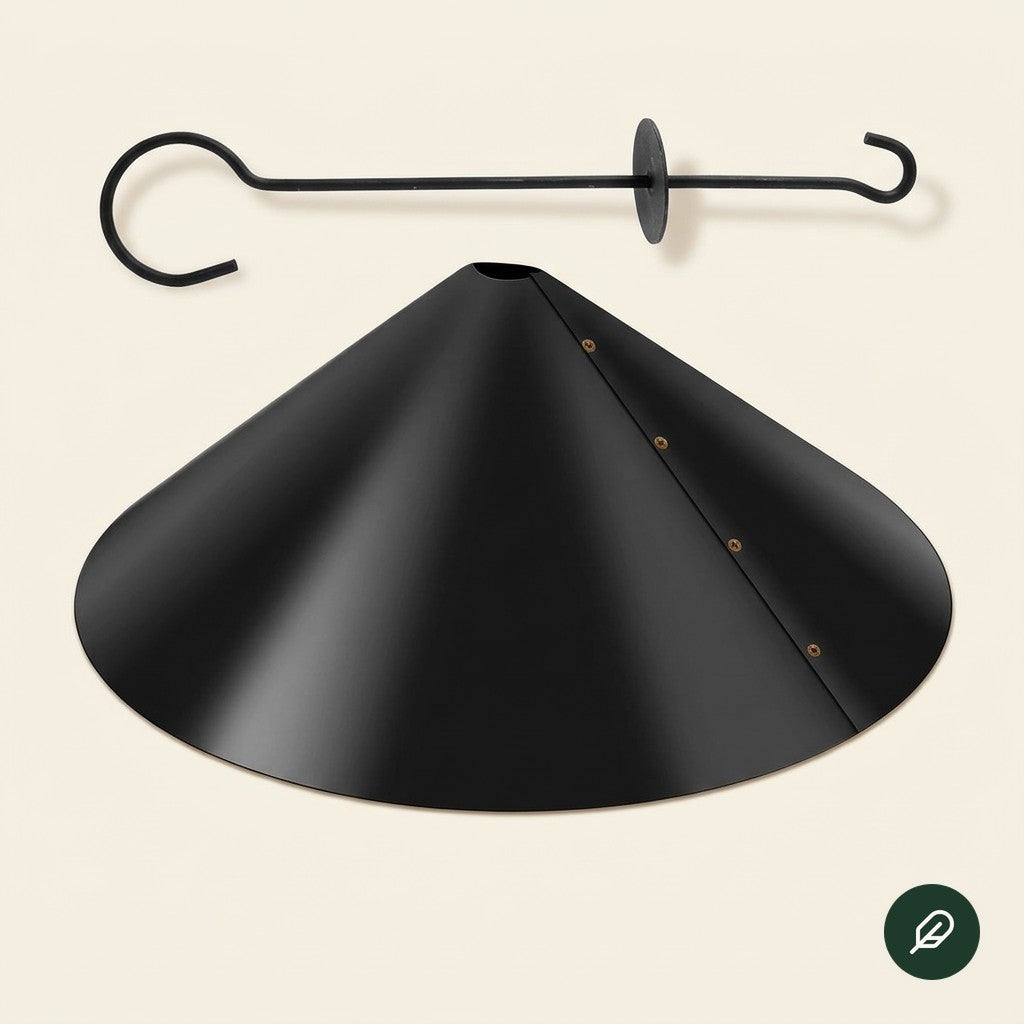
18-Inch Squirrel Baffle
A wide black baffle for helping keep squirrels from reaching a hanging or pole-mounted feeder. The cone measures 18 inches (45.7 cm) across. Choose the hanging-hook setup or pole-collar setup to suit your feeder station. Position the baffle so squirrels cannot bypass it from a nearby branch, railing, or roof.
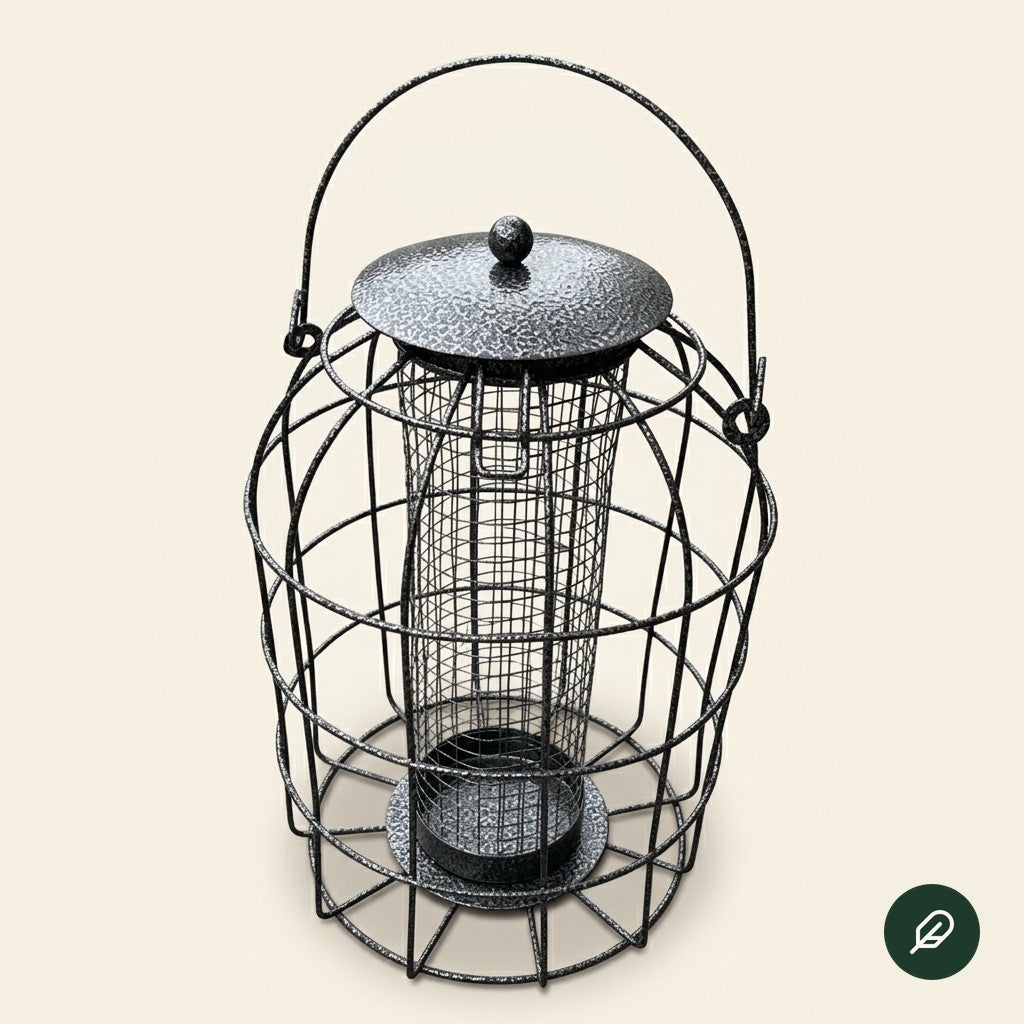
Caged Tube Bird Feeder
A metal tube feeder inside a wide protective cage. The outer cage limits access by squirrels and larger birds while smaller birds can reach the inner seed tube. A top handle makes it easy to hang, and the lid lifts for refilling. Available in black or green. No feeder is completely squirrel-proof, so placement still matters.

- Typical cage opening
- About 1.5 in (3.8 cm) squares
- Gets through
- Chickadees, titmice, nuthatches, finches, small woodpeckers, wrens
- Kept out
- Squirrels, starlings, grackles, jays, pigeons, doves
- Also kept out
- Cardinals and grosbeaks — too big for most cages
- Gap from cage to tube
- At least 2–3 in, so a squirrel can't reach in
How a cage feeder works
A caged feeder is an ordinary seed tube inside a wire or steel-mesh cage. The cage holes are sized so small songbirds can hop through and reach the ports, while anything bigger is stopped at the wire. It is a physical barrier, not a trick, which is why cage feeders keep working long after a squirrel has learned every other defense in the yard.
The key number is the opening size. Most cages use squares of about 1.5 inches. A chickadee, titmouse, nuthatch, House Finch, goldfinch, Pine Siskin or Downy Woodpecker passes through easily. A European Starling, Common Grackle, Blue Jay, Mourning Dove or Rock Pigeon cannot. A gray squirrel can push its head and front paws through, which is why the second number matters just as much: the distance between the cage and the seed tube.
If the tube sits right up against the cage, a squirrel hanging on the outside can stretch in and chew a port. A good design leaves 2 to 3 inches or more of clear space all round, so a squirrel can see the seed and can't reach it. When you compare listings, look at the outer cage diameter against the tube diameter rather than the marketing claims.
Which birds you gain and which you lose
A cage changes who eats. That is the point, but go in knowing what you are trading. Cardinals are the bird people most often miss. A Northern Cardinal is about 8 to 9 inches long and wide across the shoulders, and most will not squeeze through a 1.5-inch grid. Evening and Rose-breasted Grosbeaks are in the same position. If cardinals matter to you, keep a separate tray or hopper with safflower seed, which squirrels and grackles like less.
On the other side, a cage feeder is often the only way a chickadee or titmouse gets a quiet meal when a flock of starlings or grackles arrives. Those flocks can empty an open tube in an afternoon. Small woodpeckers adapt quickly, and Downy Woodpeckers will cling to the cage wire itself while they work at a port.
House Sparrows are small enough to pass through, so a cage alone won't stop them. If sparrows are the main problem, switch the food to nyjer or safflower and see the house sparrow guide for other steps.
What to fill it with
Black-oil sunflower is the default. It suits every bird that fits through the cage and leaves less waste than mixed seed. Sunflower hearts cost more but leave no shells under the feeder. Avoid cheap mixes heavy in milo and red millet; small birds that use cage feeders mostly toss those grains on the ground, where they attract the squirrels and rats you were trying to avoid.
Some cage feeders hold a nyjer tube for goldfinches, or a suet cake. The cage works the same way for suet: it keeps starlings off a food they otherwise take over in winter. Check the port size matches the seed. Nyjer needs tiny slots; sunflower in a nyjer tube just sits there.
Hanging and placement
Hang the feeder where it can spin freely, ideally from a pole with a baffle or from a branch at least 5 feet off the ground. A cage keeps squirrels out of the seed, but a squirrel sitting on top of the cage still scares small birds away and can chew a plastic lid. Steel or metal-capped tops last much longer than plastic.
Keep the feeder within about 3 feet of a window or more than 30 feet away to reduce window strikes, and within 10 to 15 feet of a shrub so small birds have somewhere to dive if a hawk comes through. Clean it every two weeks, more often in wet weather. Take the tube out of the cage to scrub the ports; dirty ports are a common place for mould to build up.
When a cage isn't the answer
A cage solves the problem of big birds and squirrels eating the seed. It does not solve raccoons or bears pulling the whole feeder down, rats feeding on spilled seed, or a hawk hunting your feeder birds. If the feeder keeps getting knocked down at night, bring it in after dark. If spilled seed is the issue, a seed tray under the feeder and hulled seed help more than any cage.
Very persistent red squirrels, which are smaller than gray squirrels, sometimes fit through 1.5-inch openings. In that case a pole and baffle setup is the better fix, because no cage design keeps out a squirrel small enough to fit the holes.
Frequently asked
Can cardinals use a caged bird feeder?
Usually not. Most cages use roughly 1.5-inch openings, which are too small for a cardinal. Put safflower in a tray or hopper feeder elsewhere for them.
Do caged feeders really stop squirrels?
They stop gray and fox squirrels when the cage sits at least 2–3 inches away from the tube. Small red squirrels can sometimes fit through the openings.
Will a caged feeder keep starlings away?
Yes. Starlings and grackles are too large for typical 1.5-inch openings, which is one of the main reasons people buy cage feeders.
What seed is best for a caged feeder?
Black-oil sunflower or sunflower hearts. Avoid mixes heavy in milo and millet, which small birds throw on the ground.
More Canadian winter guides
- Upside-Down Suet Feeders: Feed Woodpeckers, Not Starlings
Woodpeckers, nuthatches and chickadees will hang underneath a suet cake to feed. Starlings mostly won't. How a bottom-feeding suet feeder works, how well it actually deters starlings, and how to set one up.
- Window Bird Feeders: Which Ones Stay Up, and Which Birds Come
A suction-cup feeder on the glass gives the closest view of backyard birds you'll get, and it's safer for birds than a feeder a few yards from the window. How to choose one, make it stick, and what to fill it with.
- Bird Feeder Pole Setup: Height, Depth and Baffle Placement
A pole is the most squirrel-resistant way to hang feeders, but only if it is the right height, far enough from launch points and fitted with a baffle in the right place. The measurements that matter.
- Deck Railing Bird Feeders: Mounting, Mess and Squirrels
A clamp-on arm or rail-mounted feeder brings birds right to a deck or porch. How to mount one without damaging the railing, keep seed off the boards, and stop the deck becoming a squirrel buffet.
More troubleshooting
- Why Birds Stopped Coming to Your Feeder (and What to Do by Season)
- Keeping House Sparrows Out of Bluebird and Chickadee Boxes
- A Hawk Is Hunting at My Bird Feeder: What It Means and What to Do
- Keep Squirrels Off a Shepherd's Hook and Out of Feeders
- How to Get Rid of Grackles at Your Feeders (Without Losing the Birds You Want)
- How to Keep Starlings Off Your Feeders (Suet, Seed and Nest-Box Problems)
- How to Stop Raccoons Raiding Your Bird Feeders (and Your Nest Boxes)
- Bears and Bird Feeders: When to Take Feeders Down (and How to Feed Birds in Bear Country)
- How to Stop Rats and Mice Moving In Under Your Bird Feeders
- Bird Feeder Placement: Height, Distance and Sightlines That Actually Work
- How to Keep Cats Away From Your Bird Feeders (Yours and the Neighbors')
- Sick Birds at Your Feeder: House Finch Eye Disease, Salmonella and What To Do
- How to Keep Crows and Jays From Taking Over Your Feeders
- Why a Woodpecker Is Pecking Your House (and How to Make It Stop)
- Choosing and Placing a Bird Bath: Depth, Material, Moving Water and Location
- How to Clean a Bird Bath: Algae, Safe Cleaning and Mosquitoes
- Bird Bath Water Through the Seasons: Freezing Winters and Summer Heat
- Why Birds Won't Use Your Bird Bath: 8 Common Reasons and Fixes
- Window Bird Feeders in the UK: Which Birds Use Them and How to Make One Stick
- How to Set Up a Bird Feeding Station in a UK Garden
- Robin Bird Box: Open-Front Design, Height and Where to Put It
- Squirrel-Proof Bird Feeders in the UK: What Stops Grey Squirrels
- Bird Baths for UK Gardens: Depth, Placement and Keeping Ice Off
- Heated Bird Baths in Canada: Keeping Water Open at -20°C
- Winter Bird Feeding in Canada: Foods, Feeders and What Shows Up
- Squirrel-Proof Bird Feeders in Canada: Red, Grey and Black Squirrels
- Bird Feeders for Condos and Balconies in Canada
- How to Attract Chickadees in Canada: Food, Nest Boxes and Winter Care